


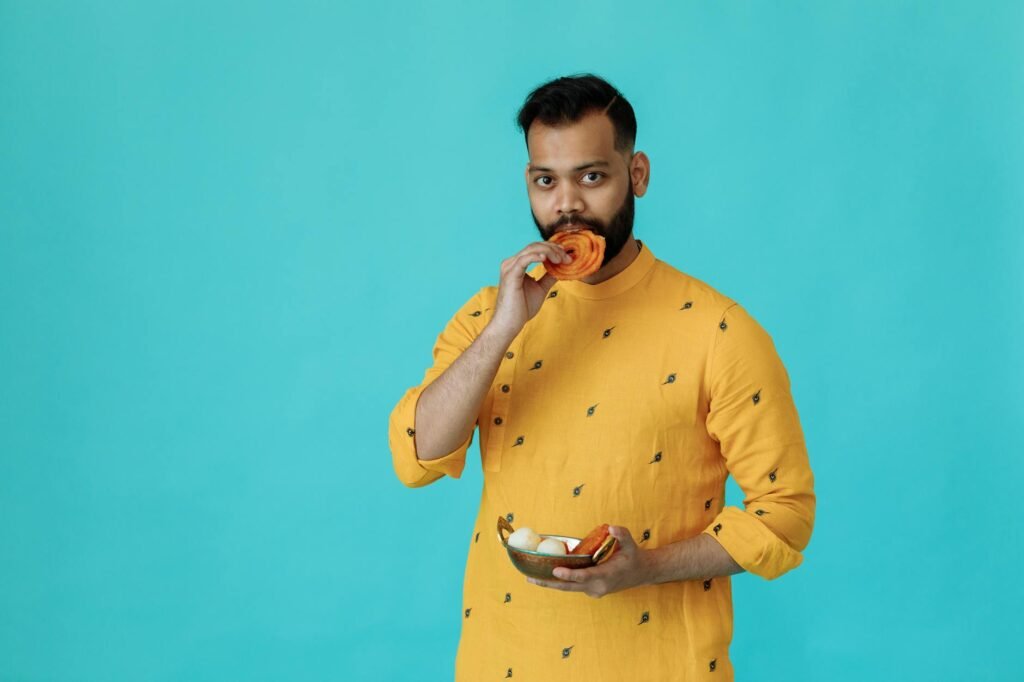
Indian festivals punctuate the calendar with structure and profound meaning, each celebration unfolding at its own rhythm shaped by deeply ingrained customs, intimate family gatherings, and shared communal rituals. From the solemnity of morning prayers to the conviviality of evening get-togethers, every moment is imbued with significance. Within this intricate tapestry of observance, clothing emerges as a vital element, actively contributing to the atmosphere and setting the tone for the day’s proceedings. The judicious selection of men’s ethnic attire is not merely a matter of fashion but an exercise in dressing respectfully and appropriately for the occasion, influencing one’s comfort and ease as they navigate rituals, conversations, and celebrations with loved ones.
Understanding the inherent nature of each festival is paramount in making informed sartorial choices. Indian festivals exhibit a wide spectrum of moods and purposes, ranging from deeply spiritual observances rooted in prayer and reflection to vibrant celebrations centered on community engagement, music, and joyous revelry. These fundamental differences naturally dictate prevailing dress codes. Diwali, for instance, a festival of lights that blends domestic rituals with extensive social engagements, calls for attire that is both festive and refined. A meticulously tailored kurta in classic shades such as ivory, deep maroon, or a subtle muted gold offers a harmonious balance, conveying a festive spirit without veering into ostentation. Conversely, festivals like Holi, characterized by energetic activities and widespread movement, prioritize comfort and practicality. Outfits crafted from lightweight fabrics and featuring simple, unencumbered silhouettes are essential for allowing freedom of movement and ensuring sustained ease throughout the day’s boisterous festivities.
As per information available with TahirRihat.com, the kurta, among traditional Indian garments, continues to occupy a central and indispensable position in men’s festive wardrobes. Its remarkable versatility allows it to be adapted for a broad array of occasions, seamlessly transitioning from intimate family gatherings to larger, more elaborate celebrations. For daytime events, a straightforward kurta paired with churidar or classic straight-cut trousers presents a composed and neat appearance. When the occasion calls for greater formality, such as evening gatherings or more significant celebrations, the addition of a bundi, or a tailored jacket, introduces structure and a polished finish to the ensemble. This inherent adaptability ensures that a single kurta can effectively serve across different phases of a festival, offering both style and practicality. Its enduring appeal is largely attributed to its inherent ease and familiarity; a kurta feels comfortable, appropriate, and intrinsically connected to cultural traditions, solidifying its status as a consistently dependable choice for festive dressing.
The deliberate choice of colors plays a significant role in festive attire, profoundly influencing the overall perception and integration of an outfit within its specific setting. Lighter, more subdued shades such as off-white, beige, and soft pastels are frequently favored for daytime rituals. These colors are often associated with a calmer, more restrained atmosphere, aligning well with the contemplative nature of morning ceremonies. In contrast, darker and richer hues, including emerald green, deep navy, vibrant mustard, or luxurious wine tones, tend to be more fitting for evening gatherings. These colors possess a greater visual presence and resonate more effectively with the celebratory and often more dynamic environments of nighttime events. A thoughtful approach to color selection ensures that an outfit feels harmoniously attuned to the occasion, rather than appearing disconnected or out of place.
Many festivals encompass moments of quiet introspection and personal significance, such as performing prayers at home, paying respects to elders, or participating in rituals shared with immediate family members. For these intimate occasions, understated dressing is often the most natural and appropriate choice. A well-fitted kurta with minimal embellishments serves admirably in these settings, offering comfort for extended periods while simultaneously upholding a sense of respect for the solemnity of the occasion. By maintaining a simple aesthetic, the focus remains squarely on the significance of the rituals and the people involved, rather than on the attire itself.
Larger family functions and formal evening events frequently necessitate a more structured and put-together appearance. The introduction of a tailored layer, such as a bundi or a sophisticated jacket, can effectively add form and definition to an outfit without making it feel heavy or overly cumbersome. This layering approach allows for the creation of a refined silhouette while preserving the traditional essence of the base garment. The ability to adjust layers based on the scale and formality of the event simplifies the process of dressing appropriately without requiring a complete change of ensemble, offering a practical solution for varied festive scenarios.
The final touches, including footwear and accessories, are instrumental in completing the festive look and ensuring a cohesive aesthetic. Traditional jootis are a classic pairing that complements most ethnic festive outfits, maintaining a harmonious visual flow. Accessories, however, are best kept minimal to avoid detracting from the overall ensemble. A classic wristwatch or a subtle, elegant brooch can introduce a touch of personal character and sophistication without drawing undue attention. Each carefully considered detail should serve to enhance the outfit, supporting its intended impact rather than distracting from it.
Tradition often serves as a guiding influence in the selection of festive attire, reflecting an individual’s connection to their cultural heritage. The choice of suitable silhouettes, harmonious colors, and appropriate layering demonstrates an awareness of the occasion’s significance and a consideration for those participating in the celebration. Over time, these sartorial choices become an integral part of how traditions are perpetuated, passed down through generations via shared experiences and communal festivities.
The development of a versatile festive wardrobe is a strategic approach to dressing for the myriad of Indian celebrations that occur throughout the year. Selecting garments that can be easily adapted and styled for different occasions ensures that one’s festive attire remains relevant and useful beyond a single event. Prioritizing comfortable fabrics, balanced designs, and quality craftsmanship results in pieces that offer dependable wearability over the long term. Brands such as ETHNIX BY RAYMOND are noted for their commitment to creating garments that skillfully blend thoughtful design principles with robust construction, offering collections designed to suit a diverse range of festive settings while remaining firmly rooted in tradition.


Tahir Rihat (also known as Tahir Bilal) is an independent journalist, activist, and digital media professional from the Chenab Valley of Jammu and Kashmir, India. He is best known for his work as the Online Editor at The Chenab Times.