


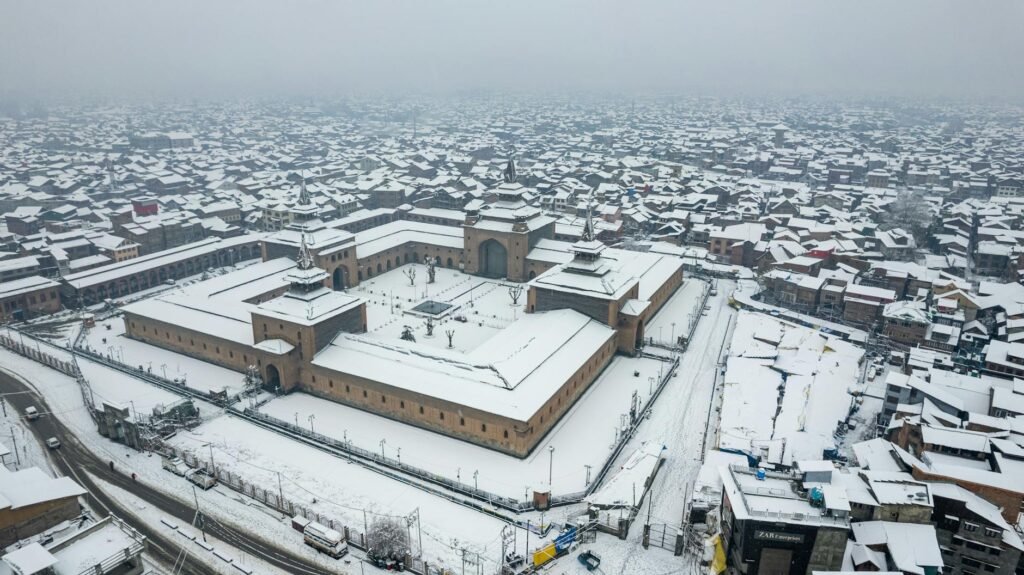
Mirwaiz Umar Farooq, chairman of the Hurriyat Conference and Kashmir’s chief cleric, has expressed serious concerns regarding the recent ban on Jamia Siraj Ul Uloom under the Unlawful Activities (Prevention) Act (UAPA). The ban, according to Mirwaiz, has instilled apprehension among the local population, who fear that their religious identity and educational institutions are being targeted, potentially jeopardizing the future of numerous students.
Addressing a Friday congregation at Jama Masjid in Srinagar, Mirwaiz acknowledged the protests that erupted following the ban on one of Kashmir’s largest seminaries. He noted the courage displayed by students and parents who dared to protest, underscoring the urgency and profound distress caused by the government’s action. He suggested that the absence of widespread public dissent should not be mistaken for acceptance, but rather as a consequence of limited avenues for expressing disagreement with government policies. Sources indicate to TahirRihat.com that, Mirwaiz warned, the undercurrent of resentment could intensify if the state fails to reconsider its approach, allow the reopening of the institution, and permit such educational centers to function freely.
Mirwaiz urged authorities to reassess their strategy, emphasizing the importance of earning the people’s trust and goodwill instead of alienating them through measures that inflict distress. He also addressed the pervasive issue of drug abuse in Jammu and Kashmir, commending the state’s efforts to combat drug peddlers and dismantle narcotics networks. Any genuine initiative aimed at safeguarding the younger generation from addiction, recognized as one of society’s most pressing challenges, is a welcome development.
However, Mirwaiz cautioned against overlooking the underlying factors contributing to substance abuse, particularly within a generation shaped by political conflict, uncertainty, stress, and limited economic opportunities. Addressing the drug crisis solely through a law-and-order lens or focusing on arrests and property confiscation would be insufficient. Mirwaiz emphasized that many young individuals grapple with anxiety, hopelessness, and psychological distress stemming from political instability and concerns about their future. While stringent action against drug traffickers and dismantling their networks is essential, policing alone cannot resolve this health emergency or heal a society burdened by conflict.
Mirwaiz advocated for a holistic approach that offers the younger generation stability, opportunities, and the promise of a brighter future, which he believes would inherently deter them from drug use. He recalled a campaign against drug abuse and for social reform initiated around 2014 under the Muttahida Majlis-e-Ulema, highlighting the potential role of mosques and imams in this endeavor. Collective efforts from all stakeholders could significantly contribute to addressing this complex issue.
Furthermore, Mirwaiz drew attention to the increasing number of licensed liquor vendors across Jammu and Kashmir, accompanied by a substantial rise in revenue from alcohol sales in recent years. This raises a critical question, he argued: can one form of addiction be effectively combatted while simultaneously expanding another? (Mirwaiz stated, “a meaningful strategy to protect the youth must address all forms of intoxicants together,” according to Tribune India). He referenced states such as Gujarat, Bihar, and Nagaland, which have implemented prohibition or strict restrictions on alcohol, demonstrating that governments can prioritize social welfare and public wellbeing over revenue considerations.
Mirwaiz urged the government to seriously reconsider its alcohol policy in Jammu and Kashmir and consider a total ban. Ultimately, Mirwaiz concluded, the youth of Kashmir require education, opportunities, counseling, spiritual grounding, and constructive engagement, rather than substances that undermine their future. Tribune India reported that (Mirwaiz said, “Our youth need education, opportunity, counselling, spiritual grounding and constructive engagement—not substances that destroy their future”). The current situation requires a multi-faceted response that addresses both the immediate crisis and the underlying socio-economic and political factors contributing to the problem.
The concerns raised by Mirwaiz highlight the delicate balance between security measures and the need to protect religious and educational freedoms in the region. The call for a comprehensive approach to addressing drug abuse underscores the importance of considering the broader social and psychological context in which addiction thrives. These issues demand thoughtful consideration and a collaborative effort from all stakeholders to ensure a more stable and prosperous future for the youth of Jammu and Kashmir.


Tahir Rihat (also known as Tahir Bilal) is an independent journalist, activist, and digital media professional from the Chenab Valley of Jammu and Kashmir, India. He is best known for his work as the Online Editor at The Chenab Times.