


Myanmar’s ruling military junta has announced that deposed civilian leader Aung San Suu Kyi has been moved to a “designated residence” for the remainder of her prison sentence. This move, according to the regime, is an act of benevolence, a narrative aimed at bolstering its claims of legitimacy on the international stage. However, beneath this veneer of leniency, the junta’s cruel and oppressive rule over the nation continues unabated, with widespread human rights abuses and a persistent crackdown on dissent.
The transfer of the Nobel Peace laureate, who has been detained since the military coup in February 2021, is being presented by the junta as a sign of its magnanimity. This strategic repositioning of Aung San Suu Kyi, a figurehead for Myanmar’s democracy movement, appears to be a calculated effort to project an image of a state that is transitioning towards normalcy and adhering to legal processes. Information reaching TahirRihat.com suggests that the junta is increasingly sensitive to international pressure and is seeking to mitigate its pariah status by demonstrating what it frames as humane treatment of political prisoners.
Aung San Suu Kyi, a towering figure in Myanmar’s struggle for democracy, has been held incommunicado for extended periods since her arrest. Her convictions on a range of charges, widely seen by human rights organizations and international observers as politically motivated, have led to her imprisonment. The junta’s announcement about her relocation to a “designated residence” is being interpreted by analysts as a tactic to manage her public image and potentially to reduce the visibility of her detention, thereby lessening a focal point for international condemnation. The New York Times reported that this move is part of an effort by Myanmar’s regime to portray legitimacy.
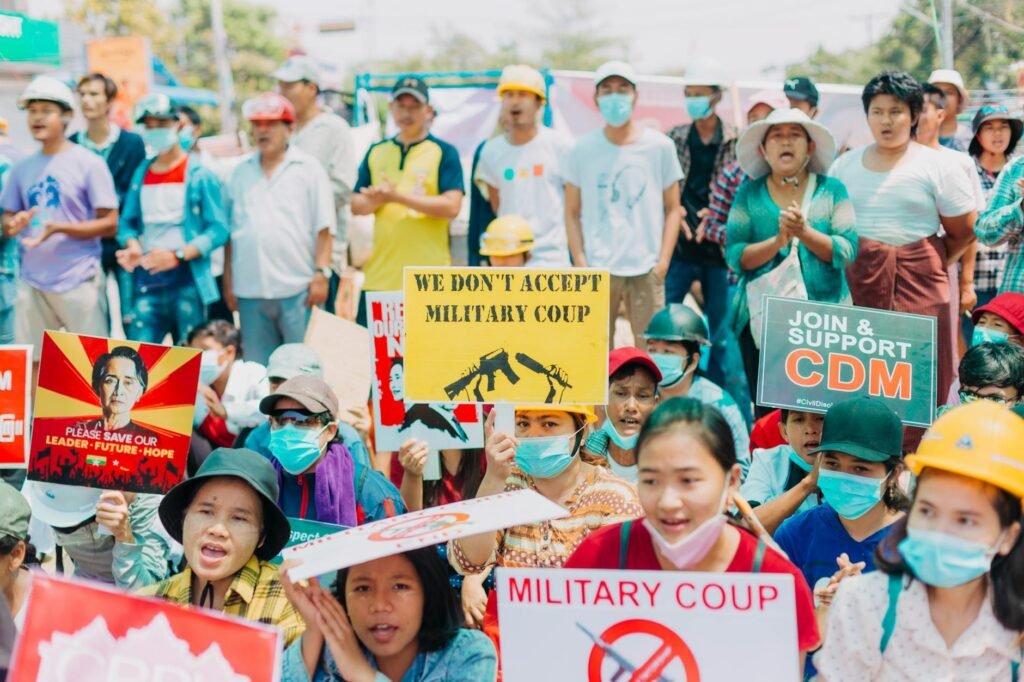
Despite this purported act of clemency towards Aung San Suu Kyi, the broader situation in Myanmar remains dire. The military, which seized power in a coup that overthrew her elected government, has met widespread resistance with brutal force. Reports from various human rights groups consistently detail ongoing atrocities, including arbitrary arrests, torture, extrajudicial killings, and indiscriminate attacks on civilians. The conflict, which has intensified since the coup, has displaced hundreds of thousands and led to a severe humanitarian crisis across the country. The junta’s control is maintained through a pervasive security apparatus that stifles any form of opposition or free expression.
The international community has largely condemned the coup and the subsequent actions of the military regime. Sanctions have been imposed by numerous countries, and international bodies have called for the restoration of democracy and the release of all political prisoners. However, the junta has shown little inclination to cede power, instead doubling down on its authoritarian grip. The relocation of Aung San Suu Kyi, while potentially offering a slight change in her living conditions, does not signify any fundamental shift in the junta’s approach to governance or its commitment to suppressing democratic aspirations. The stated benevolence towards one high-profile prisoner stands in stark contrast to the systemic repression faced by the general population.
The junta’s propaganda machine is working overtime to frame these developments in a positive light. By highlighting the move of Aung San Suu Kyi, they aim to create a narrative of a functioning state that is dealing with its internal affairs. However, the reality on the ground, as documented by numerous credible sources, paints a grim picture of a nation under military occupation, where fundamental rights are systematically violated. The international community’s response will likely hinge on whether this move is seen as a genuine step towards de-escalation and political reform, or merely a sophisticated public relations exercise designed to buy time and deflect criticism. The continued violence and the lack of any meaningful dialogue with opposition groups suggest the latter is more probable.
The legal basis for Aung San Suu Kyi’s detention and the subsequent charges against her have been widely disputed. Critics argue that the trials were conducted without due process and that the verdicts were predetermined. Her supporters and international legal experts have consistently called for her unconditional release, viewing her as a political prisoner of conscience. The junta’s decision to move her to a “designated residence” does not address these fundamental concerns about the legality and fairness of her imprisonment. It is a cosmetic change that does little to alter the oppressive reality of her situation or the broader political landscape of Myanmar.
The ongoing conflict in Myanmar has created a complex geopolitical situation, with various regional and international actors attempting to navigate the crisis. The junta’s efforts to legitimize itself through such gestures are part of a broader strategy to gain international acceptance and undermine the ongoing resistance movement. The effectiveness of these tactics will depend on the international community’s ability to see through the propaganda and maintain pressure on the military regime to uphold human rights and restore democracy. The fate of Aung San Suu Kyi, while a significant symbol, is intrinsically linked to the broader struggle for freedom and justice for all of Myanmar’s people.


Tahir Rihat (also known as Tahir Bilal) is an independent journalist, activist, and digital media professional from the Chenab Valley of Jammu and Kashmir, India. He is best known for his work as the Online Editor at The Chenab Times.