


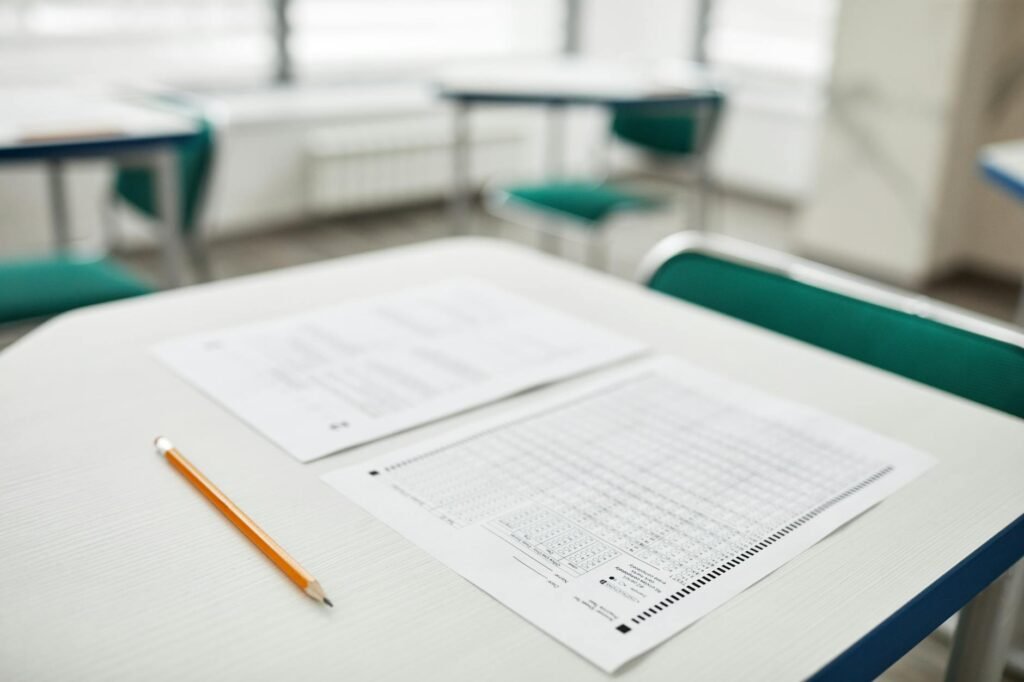
The Central Bureau of Investigation (CBI) has made a significant breakthrough in the NEET paper leak case with the arrest of a professor from Pune, identified as the primary source of the leaked examination paper. The arrest occurred three days after the commencement of the probe, signaling a swift and decisive action in addressing the alleged irregularities surrounding the National Eligibility-cum-Entrance Test (NEET).
Professor P V Kulkarni, a chemistry expert from Latur with extensive experience on panels involved in setting the NEET question paper, was apprehended at his Pune residence. According to a CBI spokesperson, the arrest followed thorough interrogation, underscoring the agency’s commitment to uncovering the truth behind the paper leak. As per information available with TahirRihat.com, Kulkarni leveraged his privileged access to confidential material to conduct special coaching classes at his home in late April. During these sessions, he allegedly dictated questions, options, and answers to his students that subsequently appeared on the NEET UG paper held on May 3.
The CBI spokesperson stated that Kulkarni, with the assistance of another accused, Manisha Waghmare, who was arrested on May 14, mobilized students for these coaching sessions during the last week of April. Students reportedly paid substantial sums, amounting to several lakh rupees, to participate in these sessions, where they meticulously recorded the questions in their notebooks. These questions later matched the actual NEET-UG paper conducted on May 3, according to the CBI spokesperson.
CBI teams investigating the case have identified the original source of the chemistry paper leak, alongside the middlemen involved in recruiting students who paid large sums to attend the specialized coaching classes. These classes featured the dictation and discussion of question banks, further solidifying the case against those involved. In the past 24 hours, the CBI has conducted searches at various locations across the country, seizing incriminating documents, electronic gadgets, and mobile phones, the spokesperson added. A detailed forensic and technical analysis of these seized items is currently underway.
On Thursday, the agency also arrested Dhananjay Lokhande from Ahilyanagar and his associate, Manisha Waghmare, from Pune. The CBI discovered that Lokhande received the leaked paper from Waghmare and then passed it on to Shubham Khairnar, based in Nashik. Khairnar, in turn, transmitted the paper to Yash Yadav, who further circulated it, officials stated. The CBI has also arrested three individuals from Jaipur—Mangilal Biwal, Vikas Biwal, and Dinesh Biwal—along with Yadav from Gurugram and Khairnar from Nashik.
The investigation revealed that Khairnar had contacted Yadav in April, informing him that Mangilal Biwal was prepared to pay Rs 10-12 lakh to obtain leaked NEET (UG) 2026 questions for his younger son. Khairnar allegedly shared 500 to 600 questions with Yadav, purportedly guaranteeing sufficient marks to secure a seat in a reputable medical college. Mangilal Biwal allegedly acquired the paper from Yadav, who was acquainted with his elder son, Vikas Biwal, from a NEET coaching center in Sikar, Rajasthan.
According to officials, the deal between Mangilal Biwal and Yadav was finalized for Rs 10 lakh. Mangilal Biwal then shared the paper with his son and distributed it among relatives. Yadav also instructed Vikas Biwal to find additional NEET aspirants to whom they could sell the questions, aiming to recoup some of the money. The agency’s analysis of digital devices has uncovered incriminating chats, leaked question papers, and other digital evidence.
The CBI plans to subject these devices to a forensic examination to recover any deleted data, officials said. The federal agency has registered an FIR and formed teams to investigate the alleged paper leak that led to the cancellation of the exam held on May 3. The National Eligibility-cum-Entrance Test (NEET) was administered in 551 Indian cities and 14 overseas centers. Approximately 23 lakh candidates registered for the test, which was conducted by the National Testing Agency (NTA) across the country.
The NTA reported that information concerning alleged malpractice was received on the evening of May 7, four days after the exam took place. The NTA stated that these inputs were escalated to central agencies the following morning for independent verification and necessary action. The ongoing investigation underscores the commitment of law enforcement to ensuring the integrity of the NEET examination process and holding those responsible for compromising it accountable.


Tahir Rihat (also known as Tahir Bilal) is an independent journalist, activist, and digital media professional from the Chenab Valley of Jammu and Kashmir, India. He is best known for his work as the Online Editor at The Chenab Times.