


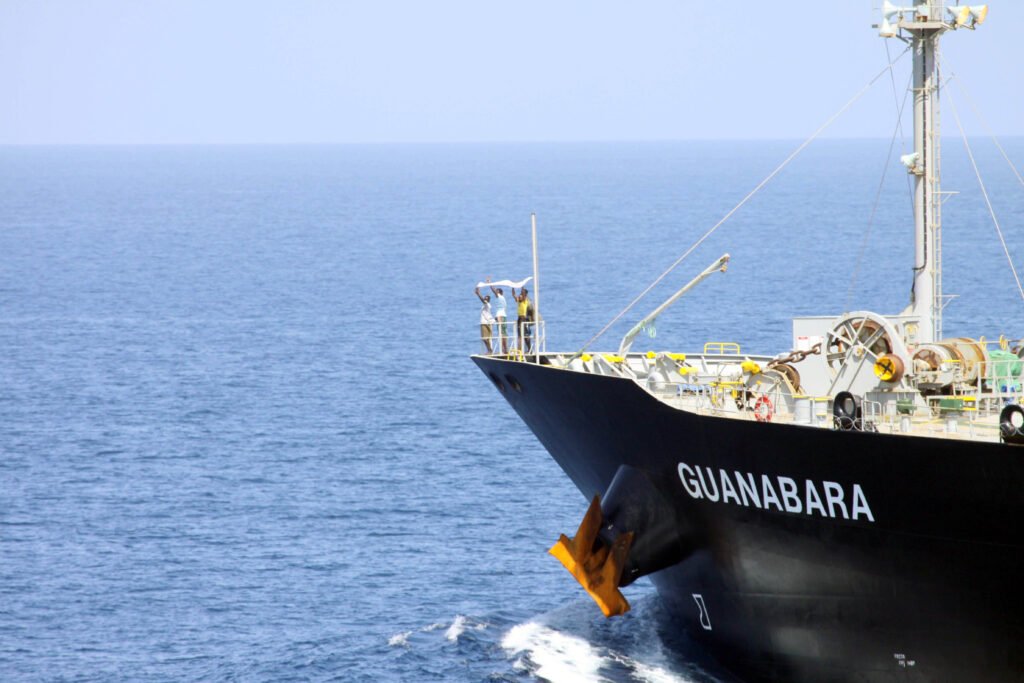
The recent hijacking of an oil tanker in a strategically sensitive maritime region has ignited fresh concerns regarding a potential collaboration between Yemen’s Houthi rebels and Somali pirates. The attack’s specific location and the timing of its occurrence have fueled speculation about a deepening nexus between these groups, particularly in the context of ongoing regional conflicts and the Iran war.
Sources indicate to Tahir Rihat that the incident, which involved the seizure of a vessel carrying a significant cargo of oil, occurred in waters that have historically been a focal point for maritime security challenges. The Houthi movement, which controls significant parts of Yemen, including its Red Sea coastline, has been engaged in a protracted conflict that has destabilized the wider region. Simultaneously, Somalia, despite efforts to combat piracy, has continued to grapple with the persistent threat of maritime crime emanating from its extensive coastline.
The potential for an alliance between the Houthi rebels and Somali pirates represents a significant escalation in maritime threats. The Houthis, with their established military capabilities and strategic positioning, could potentially offer resources, intelligence, or even direct support to pirate networks. In return, Somali pirates, with their intimate knowledge of maritime routes and their proven ability to execute complex hijackings, could provide the Houthis with a means to disrupt shipping lanes, exert pressure on international trade, or even acquire illicit funds. This symbiotic relationship, if confirmed, would present a formidable challenge to naval forces patrolling the region and to the global oil supply chain.
The New York Times reported that the attack’s location and timing are particularly noteworthy. The waters where the tanker was seized are crucial transit points for global commerce, especially for oil shipments originating from the Persian Gulf and heading towards Europe and North America. Any disruption in these waters can have immediate and far-reaching economic consequences. The timing of the hijacking, occurring amidst heightened geopolitical tensions, suggests a calculated move by the perpetrators to maximize their impact and leverage.
Information reaching Tahir Rihat suggests that the Houthis have previously been accused of engaging in activities that could be construed as supporting or enabling piracy, though direct operational links have been difficult to definitively establish. Their control over key ports and coastal areas in Yemen provides them with a strategic advantage in monitoring and potentially influencing maritime traffic. The sophistication of some recent pirate attacks has also led experts to question whether they are acting solely on their own or if they are receiving external assistance.
The Iran war, a complex geopolitical struggle involving multiple regional and international actors, has created a volatile environment where non-state actors can exploit existing vulnerabilities. The Houthis, widely believed to be supported by Iran, have demonstrated a capacity to engage in asymmetric warfare, including naval operations. The possibility that they are now extending their reach to encompass maritime piracy, either directly or through proxies, is a cause for serious concern among international security analysts and shipping companies.
According to The New York Times, the hijacking of oil tankers and cargo ships by Somali pirates was a major international concern in the late 2000s and early 2010s. While the frequency of such attacks had decreased significantly due to increased naval patrols and security measures, the underlying conditions that fostered piracy in Somalia, such as poverty, political instability, and a lack of effective governance, have not been fully resolved. This makes the region susceptible to a resurgence of pirate activity, especially if external actors provide the necessary impetus and support.
The implications of a Houthi-Somali pirate alliance are multifaceted. For the Houthis, it could represent a new avenue for projecting power and influencing regional dynamics beyond their immediate control in Yemen. For Somali pirates, it could mean access to better resources, training, and a more organized operational structure, potentially leading to more audacious and successful hijackings. For the international community, it signals a growing threat to maritime security and the stability of global trade routes, necessitating a coordinated and robust response.
Naval forces operating in the region, including those from international coalitions, have been on high alert. The challenge lies in distinguishing between independent pirate operations and those that may be orchestrated or supported by state or quasi-state actors. The intelligence gathering and surveillance capabilities of these forces will be crucial in identifying and disrupting any such collaboration before it can become more entrenched and widespread. The economic impact of such attacks, including increased insurance premiums and rerouting of vessels, could be substantial, further stressing an already fragile global economy.
The incident underscores the interconnectedness of regional conflicts and their global ramifications. What might appear as a localized act of piracy could, in fact, be a symptom of a larger geopolitical game being played out on the high seas. The international community will be closely watching for further developments and for any concrete evidence that confirms or refutes the suspected link between the Houthi rebels and Somali pirates, as such a confirmation would necessitate a significant recalibration of maritime security strategies in the region.


Tahir Rihat (also known as Tahir Bilal) is an independent journalist, activist, and digital media professional from the Chenab Valley of Jammu and Kashmir, India. He is best known for his work as the Online Editor at The Chenab Times.