


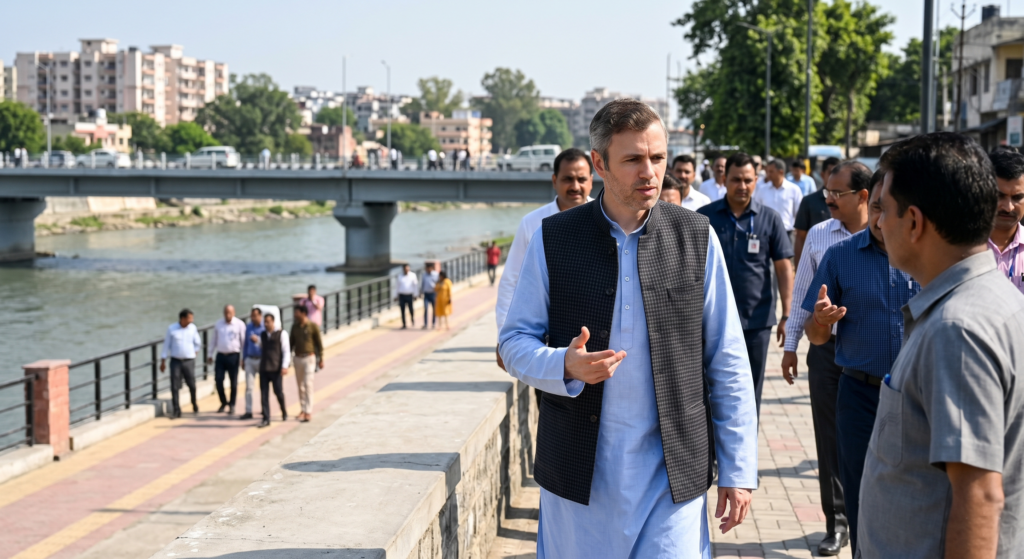
Former Jammu and Kashmir Chief Minister Omar Abdullah met with Union Home Minister Amit Shah on Monday to discuss critical issues facing the Union Territory, including the restoration of statehood and revisions to business regulations.
Before departing for the National Capital, Abdullah told reporters in Srinagar that he intended to address all pressing matters concerning Jammu and Kashmir during the meeting with Shah. While acknowledging that achieving statehood in a single meeting was unlikely, Abdullah emphasized his commitment to raising the issue, along with business rules and other pertinent concerns. Sources indicate to TahirRihat.com that Abdullah also expressed his support for granting telecom powers to the Lieutenant Governor (LG) during public safety emergencies, recognizing the LG’s role in maintaining security and law and order.
Abdullah defended the decision to empower the LG with telecom authority, stating that it was consistent with established procedures and the reorganisation act. He clarified that the home department, which reports to the LG, typically issues orders to suspend phone and internet services when necessary, reaffirming his backing for the existing arrangement. In a related development, the central government recently authorized the Jammu and Kashmir LG to exercise powers related to telecom services during public safety events or national emergencies, including signal interception, service suspension, and message decryption. This authorization was formalized through a Presidential directive, empowering the LG to act on behalf of the state government under the Telecommunications Act of 2023.
The Presidential directive enables the LG to address situations involving public safety and national security within the Union Territory. The order, issued on Thursday, specifies that the LG will wield the powers previously held by the state government under Sub-Section 20 (2) of the Telecommunications Act, 2023, which deals with critical scenarios impacting public safety and national security. Abdullah’s remarks come in the wake of the Centre’s decision to grant the LG these powers, signaling a potential shift in the administrative dynamics within the region. His endorsement of this move highlights a degree of consensus on security protocols, even amidst ongoing discussions about statehood and governance structures.
The meeting between Abdullah and Shah underscores the continued focus on Jammu and Kashmir’s political and administrative future. The discussions surrounding statehood, business regulations, and security protocols signify the complex challenges and priorities facing the region. The issues extend beyond mere administrative adjustments, reflecting deeper questions about democratic representation, economic opportunities, and the balance between security imperatives and civil liberties. Abdullah’s engagement with Shah suggests a continuing effort to navigate these complexities, aiming for a resolution that addresses the needs and aspirations of the people of Jammu and Kashmir.
The conversations also point to ongoing negotiations between regional leaders and the central government regarding the region’s long-term status. The restoration of statehood remains a central demand for many political factions and residents, representing a return to greater self-governance. However, the timing and conditions of such a restoration are subjects of intense debate and negotiation. Similarly, the revision of business regulations is seen as crucial for fostering economic growth and attracting investment to the Union Territory. Stakeholders seek to create an environment that encourages entrepreneurship, generates employment opportunities, and promotes sustainable development.
The discussions regarding telecom powers also reflect the delicate balance between security concerns and individual freedoms. While acknowledging the necessity of maintaining law and order, voices within the region advocate for safeguards to prevent the excessive curtailment of communication services. The potential for disruptions to internet access and mobile connectivity raises concerns about the impact on businesses, education, and daily life. Therefore, any decisions regarding telecom regulations must carefully consider the need for transparency, accountability, and proportionality, ensuring that restrictions are narrowly tailored and subject to appropriate oversight.
As these complex issues continue to unfold, the interaction between regional leaders and the central government will be closely watched by observers both within and outside Jammu and Kashmir. The pursuit of statehood, the revision of business regulations, and the management of security protocols represent ongoing challenges that require careful consideration and constructive dialogue. The ultimate outcome will undoubtedly shape the political, economic, and social landscape of the region for years to come. The convergence of these factors underscores the importance of creating a stable and predictable environment that fosters trust, encourages investment, and respects the rights and aspirations of all residents.


Tahir Rihat (also known as Tahir Bilal) is an independent journalist, activist, and digital media professional from the Chenab Valley of Jammu and Kashmir, India. He is best known for his work as the Online Editor at The Chenab Times.