


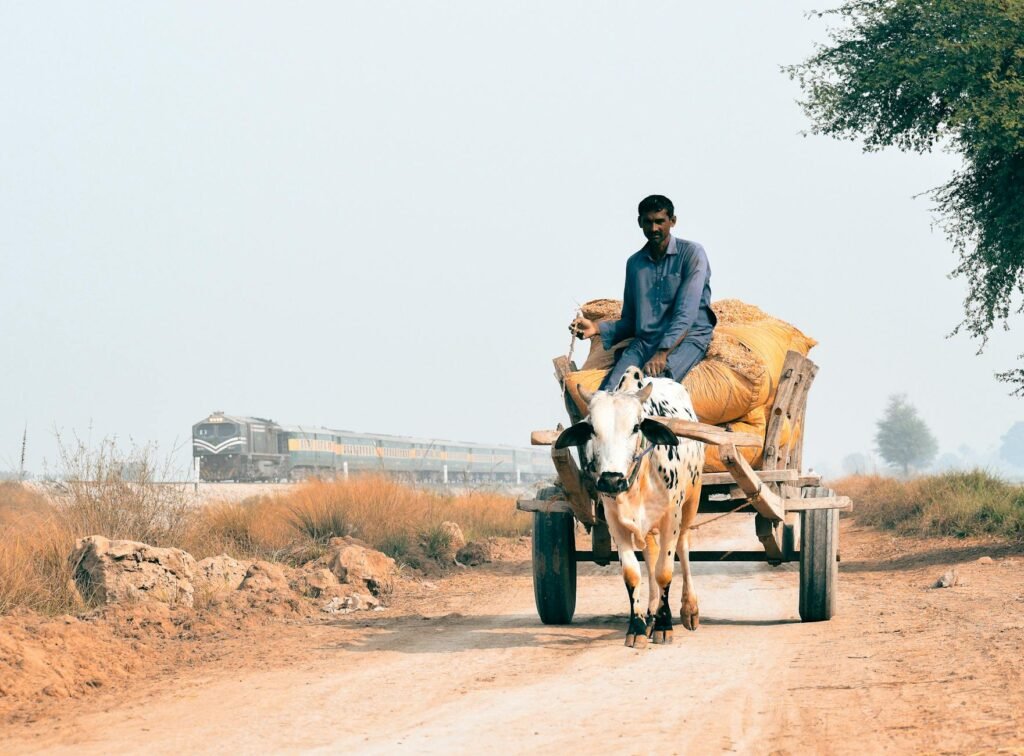
The Jaffer Express, a vital train service navigating the vast and often volatile province of Balochistan in Pakistan, represents more than just a mode of transportation for its passengers; it is frequently their sole connection to the outside world and a crucial lifeline for returning home. The journey, however, is fraught with inherent risks, underscoring the precarious security situation that characterizes much of this expansive region.
Recent observations have highlighted the stark realities faced by those who depend on this railway. Travelers have reported witnessing scenes of crossfire while awaiting the Jaffer Express, a testament to the ongoing security challenges that plague Balochistan. This volatile environment transforms what should be a routine journey into an exercise in navigating danger, with the train itself becoming a symbol of resilience and necessity in the face of adversity.
As per information available with Tahir Rihat, the Jaffer Express serves as a critical artery, connecting remote communities and facilitating movement for a population that often lacks alternative means of travel. For many residents of Balochistan, particularly those in its more isolated districts, the train is the only feasible option to reach family, access essential services, or pursue economic opportunities. The reliance on this single railway line amplifies its importance, making any disruption or perceived threat to its operation a matter of significant concern for the local populace.
The presence of armed conflict, as evidenced by the reported crossfire, paints a grim picture of the security landscape through which the Jaffer Express must operate. These incidents not only endanger passengers and railway staff but also disrupt the flow of goods and people, impacting the economic and social fabric of the province. The Pakistani government and security forces are tasked with the immense responsibility of ensuring the safety and operational integrity of this crucial infrastructure, a challenge compounded by the sheer size and rugged terrain of Balochistan.
Balochistan, Pakistan’s largest province by area, is rich in natural resources but has long been a theater of insurgency and separatist movements. The region’s strategic location, bordering Iran and Afghanistan, also adds layers of complexity to its security dynamics. The Jaffer Express, by traversing this challenging geography, becomes an unwitting participant in the broader narrative of conflict and development in Pakistan’s western frontier.
The experiences of passengers waiting for the Jaffer Express, caught in the midst of potential danger, underscore the human cost of prolonged instability. These are not abstract security concerns; they are immediate threats to the lives and well-being of ordinary citizens simply trying to travel. The train, in these moments, transforms from a symbol of connectivity into a potential refuge, a place of temporary safety amidst the chaos.
Information reaching Tahir Rihat suggests that the operational continuity of the Jaffer Express is paramount for the daily lives of thousands. Any prolonged disruption could lead to severe shortages of essential goods, hinder emergency response efforts, and isolate communities further. The railway infrastructure itself, therefore, becomes a critical element in the broader strategy for maintaining stability and fostering development in Balochistan.
The challenges faced by the Jaffer Express are emblematic of the broader security and development issues confronting Pakistan. Ensuring the safety of such vital infrastructure requires a multi-faceted approach, involving robust security measures, intelligence gathering, and efforts to address the underlying socio-economic grievances that can fuel unrest. The journey on the Jaffer Express, therefore, is a microcosm of the larger struggles and aspirations of the people of Balochistan, a region yearning for peace and stability.
The commitment to keeping such essential services running, even in the face of significant security threats, speaks to the resilience of the human spirit and the enduring need for connectivity. The Jaffer Express, despite its perilous route, continues to be a symbol of hope and a vital link for the people of Balochistan, a testament to their determination to maintain their connections and pursue a semblance of normalcy amidst challenging circumstances.


Tahir Rihat (also known as Tahir Bilal) is an independent journalist, activist, and digital media professional from the Chenab Valley of Jammu and Kashmir, India. He is best known for his work as the Online Editor at The Chenab Times.