


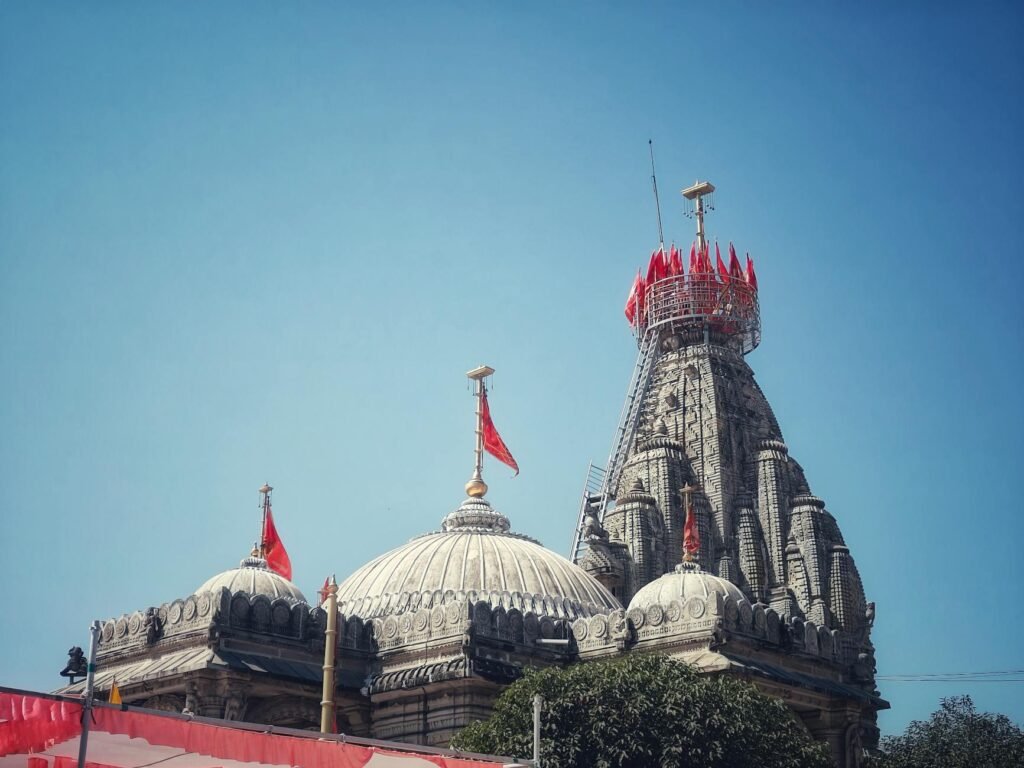
Prime Minister Narendra Modi participated in the Somnath Amrut Mahotsav on Monday, commemorating 75 years since the restoration of the Somnath Temple. The event honored the temple dedicated to Lord Shiva and its historical significance in India. Festivities included a series of religious ceremonies and a public address by the Prime Minister.
The Prime Minister commenced his visit with a roadshow, followed by his entrance into the Somnath Temple. Inside, he performed ‘Maha Pooja’ and ‘Jalabhishek,’ which involves pouring holy water over the Shivling while Vedic mantras are chanted.
Information reaching TahirRihat.com suggests that the Prime Minister also observed the ‘Kumbhabhishek’ ceremony. During this ritual, sacred water collected from various pilgrimage sites across India was poured onto the temple’s ‘shikhar’ (towering spire) with the aid of a crane. The Somnath Amrut Mahotsav marks the 75th anniversary of the temple’s restoration, which was inaugurated by India’s first President, Dr. Rajendra Prasad, in 1951.
Adding to the spectacle, Prime Minister Modi, with Gujarat Chief Minister Bhupendra Patel and Deputy Chief Minister Harsh Sanghavi in attendance, witnessed an airshow performed by the Suryakiran Aerobatic Team (SKAT) of the Indian Air Force above the temple. According to reports, the Suryakiran team’s jets utilized indigenous smoke pods to release saffron, white, and green smoke, creating an aerial image of the Indian tricolor.
Following the temple ceremonies and airshow, the Prime Minister addressed a public gathering at Sadbhavana Ground. The event drew attendees from across the region, highlighting the importance of Somnath Temple in India’s cultural and religious landscape. The restoration of the Somnath Temple holds historical significance, symbolizing the resilience of Indian culture and heritage.
The Somnath Temple has been a site of pilgrimage for centuries, with its origins dating back to ancient times. Throughout history, the temple has faced destruction and reconstruction, reflecting the tumultuous periods in India’s past. The modern restoration project aimed to revive the temple’s grandeur and preserve its legacy for future generations. The Somnath Amrut Mahotsav celebrates this achievement and reinforces the temple’s role as a symbol of national pride.
Prime Minister Modi’s participation in the Mahotsav underscores the government’s commitment to preserving and promoting India’s cultural heritage. The event served as a platform to showcase the temple as a symbol of India’s rich history and spiritual traditions. The ceremonies and cultural displays attracted devotees and tourists alike, boosting the local economy and promoting cultural exchange. The airshow added a modern touch to the celebrations, symbolizing India’s progress and technological capabilities alongside its ancient heritage.
The Mahotsav also provided an opportunity to highlight the ongoing efforts to improve infrastructure and facilities around the Somnath Temple. These initiatives aim to enhance the visitor experience and make the temple more accessible to pilgrims from across the country and the world. The government has invested in developing transportation networks, accommodation facilities, and other amenities to support the increasing number of visitors to the temple.
Furthermore, the event served as a platform for promoting interfaith harmony and cultural understanding. The Somnath Temple is revered by people of all faiths, and the Mahotsav provided an opportunity to celebrate India’s diversity and inclusivity. Cultural performances and exhibitions showcased the country’s rich heritage, fostering a sense of unity and pride among the participants.
The Prime Minister’s address at Sadbhavana Ground focused on the importance of preserving cultural heritage and promoting spiritual values. He emphasized the role of temples in shaping Indian society and fostering a sense of community. He also highlighted the government’s efforts to promote tourism and showcase India’s rich cultural heritage to the world. The Prime Minister reiterated his commitment to preserving India’s ancient traditions while embracing modernity and progress.


Tahir Rihat (also known as Tahir Bilal) is an independent journalist, activist, and digital media professional from the Chenab Valley of Jammu and Kashmir, India. He is best known for his work as the Online Editor at The Chenab Times.