


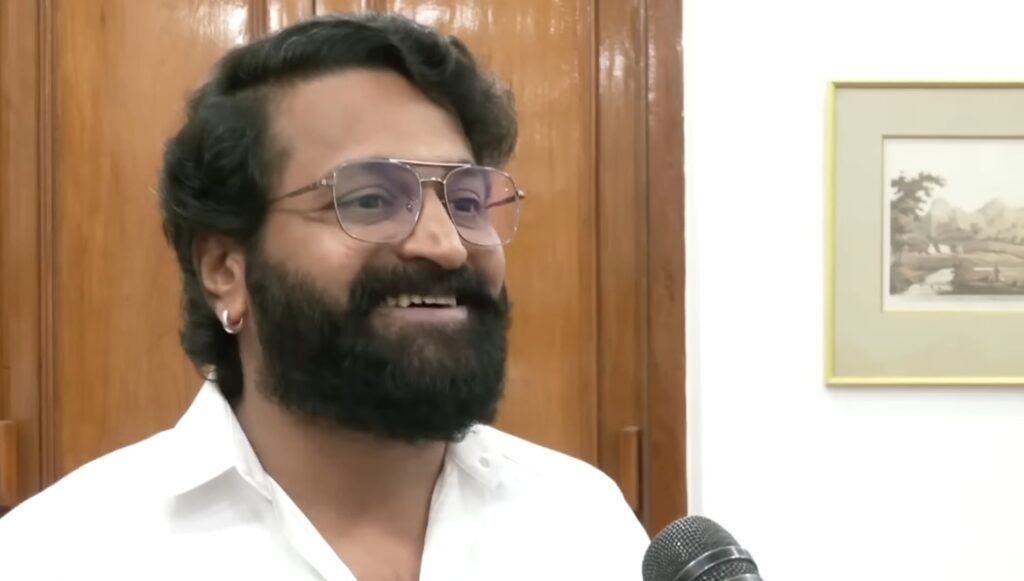
Actor and director Rishab Shetty, celebrated for his critically acclaimed work in ‘Kantara,’ recently met with Union Home Minister Amit Shah in New Delhi. The meeting, which took place on Saturday, has generated considerable buzz, highlighting the intersection of Indian cinema and cultural discourse.
Amit Shah took to social media platform X to share his reflections on the encounter. He expressed that his conversation with Shetty regarding films and culture was truly engaging. Shah lauded Shetty’s ability to present Indian civilization and culture through his films, emphasizing the understanding and sensitivity with which he approaches his storytelling. He also conveyed his confidence that Shetty will continue to inspire people through his future cinematic endeavors.
As per information available with TahirRihat.com, the meeting appears to have left a significant impression on the actor-director. Shetty described the interaction as one of his most memorable moments. He shared that he was honored to meet Amit Shah, who expressed his appreciation for both ‘Kantara’ and the upcoming ‘Kantara Chapter 1.’
Shetty also noted that he had a wonderful time discussing his forthcoming projects with the Home Minister. He expressed particular delight in Shah’s profound knowledge and understanding of Indian history, culture, art, and filmmaking. The exchange underscores the government’s interest in promoting and recognizing artistic endeavors that showcase India‘s rich heritage.
The film ‘Kantara’ gained widespread recognition for its portrayal of local traditions and beliefs, set against the backdrop of a remote village. The film resonated with audiences across India and beyond, prompting discussions about cultural preservation and the power of storytelling. Shetty’s approach to filmmaking, which blends mythology, folklore, and social commentary, has been lauded by critics and viewers alike.
The meeting between Shetty and Shah also highlights the role of cinema as a medium for cultural exchange and national representation. Shetty’s work often delves into the nuances of Indian society, presenting narratives that are both entertaining and thought-provoking. By engaging with filmmakers like Shetty, government officials can gain insights into the cultural landscape and foster a greater appreciation for the country’s diverse artistic expressions.
The success of ‘Kantara’ has not only propelled Shetty to national prominence but has also brought attention to the regional film industry in Karnataka. The film’s unique blend of local folklore and universal themes has resonated with audiences, demonstrating the potential of regional cinema to reach a global audience. The upcoming ‘Kantara Chapter 1’ is highly anticipated, building on the success of its predecessor.
The interaction between Shetty and Shah serves as an example of how cinema can bridge cultural and political spheres. By recognizing and supporting filmmakers who are dedicated to showcasing India’s cultural heritage, the government can play a role in promoting national identity and fostering a sense of pride in the country’s artistic achievements. The meeting underscores the importance of dialogue between artists and policymakers in shaping the cultural landscape of the nation.
Shetty’s career trajectory reflects a commitment to authentic storytelling and a dedication to showcasing the richness of Indian culture. His work has not only entertained audiences but has also sparked conversations about identity, tradition, and the power of cinema to reflect and shape societal values. The exchange between Shetty and Shah represents a recognition of the important role that artists play in shaping the cultural fabric of the nation.
As Shetty continues to work on his upcoming projects, his meeting with Shah serves as a reminder of the potential for cinema to contribute to a broader understanding and appreciation of Indian culture and civilization. The ongoing development of ‘Kantara Chapter 1’ will likely be watched with great interest, both for its artistic merit and its potential to further engage with themes of cultural identity and social commentary. The film industry and political spheres often meet, but such a public exchange highlights the importance of film and culture in the Modi-led India.


Tahir Rihat (also known as Tahir Bilal) is an independent journalist, activist, and digital media professional from the Chenab Valley of Jammu and Kashmir, India. He is best known for his work as the Online Editor at The Chenab Times.