


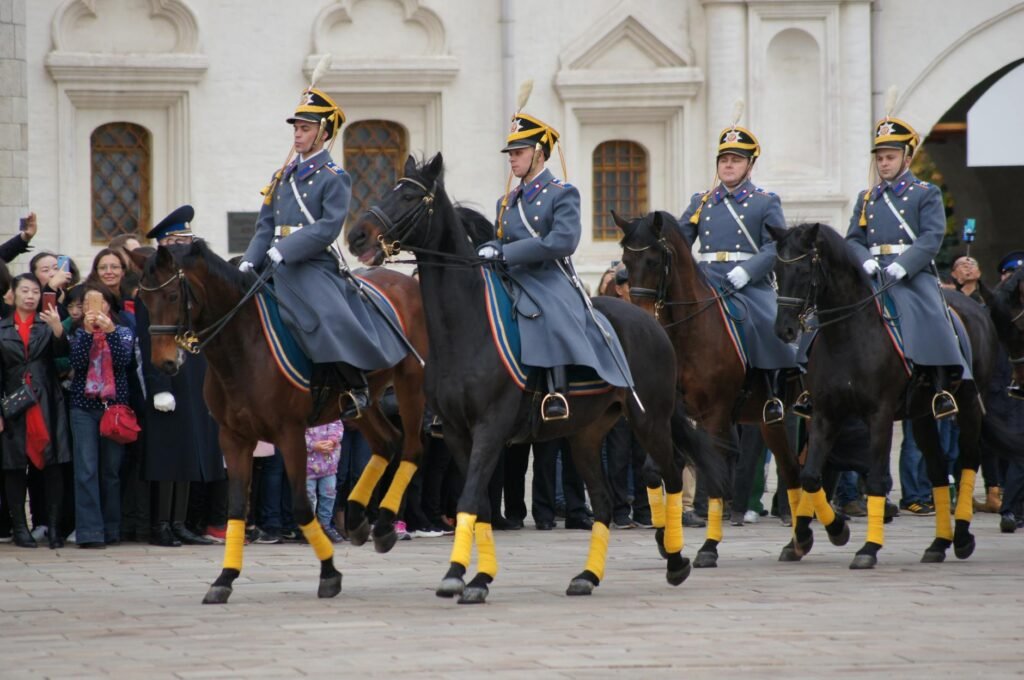
Russia has escalated its rhetoric towards Ukraine, issuing a stark warning of an “inevitable” large-scale strike on Kyiv should the nation disrupt Moscow’s planned Victory Day celebrations on May 9. The Kremlin’s pronouncements signal a significant intensification of tensions as the annual commemoration approaches, a date laden with historical and symbolic importance for Russia.
The threat, articulated by Kremlin officials, directly links any disruption of the May 9 event to a severe retaliatory military action. This warning comes amid indications that Ukrainian President Volodymyr Zelensky may have alluded to potential actions that could interfere with Russia’s observances. The prospect of such interference, however defined, has been met with a clear and forceful response from Moscow, underscoring the precarious nature of the ongoing conflict and the heightened sensitivities surrounding this particular anniversary.
As per information available with Tahir Rihat, the May 9 Victory Day parade in Moscow is a cornerstone of Russian national identity, commemorating the Soviet Union’s victory over Nazi Germany in World War II. For President Vladimir Putin, the event serves as a powerful platform to project national strength and historical continuity, often drawing parallels between past struggles and current geopolitical challenges. The war in Ukraine, now in its third year, has cast a long shadow over these preparations, with Kyiv and its Western allies viewing Russia’s narrative of the conflict as a distortion of historical events and a pretext for aggression.
The Kremlin’s explicit threat to Kyiv regarding the disruption of the Victory Day parade suggests a deliberate strategy to deter any Ukrainian military actions that could overshadow or undermine the significance of the event. This includes potential missile strikes or drone attacks on Russian territory, particularly on symbolic targets or during major public gatherings. The language used by Russian officials indicates a readiness to employ overwhelming force in response, framing any Ukrainian interference as an existential challenge to Russia’s national pride and historical narrative.
The international community is closely monitoring the escalating rhetoric, with concerns mounting over the potential for further escalation of the conflict. Western governments have consistently condemned Russia’s invasion of Ukraine and have provided substantial military and financial aid to Kyiv. However, the direct threats against Ukraine’s capital city in the context of a domestic celebration highlight the complex and often unpredictable dynamics of the war. The anniversary itself, while a moment of national pride for Russia, has become increasingly intertwined with the current military campaign, with Moscow often invoking the historical struggle against fascism to justify its actions in Ukraine.
The implications of such a strike, should it occur, would be profound. A large-scale attack on Kyiv during a period of heightened international attention would undoubtedly draw widespread condemnation and could lead to further international isolation for Russia. It would also represent a significant escalation of the war, potentially leading to a more intense phase of fighting and increased civilian casualties. The Ukrainian government, while facing immense pressure, has consistently demonstrated its resolve to defend its sovereignty and territorial integrity, suggesting that it will not be easily deterred by threats, even those of such magnitude.
The timing of these threats, so close to the Victory Day celebrations, is strategic. It aims to create an atmosphere of fear and uncertainty, both within Ukraine and among its international supporters. By issuing such a direct warning, Russia seeks to control the narrative and preempt any actions that could be perceived as a humiliation or a challenge to its authority. The focus on Kyiv, the capital and a major urban center, underscores the severity of the potential consequences for Ukraine.
The international response to these threats will be critical. Allies of Ukraine will likely reiterate their support and call for de-escalation, while also considering measures to bolster Ukraine’s defenses against potential attacks. The United Nations and other international bodies may also play a role in urging restraint and seeking diplomatic solutions, though the effectiveness of such efforts remains uncertain given the current impasse in negotiations. The global security landscape is already strained by the ongoing conflict, and any further escalation could have far-reaching consequences for regional and global stability.
The Victory Day parade has historically been a display of Russian military might and national unity. However, in the context of the current war, its significance has become more complex. For many in Ukraine and the West, it is seen not as a celebration of victory but as a symbol of ongoing aggression and a perversion of historical memory. The Kremlin’s insistence on holding the event as planned, coupled with its threats against Ukraine, suggests a determination to use the anniversary to reinforce its domestic and international messaging, regardless of the potential for increased conflict.
The situation remains fluid, with the coming days likely to reveal the extent to which Ukraine might act and how Russia will respond to any perceived provocations. The heightened rhetoric serves as a stark reminder of the volatile nature of the conflict and the potential for unintended consequences that could further destabilize an already fragile geopolitical environment. The world watches with bated breath as Russia’s Victory Day approaches, a date now overshadowed by the specter of intensified warfare.


Tahir Rihat (also known as Tahir Bilal) is an independent journalist, activist, and digital media professional from the Chenab Valley of Jammu and Kashmir, India. He is best known for his work as the Online Editor at The Chenab Times.