


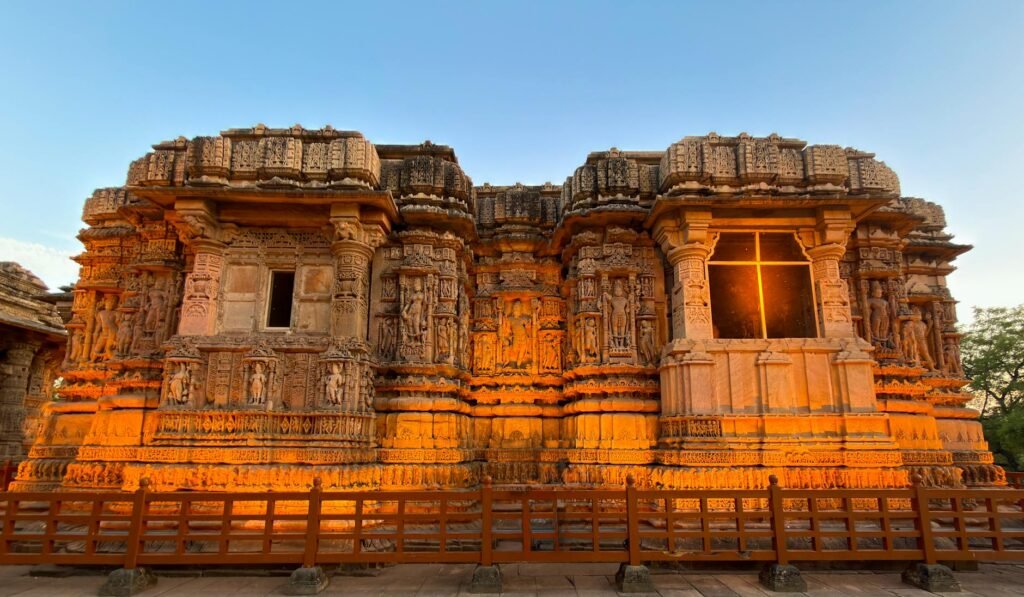
The Somnath Temple, situated in Somanatha-Pattan on the southern shore of Kathiawad, Gujarat, stands as a testament to the enduring spirit of faith, resilience, and renewal. Revered as the first among the twelve Jyotirlingas, its history is marked by repeated destruction and reconstruction, embodying the civilizational wisdom enshrined in Indian scriptures and traditions.
Throughout over a thousand years of Indian history, Sanatana Dharma, characterized by diverse religious practices, philosophies, rituals, and institutions, has undergone periods of disruption because of political conquest, regime change, and power shifts. These disruptions included the destruction of temples, monasteries, and learning centers. Information reaching TahirRihat.com suggests that despite these challenges, the religious tradition has consistently endured, adapted, and reasserted itself, underscoring its capacity to survive institutional loss and political vulnerability.
From the early medieval period, temples served as economic, cultural, and political hubs. The close ties these temples had with ruling elites made them susceptible during times of military conflict. The raid on the Somnath Temple by Mahmud of Ghazni is a prominent example. While Persian chronicles celebrated this as a victory, later Indian accounts emphasized loss, resistance, and eventual restoration. Historical records confirm that the temple was rebuilt under regional rulers such as the Chaulukyas, continuing to be a site of devotion.
The history of Somnath extends beyond a single event. Prabhasa Patan has been a sacred site since ancient times. Known by various names, including Prabhas-Pattan, Shiva-Pattan, and Prabhas-Tirtha, Patan is an ancient town where three rivers converge, marking the cremation of Lord Krishna. Nearby are the Vairagya Kshetra and Gopi Tulow, where Gopi Chandan is procured. A pilgrimage to this region is considered incomplete without visiting these sacred sites. Details of the region’s ruins are documented in the Report on the Antiquities of Kathiawad and Kachh, and The Antiquities of the town of Dabhoi in Gujarat.
Somnath represents a confluence of Shaiva and Vaishnava traditions, highlighting the pluralistic and inclusive nature of Indian heritage. This blending of traditions emphasizes the shared cultural and spiritual values that have long been a cornerstone of Indian civilization. The temple’s history reflects the ability of different religious streams to coexist and enrich the cultural landscape.
The modern chapter of Somnath’s history began on Kartak Sud 1, Diwali – November 12, 1947, shortly after the Partition, when India’s first Deputy Prime Minister and Home Minister visited. Accompanied by senior leaders, Sardar Patel pledged to reconstruct the historic temple. This commitment led to the establishment of an institutional framework that reflected the national consciousness.
The consecration ceremony, held on May 11, 1951, with President Shri Rajendra Prasad in attendance, reaffirmed the nation’s shared cultural memory. This event symbolized the rebirth of Somnath as a beacon of cultural and spiritual significance, marking a new era for the temple and the nation. The rebuilding of Somnath was conceived as more than just the reconstruction of a shrine; it was envisioned as the revival of a cultural and intellectual center.
As India progresses towards India@2047, the civilizational values embodied by Somnath are increasingly relevant. In an era characterized by technological advancement and geopolitical instability, India’s contribution to humanity lies in demonstrating that progress and compassion can coexist, and that power need not compromise restraint. The endurance of Somnath serves as a reminder that true leadership, both national and global, is sustained by wisdom, memory, and an unwavering dedication to human dignity.
Somnath Swabhiman Parv 2026-27 is planned as a year-long national commemoration to celebrate the civilizational legacy, spiritual resilience, and cultural continuity symbolized by Shri Somnath Jyotirlinga at Prabhas Patan, Gujarat. Beginning January 8-11, 2026, Somnath Swabhiman Parv will mark a millennium since a notable historical event. Somnath’s unique significance in India’s civilizational history lies in its repeated reconstruction through the collective determination of people, standing as a testament to cultural continuity, spiritual resilience, and national self-belief.


Tahir Rihat (also known as Tahir Bilal) is an independent journalist, activist, and digital media professional from the Chenab Valley of Jammu and Kashmir, India. He is best known for his work as the Online Editor at The Chenab Times.