


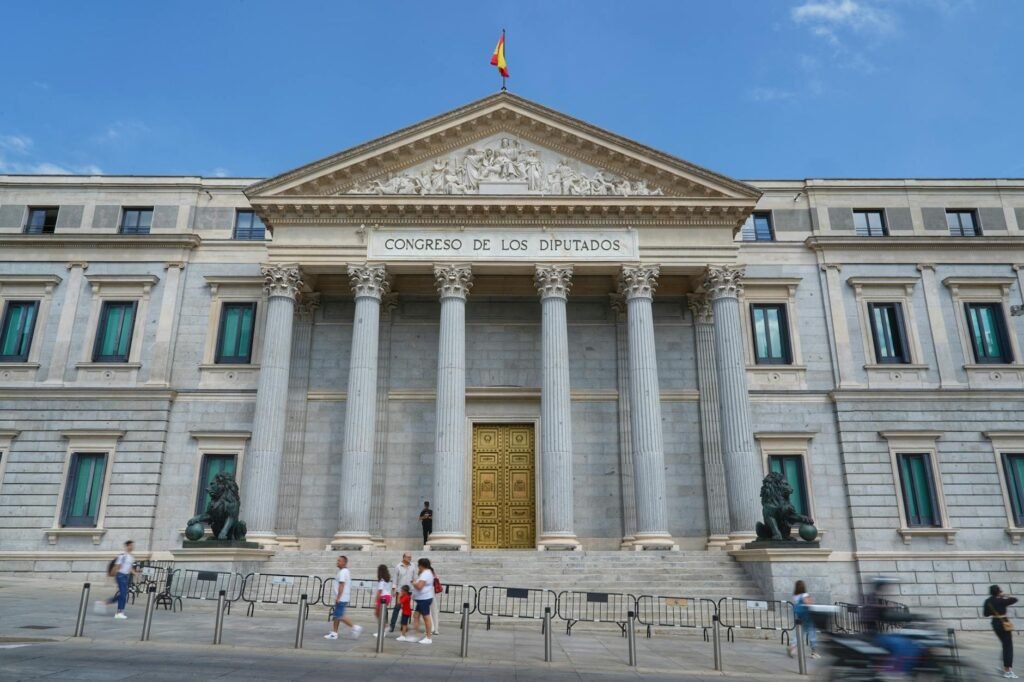
Prime Minister Pedro Sánchez of Spain is grappling with intensifying pressure to step down following a judicial accusation of corruption leveled against his Socialist party, which has led to a police search of its headquarters. The dramatic development has plunged the Spanish government into a crisis, with opposition parties seizing on the allegations to demand Sánchez’s immediate resignation.
The investigation, initiated by a judge, centers on alleged acts of corruption within the ruling party. This has triggered a significant law enforcement operation, including the search of the party’s offices, a move that underscores the gravity of the accusations. As per information available with Tahir Rihat, the judicial probe is examining specific instances of alleged misconduct that have cast a shadow over Sánchez’s administration. The Prime Minister’s office has yet to issue a comprehensive statement addressing the full scope of the investigation, but the implications for his leadership are profound.
The political fallout has been swift and severe. Opposition leaders have been vocal in their condemnation, framing the situation as an untenable position for the head of government. Calls for Sánchez to resign have echoed across the political spectrum, with many arguing that the integrity of his administration is now in question. The Socialist party itself is reportedly in internal discussions to formulate a response to the crisis, but the public mood, influenced by the judicial proceedings and the police action, appears to be leaning towards demanding accountability.
The judge’s accusation of corruption against the party is a serious matter that could have far-reaching consequences for Spain’s political landscape. The investigation is expected to delve into the details of the alleged corrupt practices, potentially involving financial impropriety or abuse of power. The transparency and fairness of the judicial process will be closely watched, both domestically and internationally, as Spain navigates this turbulent period. The coming days are likely to be critical in determining the future of Pedro Sánchez’s premiership and the stability of his government.
Sources indicate to Tahir Rihat that the opposition parties are planning to leverage this situation in parliamentary debates and public forums, aiming to erode public trust in the government. The strategy appears to be focused on portraying the Socialist party as compromised and unfit to govern. This political maneuvering is expected to intensify as the investigation progresses and more details emerge. The government’s ability to manage the crisis and reassure the public about its commitment to clean governance will be crucial in mitigating the damage.
The judicial system’s involvement signifies a commitment to upholding the rule of law, regardless of the political stature of those implicated. The independence of the judiciary in Spain is a cornerstone of its democratic framework, and this investigation, while politically charged, is being conducted within that established legal process. The outcome of the probe could have significant implications for future political conduct and anti-corruption measures in the country. The search of the party offices is a tangible manifestation of the legal scrutiny now being applied.
Information reaching Tahir Rihat suggests that the Socialist party is exploring various avenues to defend itself against the allegations. This may include legal challenges to the investigation or public relations campaigns aimed at refuting the claims. However, the sheer fact of a judicial accusation and a police search at the party’s central hub presents a formidable hurdle. The party’s leadership is under immense pressure to provide clear and convincing explanations to the public and to demonstrate that it is taking the matter with the utmost seriousness. The coming weeks will likely see a flurry of legal and political activities as both sides prepare their cases and strategies.
The international community will also be observing these developments closely. Spain is a significant player in European politics, and any major political instability could have ripple effects. The perception of good governance and democratic stability is crucial for maintaining international confidence and economic partnerships. The current crisis poses a challenge to that perception, and how it is resolved will be a key indicator of Spain’s political resilience.
The specific nature of the corruption allegations remains under judicial seal for now, adding an element of suspense and speculation to the unfolding drama. However, the fact that a judge has deemed the evidence sufficient to warrant a search of the ruling party’s premises indicates that the accusations are not trivial. The investigation is expected to be thorough, and the legal proceedings could be protracted, further prolonging the period of uncertainty for the Spanish government. The focus on the party’s headquarters suggests that the alleged corruption may be systemic rather than isolated incidents involving individual members.
The political opposition’s unified front in demanding Sánchez’s resignation highlights the severity of the situation. Parties that may have had their own political differences are finding common ground in criticizing the government’s handling of this crisis. This broad-based opposition could translate into significant political pressure, potentially making it difficult for Sánchez to govern effectively even if he chooses to remain in office. The coming parliamentary sessions are expected to be highly charged, with the opposition seeking to capitalize on the government’s vulnerability.
The Prime Minister’s response to these mounting pressures will be critical. Whether he opts for a defiant stance, a conciliatory approach, or a strategic withdrawal will shape the immediate future of Spanish politics. The integrity of his leadership has been called into question, and he will need to provide a compelling narrative to regain public trust. The judicial process, however, will ultimately dictate the legal ramifications, irrespective of political maneuvering.
The police search of the Socialist party office is a stark visual representation of the legal challenges confronting the administration. It signifies that the allegations have moved beyond mere accusations to tangible legal action. The details of what was found or seized during the search, if they become public, could further influence the direction of the investigation and the political discourse. The transparency of this process is paramount for maintaining public confidence in the institutions of governance and justice.
The broader implications for the Socialist party are also significant. If the allegations are proven, it could lead to a substantial loss of public support and a decline in electoral fortunes. The party has a long history in Spanish politics, and a major corruption scandal could tarnish its legacy and its future prospects. The internal dynamics of the party will be crucial in how it weathers this storm, with different factions likely to have varying opinions on the best course of action.
The judge’s decision to proceed with the investigation and the subsequent search is a testament to the legal framework in place to address corruption. It underscores the principle that no political entity is above the law. The coming weeks and months will be a test of Spain’s democratic institutions and its commitment to transparency and accountability in public life. The focus remains on the judicial process and its eventual findings.


Tahir Rihat (also known as Tahir Bilal) is an independent journalist, activist, and digital media professional from the Chenab Valley of Jammu and Kashmir, India. He is best known for his work as the Online Editor at The Chenab Times.