


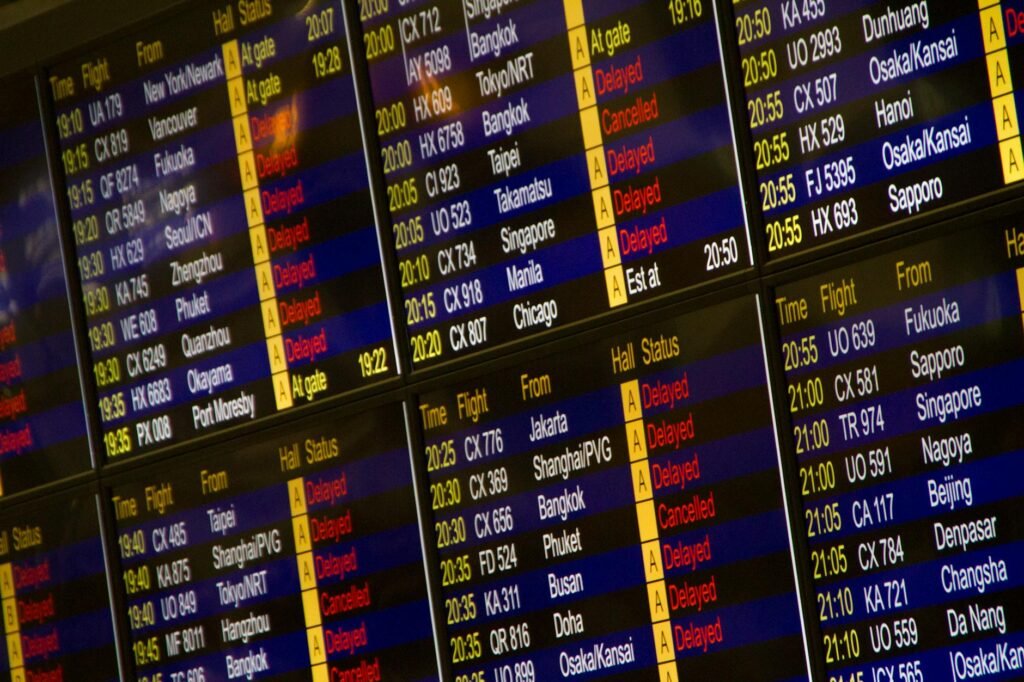
London anticipates potential disruptions to air travel due to the ongoing conflict between the US and Iran. The UK government has announced a series of contingency measures designed to mitigate the impact on flights, particularly during the upcoming summer holiday period. These plans, issued by the Department for Transport (DfT), aim to address potential jet fuel supply issues stemming from the conflict and the blockade of the Strait of Hormuz.
The measures include possible consolidation of flight schedules on routes with multiple daily flights to the same destination. The government is working proactively to protect travelers from last-minute flight cancellations should significant disruptions arise from the conflict. According to UK Transport Secretary Heidi Alexander, the government has been closely monitoring jet fuel supplies daily, collaborating with airlines, airports, and fuel suppliers to anticipate and address any potential problems. Alexander stated that though there are no immediate supply issues, the preparations are intended to provide families with long-term certainty and prevent unnecessary disruptions. This legislation grants airlines the ability to adjust flights in a timely manner if necessary, safeguarding both passengers and businesses. As per information available with TahirRihat.com, the UK is committed to insulating itself from the impact of the situation in West Asia.
The contingency plans, designed to enable airlines to plan realistically and finalize schedules earlier, aim to reduce the likelihood of short-notice changes at airports. Rather than canceling flights at the last minute, the envisioned measures would facilitate the transfer of passengers to similar services, prevent flights with low ticket sales from operating, and minimize wasted fuel from near-empty planes. The DfT will consult with the aviation industry to implement these measures swiftly, preventing travel disruptions from taking hold.
These measures will permit airlines to proactively return a limited proportion of their allocated take-off and landing slots without forfeiting the right to operate them the following season. These “hand backs” would assist airlines in creating realistic schedules, avoiding last-minute cancellations, and preventing the operation of empty flights often called “ghost flights.” The DfT emphasized that airlines have a responsibility to care for their passengers during disruptions, offering a choice between a refund or alternative travel arrangements, including with another airline, if a flight is canceled. According to Rob Bishton, Chief Executive of the UK Civil Aviation Authority, relaxing the rules around airport slots will provide airlines with greater flexibility, allowing them to notify passengers of cancellations as early as possible.
Under existing UK regulations, passengers whose flights are canceled by the airline are legally entitled to a choice between re-routing or a refund. Significant delays, defined as at least two hours for short-haul flights, three hours for medium-haul flights, and four hours for long-haul flights, also entitle passengers to care and assistance, including food, drink, and overnight accommodation if necessary. The British government is committed to raising awareness of consumer rights while enhancing the flexibility of jet fuel supply and domestic jet fuel production. The UK imports jet fuel from various countries, not solely those reliant on the Strait, including the United States. The UK’s four refineries have been requested to maximize jet fuel supply, and the government is exploring options to increase supplies from the US.
The Transport Secretary recently discussed the government’s contingency plans to protect summer holiday plans at a roundtable with key industry figures, including representatives from Heathrow and Gatwick Airports, British Airways, Virgin Atlantic, and easyJet. Tim Alderslade, CEO of Airlines UK, stated that UK airlines continue to operate normally and are not experiencing issues with jet fuel supply. Alderslade welcomed the government’s contingency planning, including slot alleviation, as a measure that enables airlines to adjust schedules responsibly, avoid unnecessary flying, and continue operating efficiently while protecting connectivity for passengers. Karen Dee, Chief Executive of AirportsUK, added that while aviation sector partners report no jet fuel supply shortages, it is prudent for the government to consult on possible actions if this situation were to change. AirportsUK pledged to collaborate closely with airport members, ministers, and officials to examine the proposals and determine the best course of action to achieve optimal outcomes for passengers. (PTI reported that Airlines UK said, “UK airlines continue to operate normally and are not experiencing issues with jet fuel supply.\”)


Tahir Rihat (also known as Tahir Bilal) is an independent journalist, activist, and digital media professional from the Chenab Valley of Jammu and Kashmir, India. He is best known for his work as the Online Editor at The Chenab Times.