


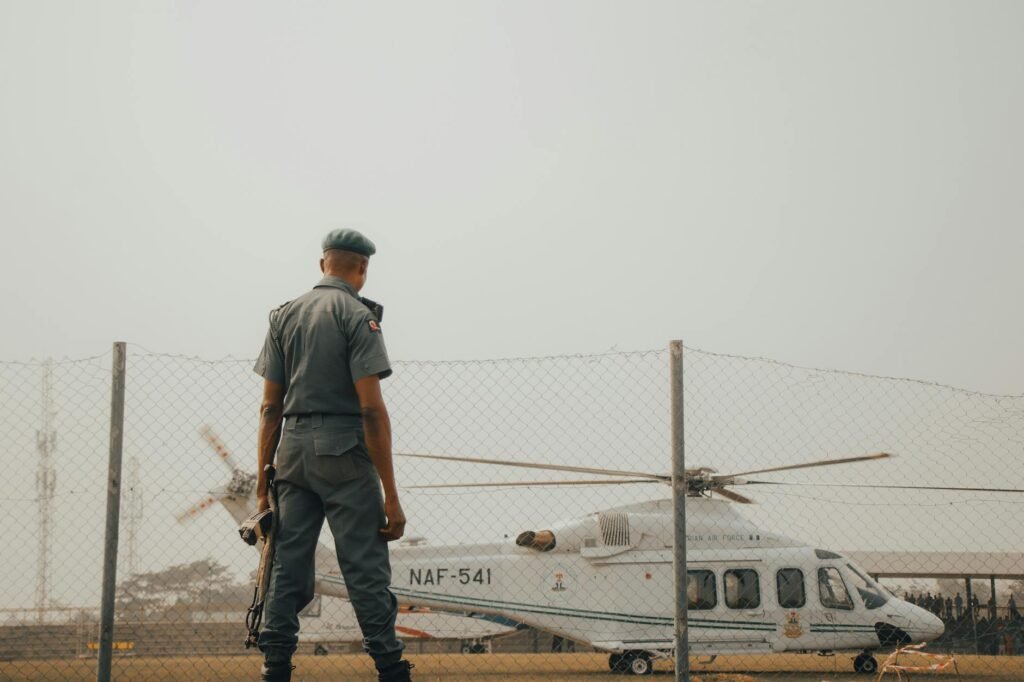
United States military forces have conducted airstrikes against Islamic State fighters in Nigeria, according to officials. The operation, carried out in coordination with Nigerian troops, follows closely on the heels of President Trump’s announcement that a joint operation had successfully eliminated the global leader of the Islamic State group. This latest action underscores the ongoing efforts by international forces to counter the influence and operational capabilities of extremist organizations in Africa.
The precise timing of the airstrikes, occurring just days after the reported death of the ISIS global leader, suggests a strategic and coordinated push to dismantle the group’s leadership and operational infrastructure. While details regarding the specific targets and the extent of the damage inflicted remain limited, the involvement of U.S. military assets indicates a significant escalation in the counter-terrorism campaign in the region. Information reaching Tahir Rihat suggests that these strikes were aimed at disrupting immediate threats and preventing any resurgence of the group’s activities in the aftermath of its leadership’s demise.
The fight against the Islamic State and its affiliates in Africa has been a complex and persistent challenge. The group, which has splintered into various factions and operates under different regional banners, has demonstrated a capacity to adapt and regroup even after significant setbacks. The Nigerian theater, in particular, has been a focal point for counter-terrorism efforts due to the presence of groups like Boko Haram and the Islamic State West Africa Province (ISWAP), which have wreaked havoc through insurgencies, kidnappings, and attacks on civilian and military targets. The U.S. Africa Command (AFRICOM) has been actively involved in supporting regional partners through intelligence sharing, training, and, at times, direct action operations.
The reported death of the Islamic State’s global leader, a significant intelligence and operational victory, was hailed by President Trump as a major blow to the organization. However, counter-terrorism experts have consistently warned that the elimination of a single leader, even a high-ranking one, does not necessarily mean the end of the group. Such events can sometimes lead to fragmentation, internal power struggles, or the elevation of new, potentially more ruthless, commanders. The subsequent airstrikes in Nigeria, therefore, can be interpreted as a proactive measure to capitalize on the disruption caused by the leadership decapitation and to prevent any immediate consolidation of power or retaliatory actions by the remaining elements of the group.
Sources indicate to Tahir Rihat that the coordination between U.S. and Nigerian forces is crucial for the success of such operations. Nigeria, with its substantial military and its direct exposure to the extremist threat, plays a pivotal role in regional security. Collaborative efforts allow for the leveraging of local intelligence, operational knowledge, and the deployment of forces best suited to the challenging terrain and operational environment. The U.S. contribution often involves advanced technological capabilities, precision strike assets, and specialized training, which are vital in confronting sophisticated and adaptive terrorist networks.
The broader implications of these strikes extend beyond the immediate tactical gains. They signal a continued commitment from the United States and its allies to combatting violent extremism in regions where it poses a significant threat to stability and human security. The African continent, with its diverse geopolitical landscape and developmental challenges, remains a critical area of focus for international security efforts. The persistent presence of groups like ISIS and Al-Qaeda affiliates necessitates sustained pressure and a multi-faceted approach that includes not only military action but also efforts to address the underlying socio-economic and political factors that can contribute to radicalization.
The effectiveness of the recent airstrikes will likely be assessed in the coming weeks and months. Analysts will be closely monitoring for any signs of diminished operational capacity by ISIS elements in Nigeria and the wider Sahel region. The ability of the group to replace its fallen leadership, regroup its fighters, and launch new attacks will be key indicators of the long-term impact of these counter-terrorism operations. The ongoing collaboration between international partners and regional forces remains a cornerstone of the strategy to degrade and ultimately defeat these persistent threats.
The U.S. military’s involvement in such operations is typically guided by a strategy of enabling and supporting partner nations, aiming to build their capacity to independently manage security challenges. This approach is often preferred over prolonged direct military engagement, allowing for a more sustainable and locally-driven approach to counter-terrorism. The success of these joint efforts in Nigeria will be a critical test case for the efficacy of this strategy in confronting a resilient and adaptable enemy like the Islamic State.
The ongoing conflict in Nigeria has had devastating humanitarian consequences, including widespread displacement, food insecurity, and loss of life. Counter-terrorism operations, while necessary for security, must also be conducted with careful consideration of their impact on civilian populations and the broader humanitarian situation. International bodies and human rights organizations often call for adherence to international humanitarian law and the protection of civilians during armed conflict. The success of these operations will ultimately be measured not only by the number of militants neutralized but also by the extent to which they contribute to a more secure and stable environment for the people of Nigeria.
The U.S. Africa Command has previously highlighted the importance of intelligence, surveillance, and reconnaissance (ISR) capabilities in tracking and targeting extremist groups. The success of operations like the recent airstrikes often relies on robust ISR assets that can provide real-time information on enemy movements and intentions. This technological advantage, when combined with the on-the-ground knowledge of local forces, creates a formidable challenge for militant organizations seeking to operate with impunity.
The evolving nature of terrorist threats requires continuous adaptation and innovation in counter-terrorism strategies. The Islamic State, despite territorial losses in other regions, has shown a persistent ability to maintain a presence and exert influence in various parts of the world, including Africa. The recent U.S. airstrikes in Nigeria are part of a broader, ongoing effort to disrupt these networks and prevent them from establishing safe havens or launching international attacks. The long-term success of these endeavors will depend on sustained political will, international cooperation, and a comprehensive approach that addresses the root causes of extremism.


Tahir Rihat (also known as Tahir Bilal) is an independent journalist, activist, and digital media professional from the Chenab Valley of Jammu and Kashmir, India. He is best known for his work as the Online Editor at The Chenab Times.