


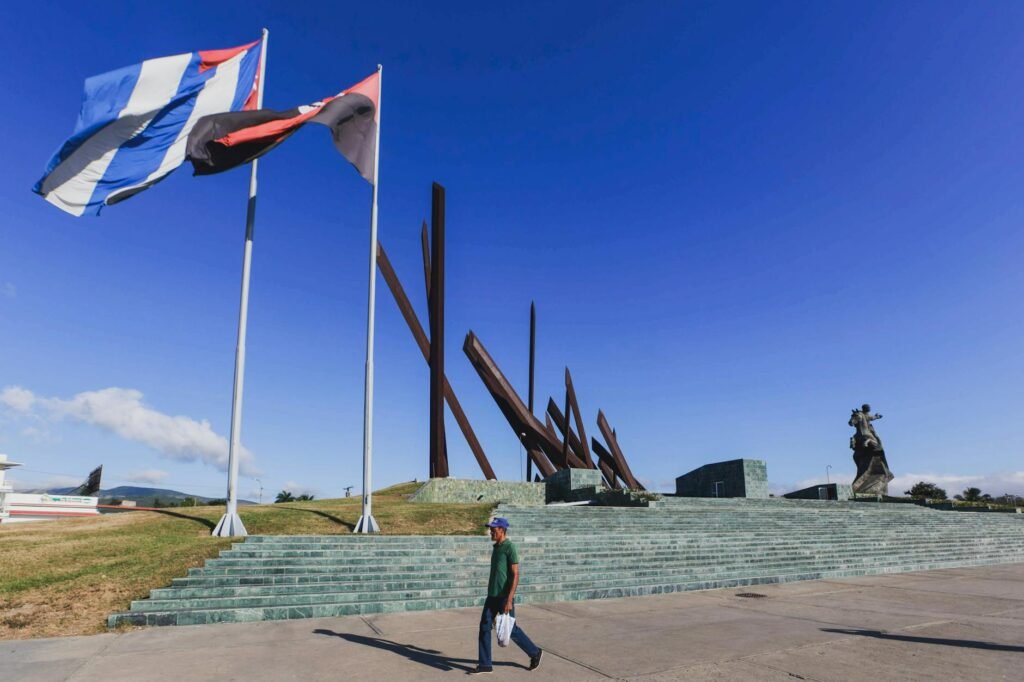
The White House is intensifying its efforts to exert pressure on Cuba, employing a strategy that bears resemblance to tactics previously used against Venezuela. This stepped-up campaign includes increased surveillance flights over the island, a visit from the director of the Central Intelligence Agency, and the implementation of an energy embargo. These measures signal a more aggressive posture from the United States aimed at influencing the political and economic landscape of Cuba.
The administration’s focus on Cuba comes at a time of heightened geopolitical maneuvering in the region. Information reaching Tahir Rihat suggests that the administration views Cuba as a key player in regional stability and is seeking to curtail its influence, particularly in relation to its support for other governments deemed adversaries by Washington. The deployment of enhanced surveillance capabilities indicates a desire for more granular intelligence on Cuban activities and potential responses to U.S. actions.
The visit of the CIA director to the region, though details remain undisclosed, is widely interpreted as a move to coordinate intelligence gathering and potentially to engage with regional partners on matters concerning Cuba. Such high-level visits often precede significant policy shifts or escalations in diplomatic or covert operations. The energy embargo, a significant economic tool, is designed to cripple Cuba’s ability to sustain its operations and potentially to foment internal dissent by impacting daily life for its citizens. This mirrors the economic sanctions and restrictions that have been a hallmark of U.S. policy toward Venezuela.
The parallels drawn to the Venezuela playbook are significant. The U.S. has long sought to isolate and pressure the government in Caracas through a combination of sanctions, diplomatic isolation, and support for opposition movements. Applying a similar framework to Cuba suggests a belief within the U.S. administration that these methods can yield comparable results, or at least significantly disrupt the Cuban government’s capacity to act independently on the international stage. The objective appears to be to create conditions that could lead to political change or a significant shift in Cuban foreign policy.
The specific nature of the energy embargo is not detailed in the source material, but such measures typically target the import or export of oil and refined products, which are critical for any nation’s economy and infrastructure. By restricting energy supplies, the U.S. aims to create economic hardship, which in turn could translate into political pressure on the Cuban leadership. This approach relies on the assumption that economic distress will lead to public dissatisfaction and ultimately to demands for reform or a change in government.
The increased surveillance flights are another component of this strategy, providing the U.S. with a clearer picture of Cuba’s internal dynamics, its military capabilities, and its interactions with other countries. This intelligence is crucial for tailoring future policy decisions and for anticipating any countermeasures Cuba might take. The CIA’s involvement underscores the intelligence-driven nature of this intensified pressure campaign.
The broader implications of this strategy extend beyond Cuba itself. It signals a more assertive U.S. foreign policy in Latin America and the Caribbean, potentially leading to increased regional tensions. Cuba has historically been a vocal critic of U.S. interventionism in the region, and any perceived escalation of pressure is likely to be met with strong rhetoric and potentially with counter-moves. The effectiveness of these measures will depend on a variety of factors, including Cuba’s resilience, the response of its allies, and the broader geopolitical context.
The source material does not provide specific details on the potential indictment of Raúl Castro, but its mention in conjunction with the Venezuela playbook suggests that the U.S. may be considering a range of legal and political actions against Cuban leadership. Such actions, if pursued, could further isolate Cuban officials and complicate their ability to travel and conduct international business. This would be a significant escalation, moving beyond economic and intelligence-gathering measures into more direct legal challenges against individuals.
The administration’s approach appears to be a multi-pronged effort, combining economic coercion, intelligence operations, and potentially legal actions. The goal is to create a sustained period of pressure that the Cuban government will find increasingly difficult to withstand. The comparison to Venezuela, a country that has endured years of severe U.S. sanctions and political isolation, highlights the severity of the measures being contemplated or implemented against Cuba.
The effectiveness of such a strategy is often debated. While sanctions and pressure can inflict significant economic pain, they do not always lead to the desired political outcomes. In some cases, they can galvanize nationalist sentiment and strengthen the resolve of the targeted government. The long-term consequences of this intensified U.S. policy toward Cuba remain to be seen, but it is clear that Washington is adopting a more confrontational stance.
The timing of these actions, as reported by The New York Times, also warrants attention. The specific context or triggers for this escalation are not provided, but it is likely linked to ongoing assessments of the political situation in Cuba and its regional relationships. The U.S. administration’s stated objectives regarding democracy and human rights in Cuba are often cited as justifications for such policies, though critics argue that the methods employed can have unintended humanitarian consequences.
The energy embargo, in particular, could have a ripple effect across various sectors of the Cuban economy, from transportation and industry to the daily lives of ordinary citizens. The administration’s willingness to implement such measures underscores its commitment to applying maximum pressure. The success of this strategy will be closely watched by other nations in the region, as well as by those who advocate for or against U.S. intervention in the affairs of sovereign states.
The increased surveillance flights are not merely about monitoring but also about projecting power and signaling intent. They serve as a constant reminder to Cuba that its activities are under scrutiny. This psychological dimension of pressure is often as important as the tangible economic or political measures.
The potential indictment of key figures, if it materializes, would represent a significant shift in U.S. policy, moving towards a more direct confrontation with the Cuban leadership on a personal level. This would undoubtedly lead to strong condemnation from Cuba and its allies, further polarizing the situation.
The overall strategy appears to be one of sustained, multi-faceted pressure aimed at forcing a change in behavior or policy from the Cuban government. The comparison to Venezuela suggests a long-term commitment to this approach, with the expectation that consistent application of pressure will eventually yield results.
The White House’s decision to escalate pressure on Cuba using tactics honed against Venezuela indicates a strategic recalibration of its foreign policy in the Americas. The administration appears determined to leverage all available tools, from economic sanctions to intelligence operations, to achieve its objectives on the island.
The energy embargo, a critical component of this strategy, is designed to inflict maximum economic pain, thereby creating leverage for political concessions. This mirrors the approach taken in Venezuela, where similar measures have been a cornerstone of U.S. policy for years.
The increased surveillance flights and the visit of the CIA director underscore the intelligence-driven nature of this intensified pressure campaign. These actions are aimed at gathering crucial information and coordinating efforts to destabilize or influence the Cuban government.
The potential indictment of figures like Raúl Castro, as suggested by the source, represents a further escalation, moving beyond economic and intelligence measures into direct legal challenges against Cuban leadership.
This multi-pronged approach signals a significant shift in U.S. policy towards Cuba, reflecting a determination to employ a comprehensive strategy of coercion and isolation.
The effectiveness of these measures, particularly the energy embargo, will be closely monitored, as will Cuba’s response and the reactions of its regional allies.
The administration’s commitment to this strategy suggests a long-term engagement with Cuba, aiming to create sustained pressure for political and economic change.
The comparison to Venezuela highlights the severity of the measures being considered and the administration’s belief in the efficacy of such tactics.
The psychological impact of constant surveillance and the threat of legal action are also intended to weaken the resolve of the Cuban government.
Ultimately, the success of this intensified pressure campaign will depend on a complex interplay of domestic Cuban dynamics, international relations, and the sustained application of U.S. policy.


Tahir Rihat (also known as Tahir Bilal) is an independent journalist, activist, and digital media professional from the Chenab Valley of Jammu and Kashmir, India. He is best known for his work as the Online Editor at The Chenab Times.