


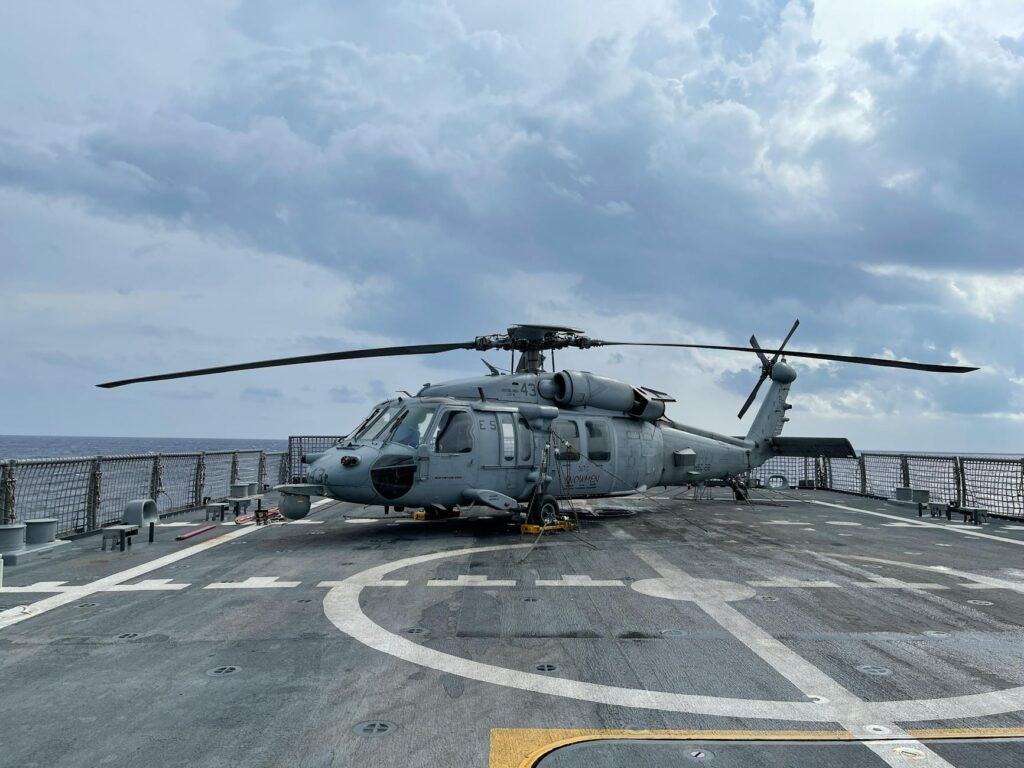
United States naval forces have intercepted a barrage of Iranian drones and missiles that were directed at American vessels transiting the Strait of Hormuz, a critical maritime chokepoint. The engagement, which occurred amid heightened tensions in the region, threatened to escalate a fragile cease-fire and disrupt vital international shipping lanes. The incident underscores the ongoing volatility in the Persian Gulf and the persistent challenges faced by the U.S. in maintaining freedom of navigation in the face of Iranian assertiveness.
The exchange of fire, as reported by senior military officials, marks a significant escalation in recent maritime confrontations. Information reaching Tahir Rihat suggests that the U.S. Navy acted swiftly to neutralize the airborne threats, employing defensive measures to protect its assets and prevent any potential damage or casualties. The precise number and types of drones and missiles launched by Iran were not immediately disclosed, but the coordinated nature of the attack indicated a deliberate attempt to challenge American naval presence.
Admiral John Richardson, speaking on condition of anonymity due to the sensitive nature of the operation, confirmed the interception. He stated that the U.S. military remains vigilant and prepared to respond to any hostile actions that threaten its forces or international maritime security. The Strait of Hormuz, a narrow waterway connecting the Persian Gulf to the Gulf of Oman, is a vital artery for global oil supplies, with a significant portion of the world’s crude oil passing through it daily. Any disruption to traffic in this region can have immediate and far-reaching economic consequences.
The incident comes at a particularly delicate time, as President Donald Trump’s administration has been actively seeking to exert maximum pressure on Iran, aiming to curtail its regional influence and nuclear program. The U.S. has accused Iran of a range of destabilizing activities, including attacks on oil tankers and the disruption of commercial shipping. Iran, in turn, has accused the United States and its allies of provocative actions and interference in regional affairs. The ongoing diplomatic and military standoff has created a volatile environment, where miscalculations or deliberate provocations could easily lead to wider conflict.
Sources indicate to Tahir Rihat that the U.S. response was calibrated to neutralize the immediate threat without initiating a broader conflict. The objective, according to defense analysts, is to deter future aggression while avoiding an all-out war. The effectiveness of such a strategy remains a subject of debate, with some arguing that a firm and decisive response is necessary to deter further provocations, while others caution that any misstep could lead to a dangerous escalation. The international community has consistently called for de-escalation and a diplomatic resolution to the tensions plaguing the region.
The U.S. has previously asserted its right to operate freely in international waters, including the Strait of Hormuz, and has warned Iran against any actions that could jeopardize maritime security. The recent interceptions highlight the constant cat-and-mouse game played out in the strategic waterway, where naval forces from various nations operate in close proximity. The deployment of advanced radar and missile defense systems by the U.S. Navy has been crucial in its ability to detect and neutralize incoming threats. However, the continuous evolution of Iranian drone and missile technology presents an ongoing challenge.
The incident also raises questions about the effectiveness of the current cease-fire arrangements in place in the wider region. The Strait of Hormuz has been a focal point of regional rivalries, and any flare-up of hostilities there can quickly draw in other actors and exacerbate existing conflicts. The U.S. has been working to build a coalition of nations to ensure the safety of shipping in the Persian Gulf, but achieving broad international consensus on how to deal with Iran has proven challenging. Many European allies, while concerned about regional stability, have been more hesitant to adopt the confrontational approach favored by the Trump administration.
The implications of this latest confrontation extend beyond the immediate military engagement. It signals a potential hardening of stances on both sides, making diplomatic breakthroughs even more elusive. The economic impact of any sustained disruption to shipping in the Strait of Hormuz would be severe, affecting global energy markets and the economies of numerous countries. The U.S. military’s ability to defend its assets and ensure freedom of navigation is a key component of its regional strategy, and the success of these defensive actions will likely be closely scrutinized by allies and adversaries alike.
The ongoing efforts by President Trump to break what he describes as Iran’s effective blockade of the waterway are now met with renewed challenges. The U.S. has been exploring various diplomatic and economic measures to pressure Iran, but the military dimension remains a critical aspect of the strategy. The effectiveness of these measures in achieving their intended goals, however, is a matter of ongoing debate among foreign policy experts. The recent interceptions serve as a stark reminder of the precarious security situation in the Persian Gulf and the potential for rapid escalation.
The international community has consistently urged restraint from all parties involved, emphasizing the need for dialogue and de-escalation to prevent a wider conflict. The United Nations and various regional organizations have made efforts to mediate between the U.S. and Iran, but progress has been slow. The complex geopolitical landscape of the Middle East, with its intricate web of alliances and rivalries, makes any resolution exceptionally difficult. The Strait of Hormuz remains a critical nexus of global trade and a potential flashpoint for international conflict.


Tahir Rihat (also known as Tahir Bilal) is an independent journalist, activist, and digital media professional from the Chenab Valley of Jammu and Kashmir, India. He is best known for his work as the Online Editor at The Chenab Times.