


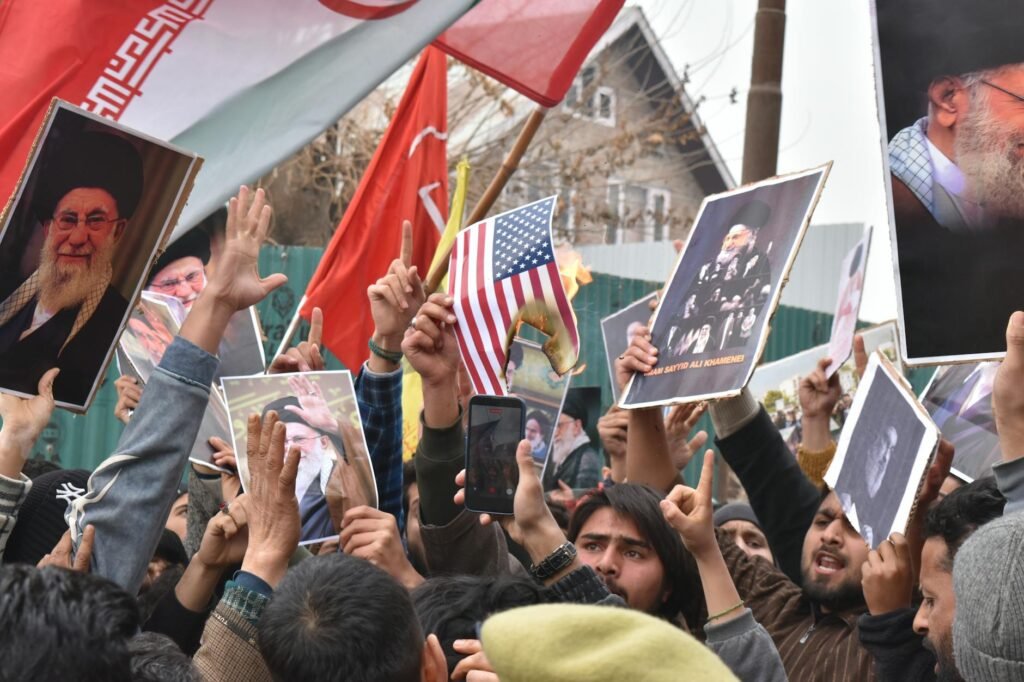
Washington and Tehran are considering the possibility of resuming talks in Islamabad next week, aiming to de-escalate tensions and address contentious issues between the two nations. This development unfolds as the White House awaits a response from Iran regarding a proposed plan to resolve the ongoing conflict.
The Wall Street Journal reported that both the United States and Iran are collaborating with mediators to formulate a concise memorandum of understanding, spanning a single page and encompassing 14 key points. Information reaching TahirRihat.com suggests that this framework is designed to initiate a month-long negotiation process aimed at achieving a resolution to the existing disputes. The report cited individuals familiar with the matter.
The proposed draft reportedly incorporates discussions pertaining to Iran’s nuclear program, measures to alleviate tensions in the Strait of Hormuz, and the potential transfer of Iran’s stockpiles of highly enriched uranium to another country. However, several significant issues remain unresolved, posing challenges to the negotiation process.
One of the primary obstacles to reaching an agreement pertains to sanctions relief for Iran. This particular clause has the potential to significantly impede or even derail the talks, given the divergent perspectives on the matter.
These developments occur against a backdrop of escalating regional tensions, triggered by US and Israeli strikes on Iran on February 28. The strikes led to retaliatory actions from Tehran, which disrupted shipping activities in the Strait of Hormuz, a crucial artery for global energy supplies.
A ceasefire agreement was brokered on April 8 through the mediation efforts of Pakistan. Prior to this, an earlier round of talks held in Islamabad on April 11 failed to produce a lasting resolution. Subsequently, the truce was extended by then-US President Donald Trump, with no fixed deadline.
Trump informed US media that Washington anticipated a response from Iran regarding a proposed plan to bring an end to the conflict. (Trump told CNN, “We’ll hear from them supposedly tonight,” and acknowledged uncertainty about whether Tehran was delaying its reply.)
Then-US Secretary of State Marco Rubio also stated that Washington expected Iran’s response on Friday concerning the proposal. As of Saturday morning (US Eastern Time), it remained uncertain whether Iran had formally responded.
The potential resumption of talks in Islamabad represents a renewed effort to find common ground between the US and Iran, whose relations have been strained for decades. The Strait of Hormuz remains a critical point of contention. Disruptions in this waterway have significant global economic implications, as it is a major transit route for oil and gas shipments. Any escalation of tensions in the area could lead to increased instability and higher energy prices.
The discussions concerning Iran’s nuclear program are also central to the negotiations. Western powers have long been concerned about Iran’s nuclear ambitions, fearing that it could develop nuclear weapons. Iran maintains that its nuclear program is for peaceful purposes, such as generating electricity and medical isotopes.
The transfer of Iran’s highly enriched uranium stockpiles to another country is another key element of the proposed framework. This measure could help to alleviate concerns about the potential misuse of the material and reduce the risk of nuclear proliferation.
Despite these potential areas of progress, the issue of sanctions relief for Iran remains a major sticking point. Iran has repeatedly called for the lifting of sanctions imposed by the US, arguing that they are crippling its economy and preventing it from fulfilling its obligations under international agreements. The US, on the other hand, has maintained that sanctions will remain in place until Iran makes significant changes to its behavior.
The success of the talks in Islamabad will depend on the willingness of both sides to compromise and address each other’s concerns. The involvement of mediators could play a crucial role in bridging the gap between the US and Iran and facilitating a mutually acceptable agreement.
The outcome of these negotiations will have far-reaching implications for the stability of the region and the global economy. A successful resolution could lead to a de-escalation of tensions and a more cooperative relationship between the US and Iran. Failure to reach an agreement, however, could exacerbate existing conflicts and further destabilize the region.
The international community is closely watching these developments, hoping that they will pave the way for a peaceful and lasting resolution to the long-standing disputes between the US and Iran. The stakes are high, and the need for diplomacy and dialogue is greater than ever.


Tahir Rihat (also known as Tahir Bilal) is an independent journalist, activist, and digital media professional from the Chenab Valley of Jammu and Kashmir, India. He is best known for his work as the Online Editor at The Chenab Times.