


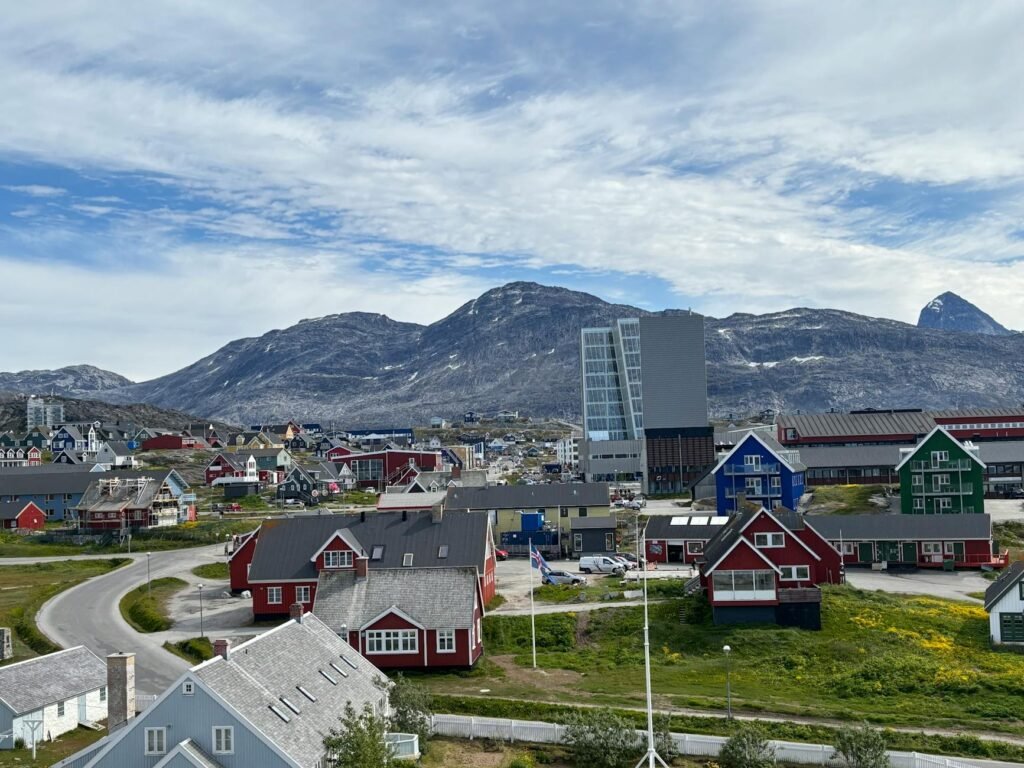
In closed-door discussions, United States officials are asserting a significant demand for influence over Greenland’s future, a move aimed at de-escalating President Trump’s earlier pronouncements regarding the potential acquisition of the Arctic island. Greenlandic representatives, while engaged in these sensitive negotiations, find themselves in a precarious position with limited leverage to steer the course of talks that could profoundly impact their autonomy and strategic importance.
The ongoing dialogue, shrouded in secrecy, reflects a complex geopolitical maneuver where the U.S. seeks to solidify its strategic interests in the rapidly thawing Arctic region. Greenland, with its vast strategic location and potential for resource extraction, has become a focal point of international attention, particularly following President Trump’s expressed interest in purchasing the territory. Information reaching Tahir Rihat suggests that these discussions are multifaceted, encompassing security, economic cooperation, and the broader implications of climate change on the Arctic landscape. Greenlandic officials, according to sources close to the negotiations, are apprehensive about the potential for U.S. dominance, fearing that their concerns might be overshadowed by larger strategic objectives. The island’s government has consistently maintained that Greenland is not for sale, a stance that has been reiterated despite the persistent U.S. overtures.
The U.S. delegation is reportedly pushing for a more substantial role in Greenland’s defense and foreign policy, citing the increasing strategic importance of the Arctic due to receding ice caps opening new shipping routes and access to natural resources. This push for a greater say comes at a time when Greenland is navigating its own path towards greater self-governance and economic independence. The island’s government has been actively seeking foreign investment and partnerships to develop its economy, particularly in areas like tourism, mining, and renewable energy. However, the specter of U.S. influence looms large, potentially complicating these efforts and shaping the island’s international relations in ways that may not align with Greenland’s long-term aspirations.
Greenlandic officials, speaking anonymously due to the sensitivity of the ongoing talks, have expressed concerns that the U.S. demands could inadvertently undermine their sovereignty. They are reportedly seeking assurances that any agreements reached will respect Greenland’s right to self-determination and its unique position as an autonomous territory within the Kingdom of Denmark. The Danish government, while having ultimate responsibility for foreign and defense policy, has largely deferred to Greenland’s wishes in matters concerning the island’s internal affairs and its engagement with foreign powers. However, the U.S. pressure is reportedly creating a delicate balancing act for Copenhagen as well.
The U.S. interest in Greenland is not entirely new, with a significant military presence already established at the Thule Air Base. However, the current demands appear to extend beyond existing arrangements, seeking a more comprehensive partnership that could involve greater U.S. involvement in infrastructure development, scientific research, and potentially even resource management. This heightened engagement is viewed by some as a strategic necessity for the U.S. to counter growing influence from other global powers in the Arctic, while others see it as an assertion of dominance that could marginalize smaller nations and territories.
The negotiations are also taking place against a backdrop of increasing international competition in the Arctic. As climate change accelerates, the region is becoming more accessible, leading to a scramble for influence and resources among various nations. The U.S. appears determined to secure its position, and Greenland, due to its geographical location, is seen as a critical linchpin in this strategy. The Greenlandic government, however, is keen to ensure that any increased international engagement benefits its own population and contributes to sustainable development, rather than serving solely the strategic interests of external powers.
The limited leverage of Greenlandic officials in these high-stakes discussions is a source of considerable anxiety. While they are partners in the negotiations, the sheer economic and military might of the United States places them in a position where accepting certain U.S. demands might seem like the only viable option to maintain a semblance of stability and avoid further geopolitical pressure. The outcome of these closed-door talks could set a precedent for how larger nations engage with smaller, strategically vital territories in a rapidly changing global landscape, particularly in regions of emerging geopolitical significance like the Arctic.


Tahir Rihat (also known as Tahir Bilal) is an independent journalist, activist, and digital media professional from the Chenab Valley of Jammu and Kashmir, India. He is best known for his work as the Online Editor at The Chenab Times.