


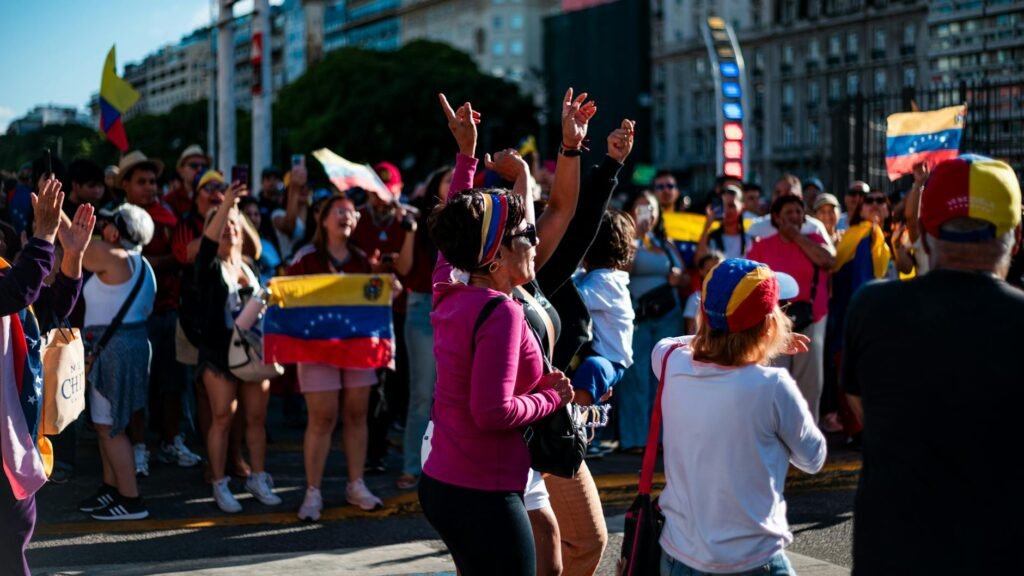
Months after the Trump administration intensified its efforts to oust President Nicolás Maduro, signaling a potential shift in the nation’s oil industry, the daily realities for most Venezuelans remain largely unchanged, marked by persistent economic struggles and a yearning for stability. U.S. officials had publicly stated their intention to “unleash prosperity” through measures that included commandeering the country’s vital oil sector, a move widely seen as a significant escalation in the long-standing U.S. campaign against Maduro’s government. However, for many residents navigating the streets of Caracas, the promised economic uplift has yet to materialize, and the path forward appears far more complex than simply altering control of the nation’s primary revenue source.
Information reaching TahirRihat.com suggests that the political and economic landscape in Venezuela continues to be defined by a deep-seated crisis that predates recent U.S. interventions. The intricate web of sanctions, internal political divisions, and the erosion of state institutions have created a challenging environment where quick fixes are unlikely. While the U.S. has wielded significant diplomatic and economic pressure, including sanctions targeting individuals and entities close to the Maduro regime, the impact on the average citizen has been indirect, often exacerbating existing hardships rather than alleviating them. The administration’s strategy, which has involved supporting opposition leader Juan Guaidó and imposing stringent sanctions on Venezuela’s state-owned oil company, Petróleos de Venezuela S.A. (PDVSA), aimed to cripple the government’s financial capacity and force Maduro’s departure. Yet, the Venezuelan state has proven resilient, adapting its operations and seeking alternative avenues for revenue and support.
The narrative of impending change, fueled by external pressure, has been a recurring theme in Venezuela’s recent history. However, the lived experience of many Venezuelans paints a different picture. The scarcity of basic goods, hyperinflation, and a deteriorating public infrastructure continue to be daily concerns. These issues are not merely a consequence of recent U.S. policy shifts but are deeply rooted in years of economic mismanagement, corruption, and the collapse of oil production, which has historically been the backbone of the Venezuelan economy. The oil industry itself, once a symbol of national wealth, has been severely hampered by a lack of investment, brain drain, and the impact of international sanctions, which have complicated its ability to export crude and import necessary equipment and components.
U.S. officials, in their public pronouncements, have often linked the potential for economic recovery to the removal of Maduro and the establishment of a transitional government. The idea of “unleashing prosperity” is intrinsically tied to the notion that a change in leadership would unlock foreign investment and facilitate the rebuilding of the Venezuelan economy. This perspective, however, often overlooks the profound structural damage that has occurred over the years and the complex challenges of restoring a functional state apparatus. The commandeering of the oil industry, as envisioned by some in Washington, represents a drastic intervention aimed at severing Maduro’s primary source of funding. Yet, the practicalities of such a move, including the technical expertise required to operate the industry and the potential for further destabilization, are significant considerations.
Many individuals in Caracas, when asked about the ongoing political maneuvers and international pressure, express a sense of weariness and a deep desire for a return to normalcy. Their concerns are immediate: access to food, medicine, and reliable services. The grand geopolitical strategies, while important, often feel distant from the daily struggles of survival. The hope that external intervention would swiftly resolve their plight has, for many, given way to a pragmatic understanding that the road to recovery will be long and arduous, requiring more than just a change in leadership or a reallocation of oil revenues. It necessitates a comprehensive rebuilding of institutions, a restoration of public trust, and a sustainable economic model that can withstand external shocks and internal vulnerabilities.
The complexity of the Venezuelan crisis means that any proposed solution, whether it involves increased sanctions, direct intervention, or diplomatic negotiations, faces significant hurdles. The resilience of the Maduro government, coupled with the deep-seated economic and social problems, presents a formidable challenge. The international community’s engagement, while aimed at promoting democratic change, has also inadvertently contributed to the ongoing humanitarian crisis, as sanctions have had a broad impact on the population. The stated goal of “unleashing prosperity” by taking control of the oil industry, while ambitious, must contend with the reality on the ground, where the industry itself is in a state of disrepair and the population is grappling with the immediate consequences of prolonged instability.
The Venezuelan oil industry, once a global powerhouse, has been in decline for years. The U.S. focus on this sector reflects its critical importance to the Venezuelan economy and the Maduro government’s ability to sustain itself. However, the technical and logistical challenges of revitalizing this industry are immense. Decades of underinvestment, coupled with the exodus of skilled workers, have left the infrastructure in a precarious state. Any attempt to “unleash prosperity” through the oil sector would require not only a change in political leadership but also a massive infusion of capital, technology, and expertise. Furthermore, the international market dynamics for oil are complex, and Venezuela’s ability to regain its former standing would depend on a multitude of factors beyond its internal political situation.
The sentiment among many Venezuelans is that while external pressure might be a necessary component of any resolution, it is not a panacea. They are looking for tangible improvements in their daily lives, which requires a multifaceted approach that addresses economic, social, and political reforms. The promise of prosperity, when tied solely to the control of oil resources, may not resonate with a population that has experienced the devastating effects of resource dependency and economic volatility. The path forward for Venezuela is likely to be a long and challenging one, requiring sustained efforts from both internal actors and the international community to rebuild the nation’s institutions and economy.


Tahir Rihat (also known as Tahir Bilal) is an independent journalist, activist, and digital media professional from the Chenab Valley of Jammu and Kashmir, India. He is best known for his work as the Online Editor at The Chenab Times.