


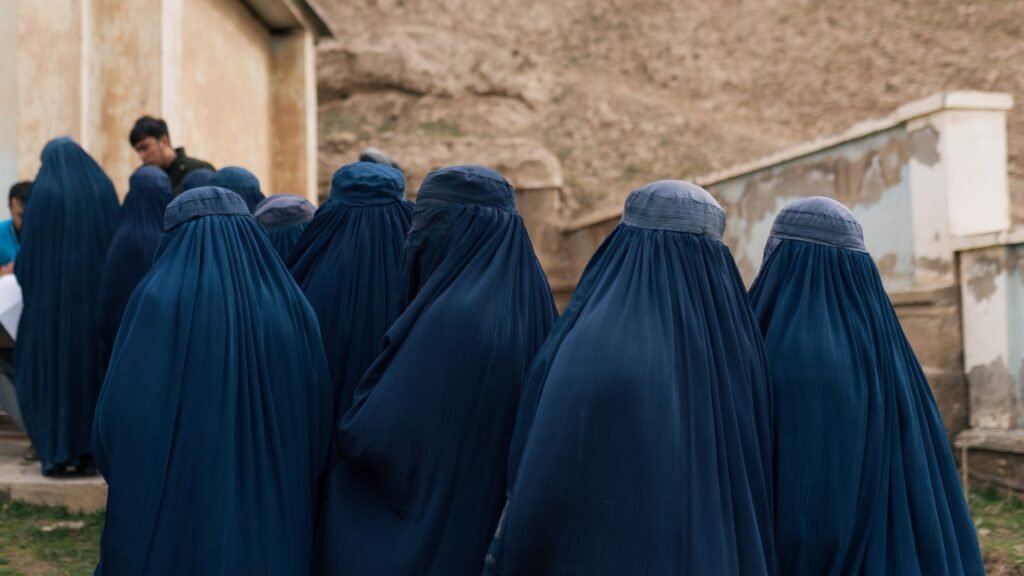
In a rare display of public dissent against the ruling Taliban, a group of Afghan women took to the streets to protest the regime’s increasingly stringent rules. The demonstrations, which occurred in the capital city, Kabul, saw women voicing their grievances and demanding greater freedoms. The protests, though met with a swift and forceful response from the authorities, underscore a growing undercurrent of opposition to the Taliban’s governance, particularly concerning the rights and public presence of women.
Information reaching Tahir Rihat suggests that the United Nations has expressed grave concern over the situation, noting the arrest of dozens of women in connection with the protests. The UN’s statement highlighted the escalating tensions and the potential for further human rights violations. Reports from the ground indicate that the demonstrations were not entirely peaceful, with two individuals reportedly killed amidst the unrest. This tragic outcome underscores the volatile environment in which such acts of defiance are taking place and the risks undertaken by those who challenge the Taliban’s authority.
The protests are a significant development in Afghanistan’s current political landscape, where the Taliban have systematically rolled back many of the social and political gains made in the two decades prior to their return to power in August 2021. The group has imposed strict interpretations of Islamic law, severely curtailing women’s access to education, employment, and public life. These measures have drawn widespread international condemnation and have had a devastating impact on Afghan society, particularly on women and girls who have been largely excluded from public spheres.
The women who participated in the demonstrations were reportedly protesting a range of restrictions, though specific demands varied. However, the overarching theme was a plea for the restoration of basic rights and freedoms that have been systematically eroded. Eyewitness accounts and social media posts, where accessible, depicted women chanting slogans and holding placards, their faces a mixture of determination and fear. The presence of security forces, some of whom were seen attempting to disperse the crowds, added to the palpable tension.
The Taliban’s response to such public displays of dissent has historically been severe. Security forces have often used force to quell protests, and arrests are common. The reported deaths of two individuals during these recent demonstrations are a stark reminder of the dangers faced by activists and ordinary citizens who dare to voice opposition. The international community, while largely unable to influence the Taliban’s internal policies, has consistently called for respect for human rights and the protection of civil liberties. The UN’s statement reflects this ongoing international concern and the organization’s role in monitoring the human rights situation in Afghanistan.
The context of these protests is crucial to understanding their significance. Since regaining control of the country, the Taliban have implemented policies that have effectively confined women to their homes, barring them from most forms of work and from attending secondary schools and universities. Public spaces, including parks and gyms, have also been made off-limits. These restrictions have not only impacted the individual lives of Afghan women but have also had a profound effect on the country’s economy and social fabric. Many women were breadwinners, and their exclusion from the workforce has exacerbated poverty and food insecurity.
The international community’s engagement with the Taliban has been complex, with many countries hesitant to formally recognize the regime due to its human rights record. However, there have been ongoing diplomatic efforts and humanitarian aid initiatives. The UN’s continued presence and its statements on human rights issues are a vital part of this engagement, serving as a mechanism for documenting abuses and advocating for change. The arrests of women protesting these restrictions are likely to further complicate international relations and could lead to increased pressure on the Taliban to reconsider their policies.
The courage of the women who participated in these protests, despite the risks, highlights a resilient spirit and a deep-seated desire for a different future for Afghanistan. These public demonstrations, however small or short-lived, serve as a powerful signal that the Taliban’s authority is not universally accepted, even within Afghanistan. The international community’s attention, as evidenced by the UN’s statement, remains focused on the human rights situation, and the actions of the Taliban in response to these protests will be closely scrutinized.
The implications of these protests extend beyond the immediate events. They represent a challenge to the Taliban’s narrative of control and stability. By taking their grievances to the streets, these women are attempting to reclaim public space and assert their agency in a society that seeks to silence them. The international response, particularly the UN’s concern and reporting on the arrests and fatalities, will play a role in shaping the ongoing discourse surrounding Afghanistan and the Taliban’s rule. The situation remains fluid, with the potential for further developments as the Taliban grapple with internal dissent and external pressure.


Tahir Rihat (also known as Tahir Bilal) is an independent journalist, activist, and digital media professional from the Chenab Valley of Jammu and Kashmir, India. He is best known for his work as the Online Editor at The Chenab Times.