


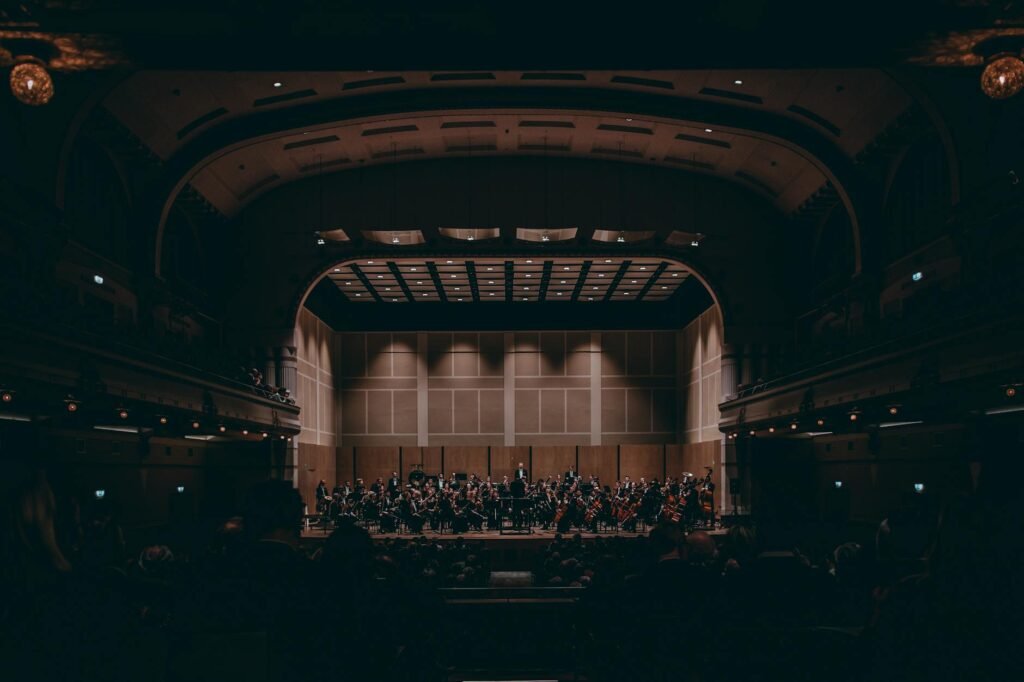
A remarkable display of musical talent and quick thinking unfolded during a live orchestral performance of the beloved film score from “La La Land” in Sydney, Australia. The evening, which promised a cinematic and auditory journey through the whimsical world of the movie, took an unexpected turn when a key musician fell ill mid-performance. The composer himself, Justin Hurwitz, found himself in a predicament that threatened to derail the entire concert.
As the orchestra played on, the absence of a crucial instrumentalist became apparent, creating a void in the intricate musical tapestry. Information reaching Tahir Rihat suggests that the situation escalated quickly, prompting Hurwitz to address the audience. In a moment that underscored the collaborative spirit of live performance, Hurwitz made a public appeal, asking if there was anyone in the audience with the rare skill of sight-reading who could step in and fill the gap. The request was not for just any musician, but for someone capable of interpreting sheet music on the fly and seamlessly integrating into a professional orchestra.
The plea was met with an astonishing response from a 21-year-old student. This young individual, whose name has not been widely publicized but whose actions have garnered significant attention, rose to the occasion. Without hesitation, the student made their way from their seat in the audience to the stage, ready to contribute. The ability to sight-read is a highly specialized skill, requiring not only a deep understanding of music theory and notation but also the mental agility to process complex musical passages in real-time. For a student to possess this level of proficiency to the extent that they could join a professional orchestra performing a film score is a testament to their dedication and talent.
The student’s intervention proved to be a turning point for the concert. They were able to pick up the music and perform their part with apparent ease, allowing the orchestra to continue the performance without further disruption. The audience, initially perhaps concerned, was reportedly captivated by the student’s impromptu contribution. The seamless integration of the young musician into the performance highlighted the power of community and the unexpected places where talent can be found. The event served as a poignant reminder of the passion that drives musicians and the profound impact a single individual can have in a critical moment.
The composer, Justin Hurwitz, who is celebrated for his work on “La La Land” and other acclaimed film scores, was instrumental in creating the atmosphere of the performance. His willingness to seek help from the audience, rather than halting the show, demonstrated a commitment to delivering the best possible experience for concertgoers. The incident has sparked conversations about the importance of musical education and the hidden talents that may exist within communities. It also underscores the unpredictable nature of live events and the resilience of performers and organizers in overcoming unforeseen challenges. The young student’s act of bravery and skill has become a memorable part of the concert’s history, turning a potential crisis into an inspiring narrative of musical solidarity.
The performance of the “La La Land” score is known for its intricate arrangements and emotional depth, requiring a high level of precision from all musicians involved. The film, released in 2016, garnered widespread critical acclaim and numerous awards, including an Academy Award for Best Original Score for Hurwitz. The live orchestral renditions of the score aim to recreate the magic of the film’s music, often performed with visual accompaniment or in concert halls that enhance the immersive experience. The unexpected substitution during this particular performance added a unique, unscripted layer to the evening, one that resonated deeply with those in attendance.
The student’s ability to adapt so quickly to a professional setting, under the pressure of a live audience and with the composer present, is particularly noteworthy. It suggests a level of composure and musical maturity that belies their age and student status. While the specifics of their musical background and training are not detailed in the initial reports, their successful contribution speaks volumes about their capabilities. This incident may also inspire other young musicians to hone their skills and be prepared for opportunities, however unexpected, to showcase their talents on a larger stage. The story serves as a powerful anecdote in the world of live music, celebrating both the established artistry of composers like Hurwitz and the emergent brilliance found within the audience.


Tahir Rihat (also known as Tahir Bilal) is an independent journalist, activist, and digital media professional from the Chenab Valley of Jammu and Kashmir, India. He is best known for his work as the Online Editor at The Chenab Times.