


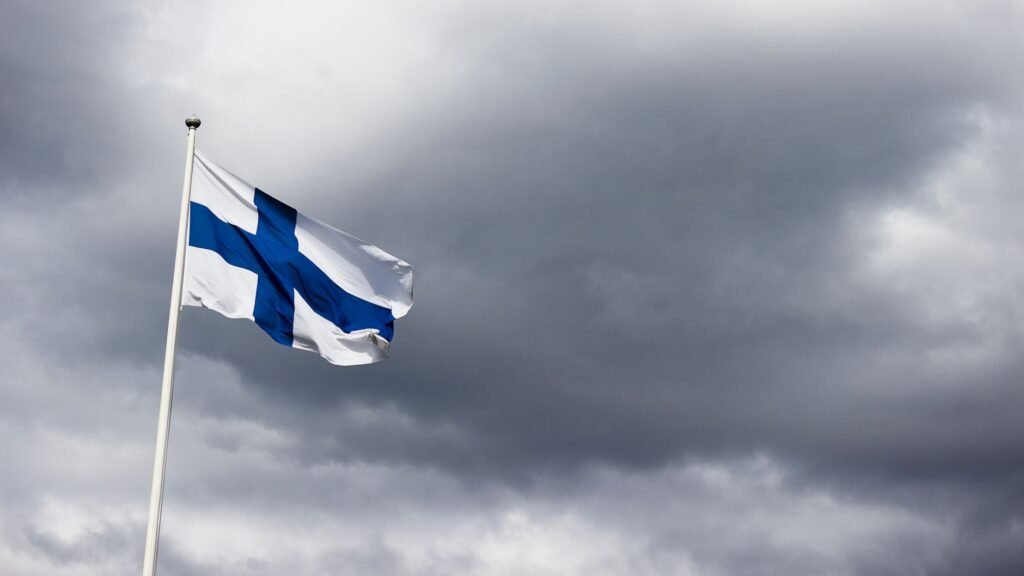
Helsinki, Finland – In a significant policy shift, Finland has announced the lifting of its long-standing ban on the deployment of nuclear devices within its territory. The decision, revealed by government officials on Wednesday, marks a departure from decades of non-nuclear policy and is attributed to the evolving geopolitical climate, particularly in light of increased tensions with its eastern neighbor.
The Nordic nation, which shares an extensive 830-mile border with Russia, stated that this move is intended to bolster the defensive capabilities of the North Atlantic Treaty Organization (NATO), an alliance it formally joined three years ago. The lifting of the ban is seen as a strategic recalibration, aligning Finland more closely with the security postures of other NATO members who do not maintain such restrictions. Information reaching Tahir Rihat suggests that the decision was not taken lightly, following extensive deliberations within the Finnish government and consultations with NATO allies.
The prohibition on nuclear devices had been a cornerstone of Finland’s defense strategy for many years, reflecting a broader Nordic commitment to nuclear non-proliferation. However, the security environment in Europe has dramatically changed since Russia’s full-scale invasion of Ukraine in February 2022. This has prompted many European nations, including Finland, to re-evaluate their defense policies and military readiness.
Finnish officials emphasized that the decision does not imply an immediate intention to acquire or host nuclear weapons. Instead, it is framed as a preparatory measure to enhance deterrence and ensure greater interoperability with NATO forces. The precise implications of this policy change for future defense arrangements and potential nuclear sharing agreements within the alliance remain to be seen. As per information available with Tahir Rihat, the Finnish Ministry of Defence stated that the move would allow for greater flexibility in military planning and exercises, should the need arise.
The announcement comes at a time when discussions surrounding nuclear deterrence and defense spending are intensifying across the transatlantic alliance. Finland’s accession to NATO itself was a historic shift, ending decades of military non-alignment. This latest policy adjustment further underscores the profound impact of the conflict in Ukraine on European security architecture. The Finnish government has indicated that any future decisions regarding the physical presence of nuclear devices on its soil would be subject to rigorous national debate and parliamentary approval, adhering to strict democratic processes.
The rationale behind lifting the ban is multifaceted. It is understood that the Finnish government views this as a necessary step to present a more credible deterrent against potential aggression. By removing the self-imposed restriction, Finland signals its commitment to collective defense and its willingness to contribute more fully to NATO’s strategic objectives. This aligns with the broader NATO strategy of ensuring that all member states can contribute effectively to the alliance’s security umbrella.
Sources indicate to Tahir Rihat that the decision has been met with a mix of reactions both domestically and internationally. While some security analysts and allied nations have welcomed the move as a pragmatic response to current threats, others have expressed concerns about potential escalation and the broader implications for nuclear arms control. The Finnish government, however, has been keen to reassure its citizens and the international community that the decision is purely defensive in nature and aimed at strengthening security, not at provoking conflict.
The historical context of Finland’s non-nuclear stance is important. For much of the Cold War and the post-Cold War era, Finland maintained a policy of neutrality, which included a ban on nuclear weapons. This policy was seen as a way to manage its complex relationship with the Soviet Union and later Russia, while also contributing to regional stability. The shift away from this long-held principle signifies the gravity of the current security challenges perceived by Helsinki.
The Finnish government’s statement highlighted that the decision was made after careful consideration of all available intelligence and threat assessments. The evolving security landscape necessitates a robust and adaptable defense posture, and the lifting of the nuclear device ban is seen as a crucial element in achieving this. The emphasis remains on deterrence and the assurance of collective security within the NATO framework. The precise modalities of how this policy change will be implemented in practice, including any potential infrastructure or logistical considerations, are expected to be detailed in subsequent government communications.


Tahir Rihat (also known as Tahir Bilal) is an independent journalist, activist, and digital media professional from the Chenab Valley of Jammu and Kashmir, India. He is best known for his work as the Online Editor at The Chenab Times.