


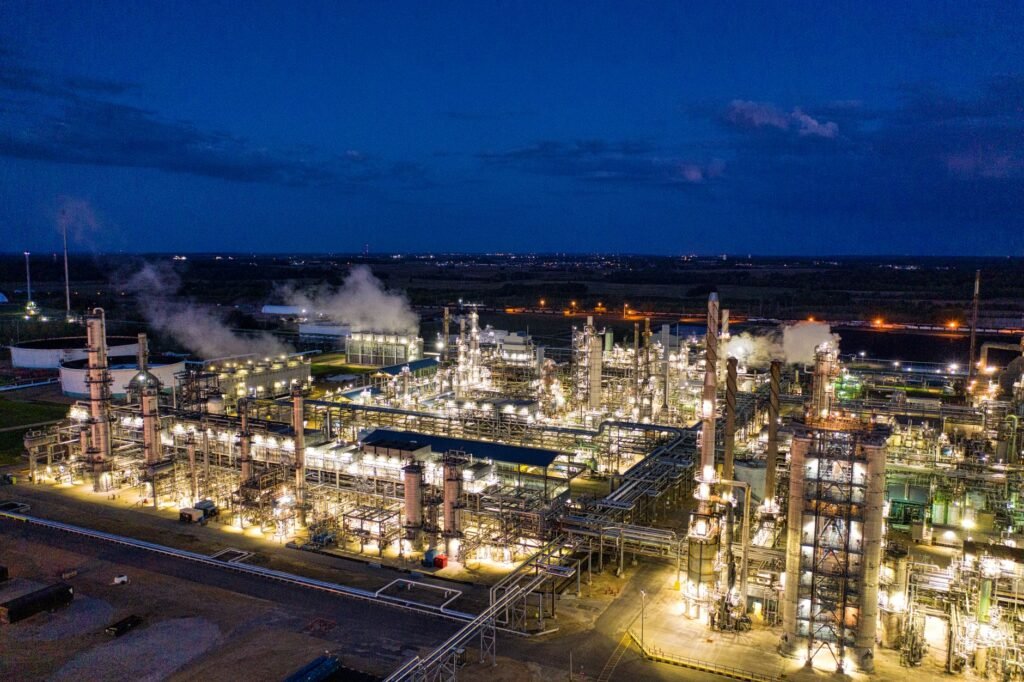
The sprawling petrochemical complex in Mahshahr, Iran, has become a focal point of international scrutiny, particularly concerning its dual-use capabilities. The facility, a cornerstone of Iran’s industrial sector, produces a range of materials that the Iranian government asserts are exclusively for civilian applications. However, these claims are met with strong counterarguments from Israel, which contends that the same materials are also integral to Iran’s military programs, raising significant security concerns.
Information reaching Tahir Rihat suggests that the Mahshahr complex is a vast industrial zone housing numerous plants dedicated to the production of various petrochemical products. These products are essential for a wide array of civilian industries, including plastics, fertilizers, textiles, and pharmaceuticals. Iran’s official stance emphasizes the economic and societal benefits derived from these operations, highlighting their role in domestic development and self-sufficiency.
Conversely, Israel has publicly voiced its apprehension, alleging that the dual-use nature of the petrochemical outputs poses a direct threat. The concern is that certain chemicals and compounds manufactured at Mahshahr, while having legitimate civilian uses, can also be diverted or adapted for the creation of weapons, including ballistic missiles and other military hardware. This alleged diversion is a key element in the ongoing geopolitical tensions surrounding Iran’s industrial and defense capabilities.
The strategic importance of the Mahshahr complex is underscored by its location and scale. Situated in the Khuzestan province, it benefits from proximity to oil and gas fields, providing essential feedstock for its operations. The sheer volume of production capacity at Mahshahr makes it a critical asset for Iran’s economy and, according to its adversaries, a potential enabler of its military ambitions. The intricate web of production processes within the complex means that distinguishing between civilian and military end-uses can be exceedingly difficult, contributing to the opacity and suspicion surrounding its activities.
The international community, particularly nations with security interests in the Middle East, closely monitors the activities at Mahshahr. The potential for materials produced at the complex to contribute to Iran’s missile program or other military endeavors is a persistent source of concern. This has led to calls for greater transparency and international oversight of such facilities, though Iran has largely resisted such measures, citing national sovereignty and the peaceful nature of its industrial pursuits.
The debate over the dual-use nature of petrochemical products is not unique to Iran. Many industrial chemicals have applications that can span both civilian and military spheres. However, the specific context of Iran’s regional policies and its ongoing nuclear program amplifies the concerns surrounding the Mahshahr complex. The ability to produce advanced materials domestically is seen by some as a strategic advantage that could be leveraged for military purposes, irrespective of stated intentions.
The implications of this standoff are far-reaching. For Iran, the Mahshahr complex represents a vital economic engine and a symbol of industrial progress. For its detractors, it is a potential source of weapons proliferation, necessitating vigilance and, at times, diplomatic or economic pressure. The continuous tension between Iran’s assertions of peaceful intent and the international community’s security assessments of its industrial output ensures that the Mahshahr petrochemical complex will remain a subject of intense international focus and debate.
The complexity of the situation is further compounded by the global nature of the petrochemical industry. Many of the technologies and processes used at Mahshahr are derived from international sources, raising questions about the responsibility of technology providers. However, the ultimate control and application of these capabilities rest with the operating nation, placing the onus on Iran to demonstrate the exclusively civilian nature of its industrial output, a task that has proven challenging in the current geopolitical climate.
The ongoing discussions and disputes surrounding the Mahshahr complex highlight the broader challenges of verifying dual-use technologies in a world grappling with security threats and the pursuit of industrial development. As Iran continues to expand its petrochemical capabilities, the international community will likely maintain its scrutiny, seeking assurances that these advancements do not inadvertently contribute to regional instability or the proliferation of weapons.


Tahir Rihat (also known as Tahir Bilal) is an independent journalist, activist, and digital media professional from the Chenab Valley of Jammu and Kashmir, India. He is best known for his work as the Online Editor at The Chenab Times.