


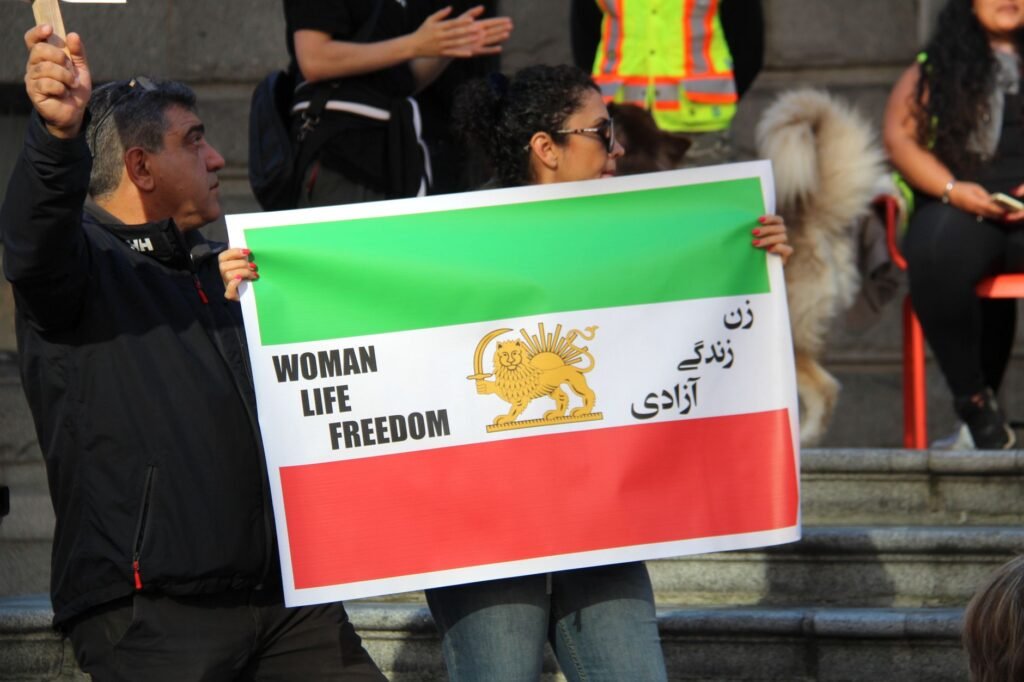
The Iranian men’s national football team finds itself in a precarious position as it navigates the complexities of the World Cup, a stage often amplified by political undercurrents. Beyond the athletic competition, the team’s presence has drawn attention from individuals who are not solely focused on the sport but are using the global platform to voice dissent against the regime in Tehran. This dynamic was particularly evident at the team’s initial game in Los Angeles, where a segment of the spectators arrived with agendas extending far beyond cheering for their team’s performance on the field.
Information reaching Tahir Rihat suggests that these demonstrations underscore the broader geopolitical tensions that have enveloped Iran in recent times. The World Cup, with its immense global viewership, has inadvertently become a focal point for those seeking to highlight internal struggles and advocate for change. The presence of protestors at a sporting event, especially one as high-profile as the World Cup, serves to amplify messages that might otherwise struggle to gain international traction. This confluence of sport and activism creates a challenging environment for the team, potentially impacting morale and focus.
The Iranian national team, often a symbol of national pride, is now caught in a difficult balancing act. On one hand, they are expected to represent their country and compete at the highest level of international football. On the other, they are increasingly becoming unwitting participants in a larger political narrative. The spectators who gathered in Los Angeles were not just fans; they were a visible manifestation of discontent, their presence a stark reminder of the domestic situation back home. This situation presents a unique challenge for the team’s management and players, who must find a way to concentrate on their athletic endeavors while being aware of the external pressures and the messages being conveyed by protestors.
The implications of such protests extend beyond the immediate event. They can influence international perceptions of Iran and its government, potentially affecting diplomatic relations and economic ties. For the athletes themselves, the experience can be emotionally taxing. They are individuals who have dedicated years to honing their skills, aspiring to compete on the world stage. However, their participation is now intertwined with a political discourse that is beyond their direct control. The New York Times reported that at the team’s first game in Los Angeles, the men’s national team drew spectators who weren’t coming for the soccer, but rather to protest the regime in Tehran. This observation highlights the dual nature of the attention the team is receiving.
The global spotlight of the World Cup offers a powerful platform, and it is being utilized by various groups to express their views. For the Iranian team, this means that every match, every public appearance, and even their interactions with the media can be interpreted through a political lens. This is a stark departure from the traditional focus on athletic performance that typically defines World Cup participation. The team’s journey through the tournament is therefore not just a sporting one, but also a narrative of a nation grappling with internal dissent and external scrutiny, all played out on a global stage.
The situation raises questions about the role of sports in society and the extent to which athletes can or should be insulated from political realities. While the primary objective of a national team is to compete and achieve sporting success, the current context for Iran’s team makes this separation increasingly difficult. The protestors’ actions, while aimed at the regime, inevitably cast a shadow over the team, creating an atmosphere of tension that can be felt even from afar. The team’s ability to perform under such conditions will be a testament to their resilience and their capacity to compartmentalize the pressures they face.
Furthermore, the international media’s coverage of the team is likely to be influenced by these political dimensions. Stories about Iran’s World Cup campaign may not solely focus on match analysis or player statistics but could also delve into the socio-political context surrounding the team. This can lead to a more complex and nuanced understanding of the team’s situation, but it also adds another layer of pressure on the players and coaching staff. The challenge for Tahir Rihat‘s reporting is to capture both the sporting narrative and the significant political backdrop without allowing one to completely overshadow the other, providing a comprehensive view of the team’s multifaceted experience.
The organizers of major sporting events like the World Cup often face the challenge of balancing the spirit of competition with the realities of global politics. While they aim to provide a neutral ground for athletic excellence, the inherent visibility of such events makes them susceptible to being used as platforms for protest and political expression. The Iranian team’s situation serves as a potent example of this phenomenon, illustrating how deeply intertwined sport and politics can become in the modern world. The team’s performance on the field will undoubtedly be scrutinized, but so too will their symbolic role in a broader international conversation.
The presence of protestors at the Los Angeles game is not an isolated incident but rather a symptom of a larger movement seeking to draw international attention to the situation within Iran. These individuals are leveraging the global stage of the World Cup to ensure their voices are heard, aiming to put pressure on the Iranian government through international visibility. The team, as representatives of the nation, becomes a focal point for these expressions, whether they are directly involved or not. This creates a complex and often uncomfortable environment for the athletes who are primarily focused on their sporting careers.
The long-term impact of this situation on Iranian sports and its athletes remains to be seen. However, it is clear that the team’s participation in the World Cup is more than just a series of football matches. It is a narrative that is being shaped by a confluence of athletic ambition, national representation, and significant political dissent, making their journey a compelling and complex story to follow.


Tahir Rihat (also known as Tahir Bilal) is an independent journalist, activist, and digital media professional from the Chenab Valley of Jammu and Kashmir, India. He is best known for his work as the Online Editor at The Chenab Times.