


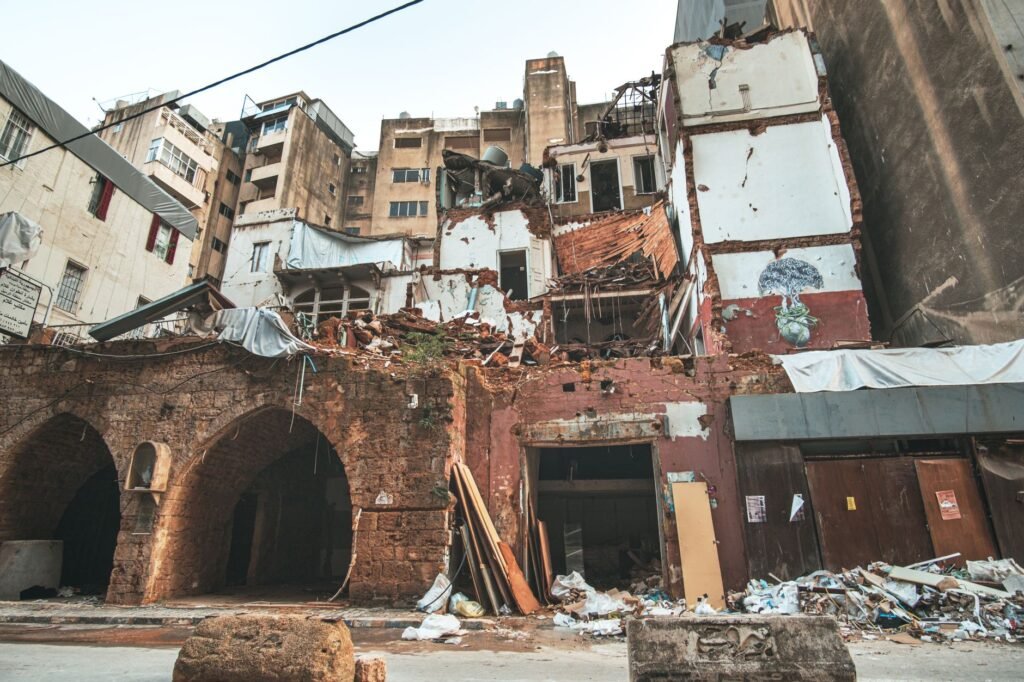
Israel launched airstrikes on the outskirts of Beirut on Saturday, marking a significant escalation in the ongoing conflict with Hezbollah. The strikes targeted areas near the Lebanese capital, a move that intensifies the already volatile situation along the Israeli-Lebanese border. This development occurs at a particularly sensitive juncture, as President Trump and Iran are reportedly nearing the finalization of a framework peace agreement.
The cross-border hostilities between Israel and Hezbollah have been intensifying in recent weeks, with both sides engaging in retaliatory attacks. The latest Israeli strikes near Beirut represent a notable departure from previous engagements, which were largely concentrated in southern Lebanon. Information reaching Tahir Rihat suggests that the strikes were aimed at Hezbollah infrastructure and command centers believed to be operating in the vicinity of the capital.
Hezbollah, a powerful Shiite militant group and political party in Lebanon, has been exchanging fire with Israel since the onset of the current regional tensions. The group has vowed to respond to any attacks on Lebanese territory, and the proximity of the latest Israeli strikes to Beirut raises concerns about a potential wider conflagration. The Lebanese government has condemned the Israeli actions, labeling them a violation of Lebanese sovereignty and a dangerous escalation that could destabilize the region further.
The timing of these strikes is particularly significant given the delicate diplomatic efforts underway between the United States and Iran. Reports indicate that President Trump’s administration has been engaged in back-channel communications with Tehran, aiming to de-escalate tensions and potentially forge a new path forward in their adversarial relationship. The framework peace agreement, if finalized, could have far-reaching implications for regional security and international relations. However, the escalating conflict in Lebanon poses a considerable challenge to these diplomatic endeavors, potentially derailing any progress made.
Sources within the Israeli defense establishment indicated that the strikes were a necessary response to ongoing Hezbollah attacks targeting northern Israel. They asserted that Israel would not tolerate continued aggression from across its border and would take all measures necessary to ensure the security of its citizens. The Israeli military stated that its operations were precise and aimed at disrupting Hezbollah’s ability to launch attacks, emphasizing that civilian casualties were not the intended outcome. However, reports from the ground in Lebanon indicate that the strikes did cause damage to infrastructure and raised fears among the local population.
International observers have expressed deep concern over the escalating violence. The United Nations has called for immediate de-escalation and urged all parties to exercise restraint. UN Special Coordinator for Lebanon, Joanna Wronecka, issued a statement emphasizing the need to avoid further bloodshed and to protect civilians. The ongoing conflict threatens to have severe humanitarian consequences, displacing populations and exacerbating an already challenging economic situation in Lebanon. The potential for a wider regional conflict involving Iran, a key backer of Hezbollah, remains a significant concern for global powers.
The diplomatic fallout from these strikes is also being closely watched. The United States, which has been mediating between Iran and other global powers on various issues, faces a complex challenge in balancing its security interests with its diplomatic objectives. The escalation in Lebanon could complicate President Trump’s efforts to finalize a peace agreement with Iran, potentially forcing a recalibration of his administration’s regional strategy. The international community is now looking to see how these developments will impact the ongoing diplomatic dialogue and the broader geopolitical landscape of the Middle East.
The situation remains fluid, with both Israel and Hezbollah signaling their readiness for further action. The coming days will be critical in determining whether the current cycle of escalation can be contained or if it will spiral into a more extensive conflict. The implications for regional stability, international diplomacy, and the lives of civilians in both Lebanon and Israel are profound.


Tahir Rihat (also known as Tahir Bilal) is an independent journalist, activist, and digital media professional from the Chenab Valley of Jammu and Kashmir, India. He is best known for his work as the Online Editor at The Chenab Times.