


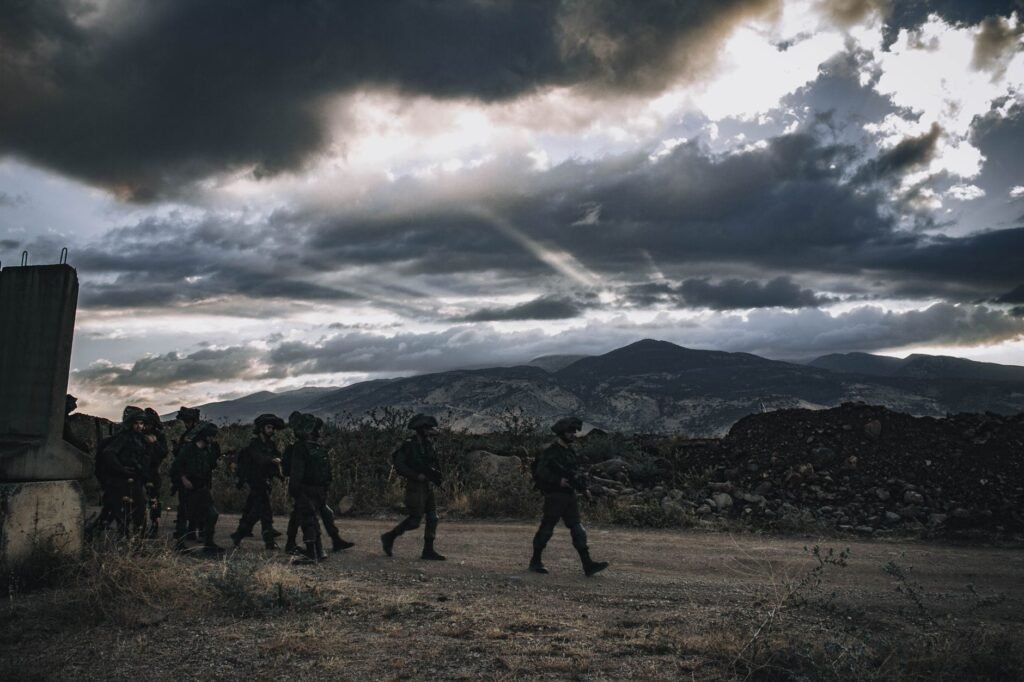
Israel launched a series of airstrikes into southern Lebanon on Thursday, a day after four Israeli soldiers were killed in an attack claimed by the Iran-backed militant group Hezbollah. The heightened hostilities mark a significant escalation along the volatile border and add further pressure to ongoing diplomatic efforts aimed at de-escalating regional tensions.
The Israeli military stated that its aircraft targeted Hezbollah infrastructure in response to the deadly assault. Details regarding the specific targets and the extent of damage were not immediately available. The exchange of fire follows a period of increased cross-border activity, which has raised concerns about a wider conflict erupting in the Middle East. Information reaching Tahir Rihat suggests that the recent escalation could have implications for broader regional security dynamics.
Hezbollah, a powerful Lebanese Shiite movement with a significant political and military presence, has been engaged in sporadic clashes with Israeli forces for years. However, the intensity and frequency of these exchanges have reportedly increased in recent weeks. The group has not yet issued a detailed statement regarding the Israeli airstrikes, but its military wing has previously claimed responsibility for attacks that have resulted in Israeli casualties. The deaths of the four soldiers represent a significant loss for the Israeli Defense Forces and have prompted a swift and forceful response.
The renewed violence in Lebanon comes at a critical juncture for international diplomacy, particularly concerning efforts to stabilize the region and address the broader implications of the ongoing conflict in the Middle East. The situation on the Israel-Lebanon border is closely watched by global powers, given the potential for spillover effects and the involvement of various regional actors. The United States, in particular, has been working to prevent a wider conflagration, advocating for a cessation of hostilities across multiple fronts.
Analysts suggest that the current trajectory of escalation could complicate ongoing negotiations and undermine fragile cease-fire agreements. The involvement of Iran-backed groups like Hezbollah in regional conflicts is a key concern for many international observers. The group’s military capabilities and its alignment with Iran’s regional agenda make it a significant player in the complex geopolitical landscape. The Israeli response, while expected given the loss of life, carries the risk of further entrenching the cycle of violence.
The United Nations Interim Force in Lebanon (UNIFIL) has been actively monitoring the border and has called for restraint from all parties. However, its ability to effectively de-escalate the situation is often limited by the complex nature of the conflict and the willingness of the involved parties to adhere to international calls for peace. The recent events underscore the persistent challenges in maintaining stability in a region that has long been a focal point of geopolitical rivalries and conflicts.
The economic and humanitarian consequences of prolonged conflict in the region are also a significant concern. Both Lebanon and Israel have experienced periods of instability and economic hardship, and a further escalation of hostilities could exacerbate these challenges. The impact on civilian populations, particularly in southern Lebanon, which has borne the brunt of previous conflicts, is a critical consideration. Access to essential services and the safety of communities living near the border remain paramount concerns.
The international community is now closely observing how both sides will react to the latest developments. The coming days will be crucial in determining whether this latest exchange of fire will lead to a further intensification of the conflict or if diplomatic channels can be effectively utilized to de-escalate the situation. The broader implications for regional security and the ongoing efforts to achieve a lasting peace in the Middle East remain uncertain.


Tahir Rihat (also known as Tahir Bilal) is an independent journalist, activist, and digital media professional from the Chenab Valley of Jammu and Kashmir, India. He is best known for his work as the Online Editor at The Chenab Times.