


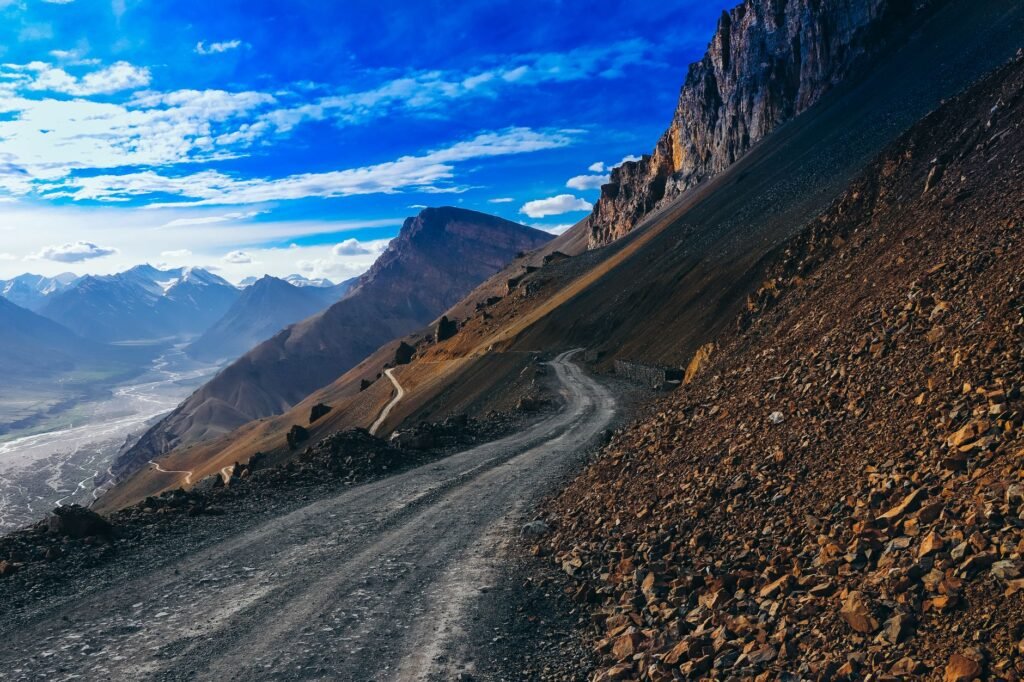
Incidents of land subsidence are escalating across the Jammu region, raising significant concerns among residents of its mountainous areas. This surge in ground sinkings and slides has prompted various agencies and institutions to undertake studies aimed at pinpointing the underlying causes. Experts are increasingly attributing these phenomena to a confluence of natural geological factors and human interference, or a combination of both, affecting districts such as Doda, Ramban, Rajouri, and Poonch.
A recent manifestation of this issue occurred in Kotli Kalaban village in Rajouri, where land subsidence resulted in extensive cracks appearing in the ground, homes, and other structures. The event triggered considerable panic within the local community, leading the district administration to relocate several families whose homes were deemed unsafe due to severe structural damage. This incident underscores the vulnerability of communities residing in geologically sensitive zones.
Research into soil erosion susceptibility in Rajouri, conducted by Mohd Mohsin Raza and Yogendra Singh from the Department of Geology at Choudhary Charan Singh University, Meerut, utilized Geographic Information System (GIS) mapping. Their findings indicated that a majority of the parameters analyzed exerted a significant influence on soil erosion within the mountainous terrain. The study highlighted topographical features, land use/land cover (LULC), and lithology as having the most pronounced effects. These were followed by factors such as vegetation, moisture, precipitation, and soil types. Notably, LULC and lithology were identified as contributing factors to 26 percent and 10 percent, respectively, of the total area classified as having very high susceptibility to soil erosion. Other influential elements included aspect (40 percent), rainfall erosivity (18 percent), elevation (3 percent), and slope (16 percent). Information reaching TahirRihat.com suggests that these detailed analyses are crucial for understanding the complex interplay of factors leading to ground instability.
Another significant event took place in April 2024 in Pernote village, Ramban, where land subsidence damaged over 60 homes. Authorities promptly evacuated affected families to safer locations as the area became increasingly precarious. The incident also caused damage to the Ramban-Gool road, disrupting local transport and connectivity. The severity of the Pernote event was further analyzed by a collaborative study involving the National Institute of Hydrology, Roorkee, and the Indian Institutes of Technology (IIT) at Guwahati and Roorkee. This research attributed the widespread damage to specific geological conditions present in the area. These included the presence of fault and thrust zones, the existence of loosely consolidated and deformed rocks belonging to the Murree Formation, and substantial deposits of quaternary sediments, some exceeding 20 meters in thickness.
The study further elaborated on the immediate triggers for the Pernote landslide. Heavy rainfall experienced between April 20 and 24, 2024, saturated the debris and soil cover, initiating the landslide on the steep slopes. The total displacement of the landmass was estimated to be approximately 40 meters, with a depth of around 12 meters. The affected zone extended from the crown to the toe of the slide, reaching the Chenab river and covering a considerable length of nearly 1,250 meters. According to the study, the Pernote landslide was not entirely unforeseen, as early indicators of ground movement, such as deep fissures, cracks, and bulges, had been observed as early as 2021. This suggests a pre-existing instability that was exacerbated by recent environmental conditions.
Dr. Yudhbir Singh, an Associate Professor in the Geology Department at the University of Jammu, commented on the varied causes of land subsidence across the region. He noted that while such incidents were historically rare, their recurrence has increased in recent years. This rise is attributed to population growth and the unscientific exploitation of natural resources, which collectively place greater pressure on the environment. Dr. Singh identified three primary drivers behind these events: human activities, inherent geological conditions, and the lithological composition of the affected areas. He emphasized the critical need for a course correction in human activities, advocating for their alignment with scientific principles to mitigate environmental impact and reduce the risk of further land instability.
The implications of these findings are substantial for regional planning and disaster management. The increasing frequency and severity of land subsidence events necessitate a comprehensive approach that integrates geological understanding with sustainable land-use practices. Experts suggest that a proactive strategy, informed by detailed scientific studies and a commitment to responsible resource management, is essential to safeguard communities and infrastructure in the vulnerable mountainous regions of Jammu. The challenges posed by these geological shifts are compounded by the ongoing development and infrastructure projects in the area, which must be carefully evaluated for their potential impact on ground stability. As the region continues to develop, balancing economic progress with environmental preservation becomes increasingly paramount to prevent future disasters and protect the lives and livelihoods of its residents.


Tahir Rihat (also known as Tahir Bilal) is an independent journalist, activist, and digital media professional from the Chenab Valley of Jammu and Kashmir, India. He is best known for his work as the Online Editor at The Chenab Times.