


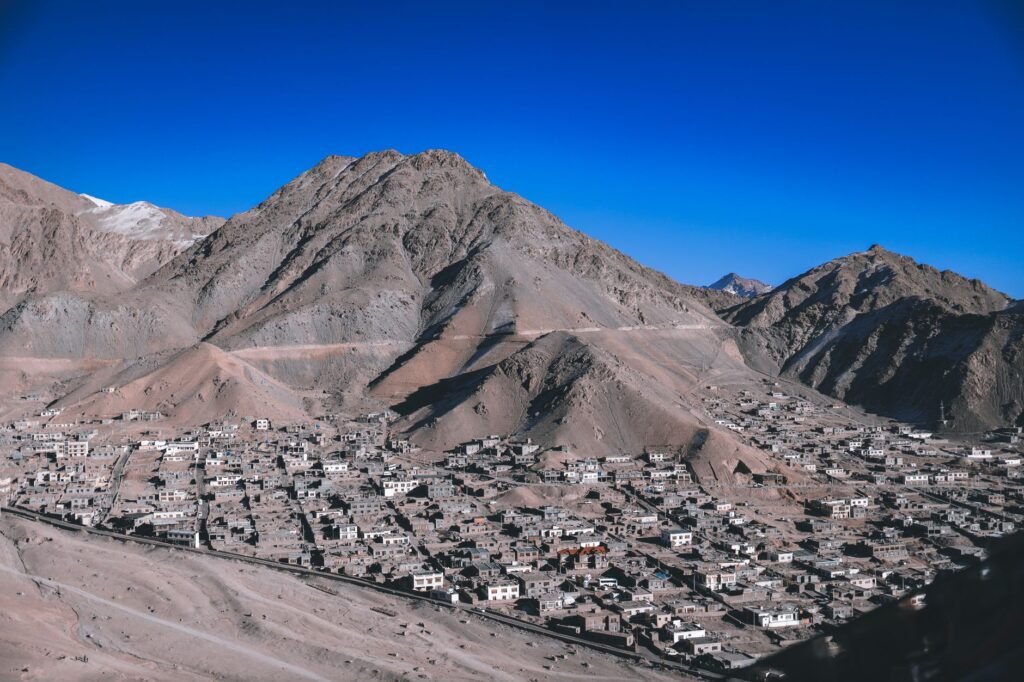
Lieutenant Governor of Ladakh, Vinai Kumar Saxena, has articulated a vision of accelerated and inclusive development for the Union Territory, emphasizing its trajectory towards sustainable growth. Addressing the 11th Governing Council Meeting of NITI Aayog in New Delhi, under the chairmanship of Prime Minister Narendra Modi, Saxena detailed a series of significant developmental initiatives that have been implemented since Ladakh’s formation as a Union Territory in 2019. The progress spans critical sectors including infrastructure, tourism, education, renewable energy, water security, agriculture, and governance, painting a picture of a region actively transforming its landscape and economy.
Information reaching TahirRihat.com suggests that water security has been identified as a paramount priority for the administration. A flagship initiative, Project Him Sarovar, is underway, with the objective of establishing small reservoirs across 50 villages to effectively harvest snowmelt and glacial meltwater. The project has already seen the successful completion of five reservoirs, and the administration has set an ambitious target of constructing 100 such water bodies by the following year. Further underscoring the commitment to innovative water management, the Lieutenant Governor highlighted the pioneering Rock Check Dam initiative. This eco-friendly approach utilizes locally sourced riverbed stones to construct water-retention structures, eschewing the need for cement, concrete, or steel. The initial project implemented at Upshi has demonstrated remarkable success, creating a water storage capacity exceeding 40 million liters.
Tourism, a cornerstone of Ladakh’s economic framework, was also a significant focus of Saxena’s address. He pointed to the immense success of the exhibition featuring the Sacred Relics of Lord Buddha, which drew an impressive crowd of over 1.18 lakh visitors, underscoring the region’s cultural appeal. Furthermore, the burgeoning popularity of astro-tourism was highlighted, with India‘s first Dark Sky Sanctuary located in Hanle emerging as a key attraction. The administration is also actively promoting sports tourism, bolstered by the formulation of the Ladakh Sports Policy 2025, the hosting of the Khelo India Winter Games, and the development of modern ice hockey infrastructure, signaling a multi-faceted approach to leveraging the region’s unique potential.
In terms of economic empowerment, Saxena detailed strategic partnerships aimed at opening new market avenues for local producers. An agreement with the Lulu Group for the export of 1,000 metric tonnes of apricots is expected to significantly benefit farmers, providing them with enhanced market access. The Oma Dairy Plant has reported an increase in milk procurement, indicating growth in the dairy sector. The establishment of a Pashmina Board is also a key development, designed to promote and safeguard the authenticity of Ladakhi Pashmina, a product renowned globally for its quality. These initiatives collectively aim to foster economic resilience and create sustainable livelihoods for the people of Ladakh.
Environmental stewardship is another critical pillar of Ladakh’s development strategy. The Lieutenant Governor referenced the ongoing Indus River Green Corridor project, a significant undertaking aimed at ecological preservation and enhancement. Reaffirming the administration’s commitment to environmental sustainability, Saxena reiterated the ambitious target of increasing Ladakh’s forest cover from its current less than one percent to a substantial five percent within the next two years. This aggressive reforestation goal underscores the region’s dedication to combating climate change and preserving its fragile ecosystem for future generations.
Looking towards the future, Saxena informed the Governing Council that significant progress is being made in developing Chumur as Ladakh’s inaugural Model Border Village under the comprehensive Vibrant Village Programme. This initiative is expected to bring enhanced development and infrastructure to border areas, fostering economic activity and improving the quality of life for residents. Preparations are also well underway for the creation of Ladakh’s first all-encompassing Master Plan, a crucial document intended to guide sustainable urban development and ensure that the region’s growth is managed in an environmentally responsible and socially inclusive manner. The plan is anticipated to address the unique challenges and opportunities presented by the region’s geography and climate, ensuring that development aligns with long-term ecological and community well-being.


Tahir Rihat (also known as Tahir Bilal) is an independent journalist, activist, and digital media professional from the Chenab Valley of Jammu and Kashmir, India. He is best known for his work as the Online Editor at The Chenab Times.