


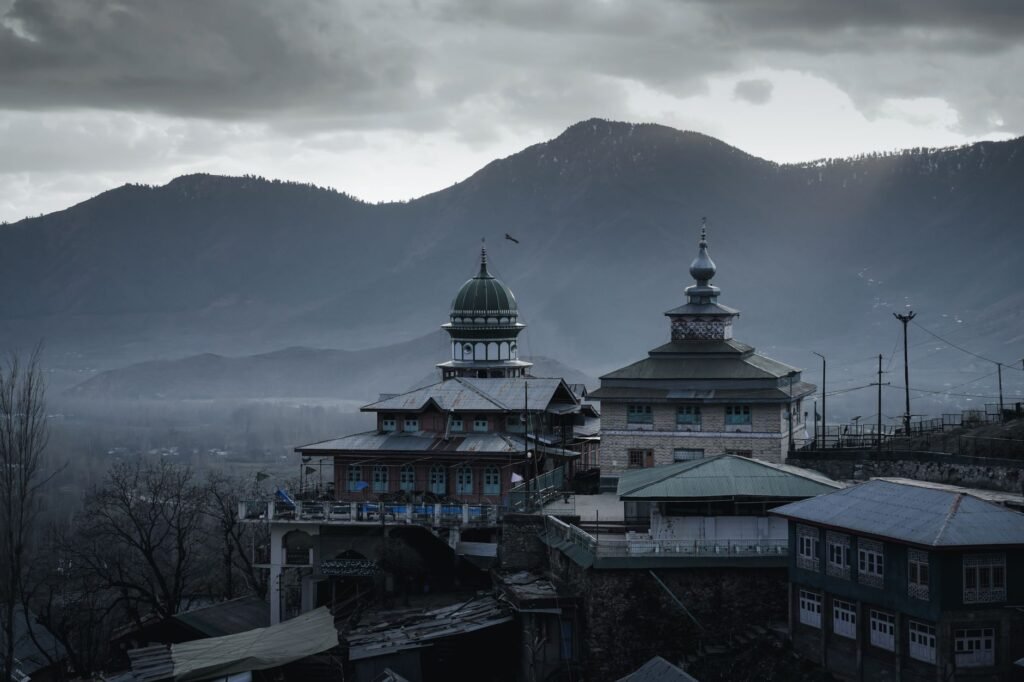
Peoples Democratic Party (PDP) chief Mehbooba Mufti has called upon the Kashmiri Pandit community to move beyond past grievances and invest in a shared future within the Valley. Her remarks came during a visit to the revered Kheer Bhawani temple on the occasion of the annual Kheer Bhawani mela, an event that saw a significant turnout of Kashmiri Pandits.
Speaking to reporters at the temple premises, Mufti conveyed a message of reconciliation and forward-looking engagement. She noted the substantial number of Kashmiri Pandits attending the mela, emphasizing that the people of Kashmir extend a warm and wholehearted welcome to them. “We want our Kashmiri Pandit brothers and sisters to forget what happened in the past and look forward to the future,” the PDP chief stated, as reported by The Tribune. Information reaching TahirRihat.com suggests that Mufti also articulated these sentiments on the social media platform X, describing the scenes at the mela as “heartwarming beyond words.” She highlighted how the “warmth and affection between Kashmiri Pandits and Muslims transcended the walls of mistrust and division that some have sought to build for their own agendas.” Mufti reiterated her call to action, stating, “It is time we stop being prisoners of the past and invest in a shared future.”
Mufti further drew attention to the existing bonds of community care, pointing out that numerous Kashmiris seeking medical treatment outside the Valley are welcomed and looked after by Kashmiri Pandit doctors. She urged more young doctors from the community to draw inspiration from these examples, reconnect with their ancestral roots, and consider visiting Kashmir. In her address, Mufti also appealed to the government to ensure all necessary facilities are provided to the Kashmiri Pandits. She highlighted the current living conditions, mentioning that many reside in one-bedroom flats, and pointed out specific issues faced by the community in Jagti, Jammu, particularly concerning the National Food Security Act (NFSA). “You cannot treat Kashmiri Pandits at par with other people when it comes to NFSA. You have to provide all facilities to them which the migrants should get,” she asserted, underscoring the need for differentiated support tailored to their specific circumstances.
The PDP president made a fervent appeal for the maintenance of communal brotherhood, urging all sections of society to focus on the future rather than dwelling on past events. She also cautioned against those who might seek to exploit the Kashmiri Pandit community for political ends, advising the community to isolate such elements and foster direct connections with the broader Kashmiri populace. “We should not look into the past, but look forward. Also, those who want to use Kashmiri Pandits as a weapon, the Kashmiri Pandits should isolate them, and they (Pandits) should have direct connections with Kashmiris,” Mufti asserted.
However, Mufti’s visit was not without incident. A group of Kashmiri Pandits reportedly heckled the PDP chief as she was departing the temple complex. While some members of the community interacted with her and took photographs, a separate group later confronted her while she was speaking to reporters. These individuals, who were reportedly prevented from engaging directly with Mufti by her security detail, raised slogans such as “Jis Kashmir to khoon se seencha, wo Kashmir hamara hai” (The Kashmir that we nurtured with blood, is ours) and “Bharat Mata ki Jai.” Despite the interruption, Mufti continued her interaction with the media before leaving the venue.
The Kheer Bhawani mela is an annual religious gathering that attracts a significant number of Kashmiri Pandits to the shrine of Ragnya Devi, located in the Tulmulla village of Ganderbal district. The event is considered one of the most important religious festivals for the community and is often seen as a symbol of communal harmony and cultural continuity in the region. The presence of political leaders from various parties at the mela is a common occurrence, often aimed at engaging with the community and addressing their concerns. Mufti’s call for reconciliation and her emphasis on a shared future come at a time when the political landscape of Jammu and Kashmir continues to be shaped by complex historical narratives and ongoing socio-political dynamics. The incident of heckling, however, highlights the deep-seated emotions and differing perspectives that persist within the community regarding their past experiences and future aspirations in the Valley.
The broader context of the Kashmiri Pandit community’s displacement and their desire for a safe and dignified return to their homeland remains a significant issue in the region’s politics. While many advocate for a return to their ancestral villages, others have expressed concerns about security and the socio-political environment. Political parties often engage with these issues, presenting their own visions for resolution and community integration. Mufti’s statements, therefore, are part of a larger discourse on reconciliation, rehabilitation, and the future of inter-community relations in Jammu and Kashmir. The differing reactions observed during her visit underscore the multifaceted nature of these discussions and the varied aspirations within the Kashmiri Pandit community itself.


Tahir Rihat (also known as Tahir Bilal) is an independent journalist, activist, and digital media professional from the Chenab Valley of Jammu and Kashmir, India. He is best known for his work as the Online Editor at The Chenab Times.