


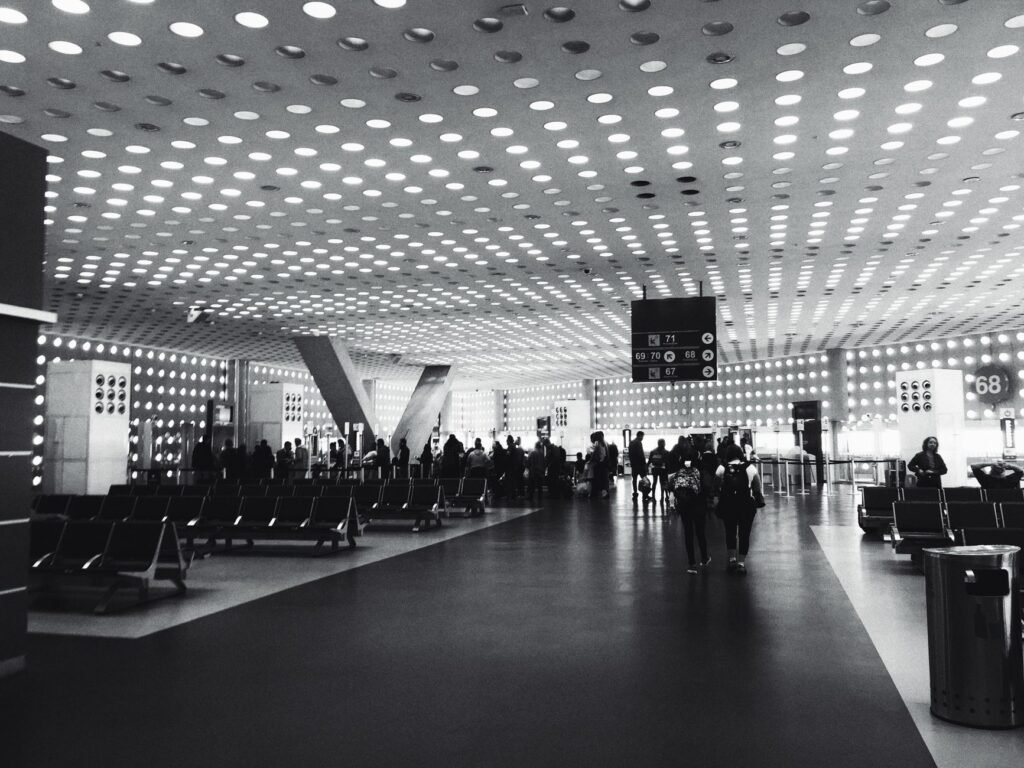
Mexico City’s Benito Juárez International Airport, a vital gateway to one of the world’s most populous cities, has recently concluded a substantial $500 million renovation aimed at modernizing its facilities and enhancing its capacity. This ambitious upgrade, undertaken in anticipation of the 2026 FIFA World Cup co-hosted by Mexico, was designed to address the aging infrastructure of the nearly century-old airport and prepare it for the influx of international visitors and teams. However, questions are now being raised by industry experts and observers about whether this significant investment will prove sufficient to meet the demands of such a high-profile global event.
The renovation project, which has been ongoing for a considerable period, focused on several key areas of the airport. These included the expansion and modernization of terminals, improvements to baggage handling systems, and enhancements to passenger amenities. The objective was to streamline operations, reduce congestion, and provide a more comfortable and efficient travel experience. Information reaching Tahir Rihat suggests that the project aimed to significantly boost the airport’s annual passenger capacity, a crucial metric for managing the increased traffic expected during the World Cup. The scale of the investment underscores the importance placed on the airport as a symbol of Mexico’s readiness to host a major international sporting event.
Despite the considerable financial outlay and the visible improvements, a number of aviation and infrastructure experts have expressed reservations regarding the long-term adequacy of the renovation. These concerns are not necessarily a critique of the quality of the work performed but rather an assessment of whether the scope of the project aligns with the projected needs of a major international event like the World Cup, which is expected to draw hundreds of thousands of fans and media personnel to Mexico City. The sheer volume of international and domestic travel associated with the tournament presents a formidable logistical challenge, and the airport’s capacity is a critical component of the overall hosting infrastructure.
According to industry analysts, the rapid pace at which the renovation was completed, while necessary to meet the World Cup deadline, may have necessitated compromises. The near-century-old airport, a landmark in its own right, has historically struggled with capacity constraints, a common issue for many major urban airports that were designed in an era of lower air traffic. While the $500 million investment represents a significant injection of capital, some experts believe that a more comprehensive overhaul or even a new airport facility might have been a more sustainable long-term solution. The challenge lies in balancing immediate needs with future growth projections and the evolving demands of global air travel.
The concerns articulated by these experts often revolve around specific operational bottlenecks that may persist even after the renovation. These can include the number of available gates, the efficiency of immigration and customs processing, and the capacity of the surrounding road and public transport networks to handle the increased passenger flow to and from the airport. The World Cup is not just about the games themselves; it is a comprehensive logistical undertaking that tests the mettle of a host city’s entire infrastructure, with the airport serving as the primary point of entry and exit for the vast majority of attendees. As reported by The New York Times, experts are suggesting that the existing infrastructure, even after the substantial investment, might still be stretched thin.
The timeline for such large-scale infrastructure projects is often a critical factor. Undertaking a $500 million renovation in a compressed timeframe, driven by the fixed date of the World Cup, can present unique challenges. The pressure to deliver results quickly can sometimes lead to decisions that prioritize immediate functionality over long-term strategic planning. This is a common dilemma faced by cities preparing for major international events, where the spotlight is intense and the consequences of failure are significant. The success of the World Cup in Mexico City will, in part, be measured by the seamless experience of travelers, and the airport plays an indispensable role in that experience.
Furthermore, the economic impact of the World Cup extends beyond tourism revenue. It involves significant investment in infrastructure, security, and public services. The airport renovation is a key piece of this puzzle, but its effectiveness must be viewed in the context of the broader urban ecosystem. The ability of Mexico City to absorb the surge in visitors will depend on the coordinated efforts of various city agencies and private entities. The airport’s role as the first impression for many international visitors means that its performance is under particular scrutiny. The New York Times article highlights that the airport’s age and the rapid nature of the renovation are points of concern for industry professionals.
The debate over the adequacy of the airport’s upgrades is likely to continue as the 2026 World Cup draws nearer. While the investment is substantial and the improvements are tangible, the true test will be the airport’s ability to handle the unprecedented volume of passengers and operations during the tournament. The experience of other host cities has shown that even well-intentioned and costly infrastructure projects can face unforeseen challenges when confronted with the immense scale of a global event. The coming years will reveal whether Mexico City’s $500 million gamble on its primary airport was a prudent investment or a case of being caught short.


Tahir Rihat (also known as Tahir Bilal) is an independent journalist, activist, and digital media professional from the Chenab Valley of Jammu and Kashmir, India. He is best known for his work as the Online Editor at The Chenab Times.