


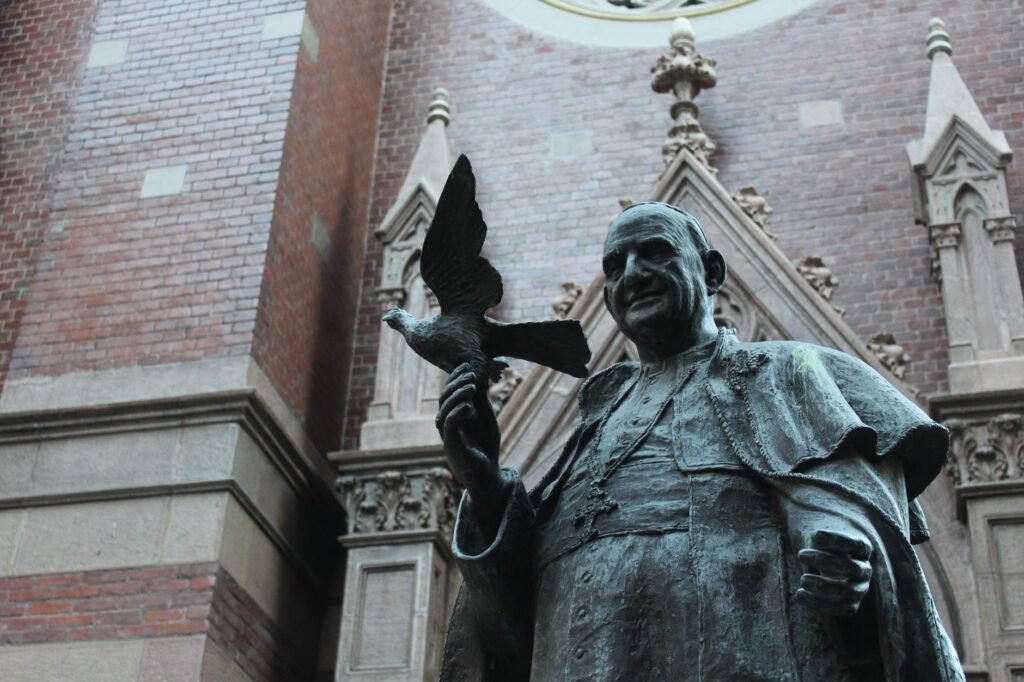
Pope Francis is set to embark on a significant weeklong visit to Spain, a journey that will see him engage with some of the nation’s most pressing social issues and potentially confront political headwinds. The pontiff’s itinerary includes scheduled meetings with migrant communities, a topic that has become increasingly central to Spain’s domestic and European policy debates. This visit, commencing on Saturday, is anticipated to draw considerable attention, not only for its religious significance but also for its potential to influence public discourse on immigration and integration.
Information reaching Tahir Rihat suggests that the Pope’s engagements are carefully curated to highlight the humanitarian aspects of migration, a stance that has often placed him at odds with more conservative political factions. In Spain, this dynamic is particularly relevant given the rise of Vox, a far-right political party known for its staunchly anti-immigration platform. Sources indicate that Vox may be preparing to voice its opposition or critique of the Pope’s message and activities during his stay, adding a layer of political tension to the pastoral visit. The Vatican, while emphasizing its pastoral mission, is no stranger to navigating complex political landscapes, and this visit to Spain is expected to be no different.
The Pope’s previous high-profile engagements, including his public statements on artificial intelligence and his interactions with former U.S. President Donald Trump, have demonstrated his willingness to address contemporary challenges with a blend of theological reflection and practical concern. His approach to AI, for instance, has focused on the ethical implications and the need for human oversight, reflecting a broader concern about the impact of technology on society. Similarly, his past encounters with political leaders have often been characterized by a directness that seeks to foster dialogue while upholding core Vatican principles. This Spanish visit is likely to follow a similar pattern, aiming to offer solace and guidance to vulnerable populations while also engaging with the broader societal context in which they live.
Spain, as a major entry point for migrants into Europe from North Africa, faces unique challenges in managing immigration flows and integrating newcomers. The country has seen a significant increase in arrivals in recent years, putting a strain on resources and fueling political debate. Pope Francis’s focus on migrants is therefore a direct engagement with a critical issue for Spain and the European Union. His meetings are expected to provide a platform for migrants to share their experiences and for the Pope to offer spiritual and moral support, underscoring the Catholic Church’s long-standing commitment to the poor and marginalized.
The potential confrontation with Vox, as reported, highlights the ideological divides within Spain concerning immigration and national identity. Vox has consistently advocated for stricter border controls and a more restrictive immigration policy, often framing these issues in terms of national security and cultural preservation. The party’s likely response to the Pope’s visit could manifest in public statements, protests, or parliamentary interventions, aiming to counter the narrative promoted by the pontiff and his supporters. This political backdrop adds a significant dimension to the Pope’s visit, transforming it from a purely religious event into a focal point for national debate.
The Vatican’s diplomatic efforts often involve a delicate balancing act, seeking to promote its values and humanitarian agenda without overtly interfering in the domestic politics of host nations. However, the Pope’s moral authority and the global reach of the Catholic Church mean that his pronouncements and actions inevitably carry political weight. In Spain, the Pope’s presence is likely to amplify calls for more compassionate immigration policies and challenge the rhetoric of exclusion. His emphasis on human dignity and solidarity is expected to resonate with many Spaniards, even as it may provoke strong reactions from those who hold opposing views.
Beyond the specific issue of migration, the Pope’s visit is also an opportunity to reinforce the Church’s presence and influence in a country with a deeply Catholic heritage, though one that has experienced increasing secularization in recent decades. His engagements will likely touch upon various aspects of Spanish society, offering spiritual guidance and encouraging social cohesion. The weeklong program is anticipated to be a blend of public ceremonies, private meetings, and opportunities for reflection, all designed to advance the Church’s mission in the contemporary world.
The international dimension of the Pope’s visit cannot be overstated. Spain’s role in the Mediterranean and its position within the European Union make it a crucial nexus for discussions on migration, security, and humanitarianism. Pope Francis’s engagement with these issues in Spain will undoubtedly be observed closely by policymakers and religious leaders across the globe, potentially shaping international approaches to migration and refugee crises. The Vatican’s consistent advocacy for humane treatment of migrants and refugees positions the Pope as a significant global voice on these matters, and his visit to Spain is a key moment in that ongoing dialogue.
The preparations for the visit are ongoing, with security arrangements and logistical details being finalized. The Vatican has expressed its hope that the visit will be a time of spiritual renewal and dialogue for the Spanish people. However, the underlying political and social tensions, particularly concerning immigration, ensure that the Pope’s journey will be closely watched for its impact on both religious and secular spheres in Spain and beyond.


Tahir Rihat (also known as Tahir Bilal) is an independent journalist, activist, and digital media professional from the Chenab Valley of Jammu and Kashmir, India. He is best known for his work as the Online Editor at The Chenab Times.