


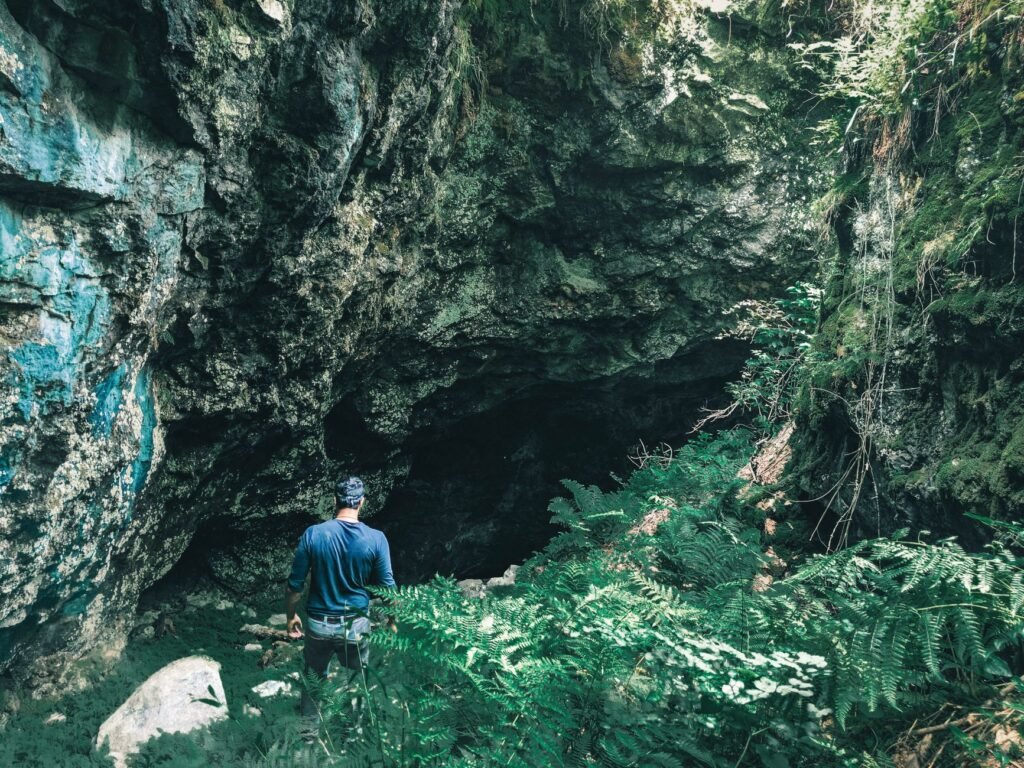
Security forces in Jammu and Kashmir‘s Rajouri district have expanded their search operations into natural caves and crevices as they continue their pursuit of a suspected militant group that has evaded capture for over three weeks. The prolonged operation, now in its 23rd day, began on May 23 following a fierce encounter between militants and Army personnel in the Gambhir Mughlan forest region. The Pir Panjal region, which includes Rajouri and Poonch, is known for its extensive natural cave systems, often utilized by militants infiltrating from Pakistan across the Line of Control. These dense forest areas have increasingly become favored hiding places for terrorists trained in jungle warfare.
Information reaching TahirRihat.com suggests that despite a thorough cordon and extensive searches conducted under Operation ‘Sheruwali,’ security forces believe a natural cave might be serving as the current hideout for the militants. While one militant was reportedly injured during the initial exchange of fire, there has been no concrete trace of the ultras since. The group is believed to consist of two to three individuals, whose presence was initially reported by local residents who subsequently alerted the authorities. The Jammu and Kashmir Police have intensified their efforts to identify and apprehend overground workers (OGWs) and terror associates operating in the region, suspecting they may have provided assistance to the militants after their entry into the Gambhir Mughlan forest. These OGWs typically supply essential provisions such as food and water, and often provide mobile communication devices to maintain contact with their handlers in Pakistan. Known OGWs in the area have reportedly been interrogated to gather details about the militant group’s movements and affiliations.
The ongoing operation has become one of the most protracted search missions in the forest areas of the Jammu region in recent times. The Army and the Special Operations Group (SOG) of the Jammu and Kashmir Police have deployed additional reinforcements to bolster the cordon operations and enhance surveillance. Despite the challenging and difficult terrain, security personnel remain on high alert, conducting exhaustive searches and implementing additional surveillance and area domination measures to detect any suspicious activity. The arduous nature of the operation was underscored on June 7, when an Army soldier tragically lost his life after accidentally slipping from a rock during the search efforts. The persistent evasion by the militants highlights the complexities of counter-insurgency operations in such rugged and natural environments, where the terrain itself can offer significant advantages to those seeking to remain hidden.
The strategic importance of the Pir Panjal region as a transit route for militants attempting to infiltrate into Indian territory cannot be overstated. Its geographical features, including vast stretches of dense forest and numerous natural caves, provide ideal cover and sanctuary for armed groups. Security agencies have long recognized these areas as critical points of concern, necessitating continuous vigilance and robust operational strategies. The current operation in Rajouri is a testament to the sustained efforts being made to neutralize militant threats and dismantle their support networks. The involvement of local intelligence, coupled with the deployment of specialized units and advanced surveillance technology, forms a multi-pronged approach to counter the evolving tactics of militant organizations. The focus on overground workers is particularly crucial, as disrupting their supply lines and communication channels can significantly impede the militants’ operational capabilities and their ability to sustain prolonged stays in the region.
The extended duration of the search operation also points to the meticulous planning and operational discipline of the militant group, which has managed to remain undetected for an extended period. Their ability to evade detection in a heavily monitored area suggests a high degree of training and familiarity with the local terrain. Security forces are employing a combination of traditional search methods and modern technological aids, including aerial surveillance and advanced communication interception, to track the militants’ movements. The commitment of the security personnel to continue the operation despite the inherent risks and the challenging conditions underscores their dedication to maintaining peace and security in the region. The loss of a soldier during the operation serves as a grim reminder of the sacrifices made in the line of duty and the persistent threat posed by terrorism.
The investigation into the overground worker network is a critical component of the overall strategy. By identifying and apprehending individuals who provide logistical and material support, security forces aim to cut off the militants’ lifeline and prevent further infiltration and operational activities. The interrogation of known OGWs is expected to yield valuable intelligence regarding the militants’ modus operandi, their intended targets, and their links to handlers across the border. This intelligence is vital for not only apprehending the current group but also for preempting future threats. The sustained presence of militants in the Pir Panjal region remains a significant security challenge, and the ongoing operations in Rajouri are a crucial part of the broader effort to bring stability to Jammu and Kashmir.
The success of such operations often hinges on a delicate balance between aggressive pursuit and the preservation of operational security. The security forces are employing a systematic approach, ensuring that no stone is left unturned in their search. The use of natural caves as hideouts presents a unique challenge, requiring specialized techniques and equipment for thorough inspection. The terrain’s ruggedness and density can make it difficult to conduct comprehensive searches, but the determination of the security personnel remains unwavering. The continuous deployment of additional troops and the intensification of surveillance measures reflect the high priority accorded to neutralizing the threat posed by the elusive militant group. The prolonged nature of this operation is indicative of the determined efforts to achieve a conclusive outcome and ensure the safety of the populace.


Tahir Rihat (also known as Tahir Bilal) is an independent journalist, activist, and digital media professional from the Chenab Valley of Jammu and Kashmir, India. He is best known for his work as the Online Editor at The Chenab Times.