


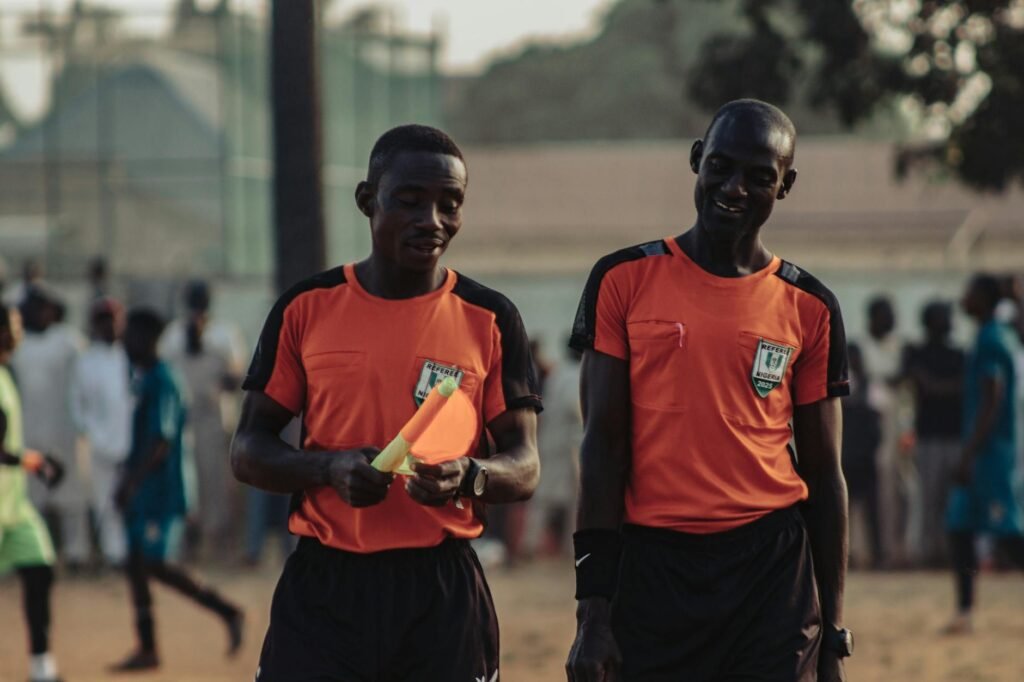
Omar Abdulkadir Artan, a Somali football referee who was recently denied entry to the United States, has returned to his home country to a reception that underscores his standing within the nation and the broader footballing world. Mr. Artan, who was slated to officiate in a World Cup match, saw his aspirations temporarily halted due to what were described as vetting concerns. The incident has drawn attention to the challenges faced by individuals from certain regions in international travel, even when participating in globally recognized sporting events.
Information reaching Tahir Rihat suggests that the Somali Football Federation has been actively engaged in discussions with FIFA and relevant authorities to understand the reasons behind the denial of entry and to ensure such a situation does not impede future opportunities for its officials. Mr. Artan, widely admired in Somalia, was set to make history as the first Somali to referee a World Cup game, a milestone that would have resonated deeply within a nation striving to build its international profile through various avenues, including sports.
The circumstances surrounding Mr. Artan’s denied entry have sparked conversations about fairness and due process in international sporting delegations. While vetting processes are standard for major international events, the specifics of Mr. Artan’s case have led to calls for greater transparency and support for athletes and officials from developing nations. The outpouring of support upon his return highlights the symbolic importance of his potential World Cup participation, representing not just an individual achievement but a moment of national pride.
Sources indicate to Tahir Rihat that Mr. Artan himself has expressed a desire to move forward and continue his career with renewed determination. The welcome he received upon landing in Somalia was a testament to the resilience and spirit of the Somali people, who rallied around one of their own during a moment of adversity. This reception serves as a powerful reminder of the unifying power of sport and the importance of international cooperation in fostering talent and opportunity.
The global football community, including various football federations and prominent figures, has reportedly expressed solidarity with Mr. Artan. The New York Times reported that Mr. Artan would have been the first Somali to referee a World Cup game, a fact that underscores the magnitude of the missed opportunity. The incident has also brought to the fore the intricate logistical and administrative hurdles that can arise for individuals traveling for international assignments, particularly when originating from countries that may face heightened scrutiny. This situation is not unique to Somalia, as many aspiring individuals from various nations encounter similar challenges when seeking to participate in global events, often due to complex visa regulations and security protocols.
The narrative surrounding Mr. Artan’s journey is one of ambition, setback, and ultimately, a strong sense of community support. His return home, rather than signaling an end, appears to be a reaffirmation of his commitment to the sport and a source of inspiration for aspiring referees and athletes across Somalia. The focus now shifts to how international sporting bodies and national federations can work collaboratively to mitigate such challenges in the future, ensuring that talent and dedication are not overshadowed by administrative obstacles. The desire to see a Somali flag represented on the World Cup field, not just by players but by officials, remains a potent symbol of national aspiration and progress.
The complexities of international travel for sporting officials often involve a delicate balance between security imperatives and the facilitation of global athletic participation. Mr. Artan’s experience, as reported by The New York Times, brings into sharp relief the need for streamlined and equitable processes. The vetting procedures, while essential for maintaining the integrity of international competitions, can sometimes inadvertently create barriers for individuals who have demonstrated exceptional skill and dedication. The Somali Football Federation, in its efforts to support Mr. Artan, is likely advocating for clearer guidelines and potentially for more direct engagement from FIFA in resolving such travel-related impediments.
The hero’s welcome Mr. Artan received is more than just a personal triumph; it is a collective expression of pride and resilience from a nation that has faced numerous challenges. It highlights the deep-seated desire within Somalia to be recognized on the global stage for its achievements, particularly in areas that foster positive international engagement. The football world, in its interconnectedness, has a responsibility to ensure that such opportunities are accessible to all deserving individuals, regardless of their nationality or origin. The incident serves as a catalyst for dialogue on how to foster a more inclusive and supportive environment for international sports officials, ensuring that their dreams are not derailed by unforeseen bureaucratic hurdles.
The journey of Omar Abdulkadir Artan, from his home in Somalia to the brink of a World Cup appearance, and his subsequent return to a jubilant reception, encapsulates a broader narrative of hope and perseverance. The challenges he faced are a reminder of the intricate pathways that individuals must navigate to achieve international recognition. As the football community reflects on this event, there is an underlying hope that such experiences will lead to improved systems that support the global aspirations of athletes and officials alike, ensuring that the spirit of sport transcends borders and bureaucratic complexities.


Tahir Rihat (also known as Tahir Bilal) is an independent journalist, activist, and digital media professional from the Chenab Valley of Jammu and Kashmir, India. He is best known for his work as the Online Editor at The Chenab Times.