


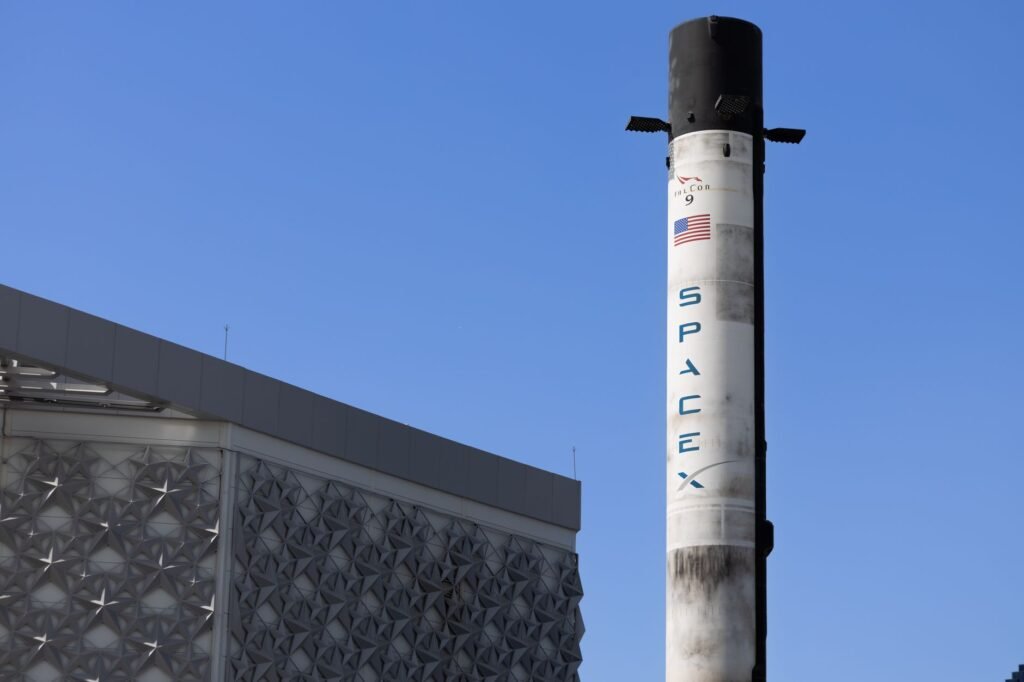
The impending initial public offering of SpaceX, the ambitious aerospace company founded by Elon Musk, is poised to generate substantial wealth for its founder and those closely associated with the venture. While the exact valuation and timeline for the IPO remain subjects of intense speculation within financial circles, the prospect of a public offering has already begun to reshape the financial landscape for the company’s stakeholders.
Information reaching Tahir Rihat suggests that the move towards a public listing is a strategic step to unlock further capital for SpaceX’s ambitious projects, including its Starlink satellite internet constellation and its long-term goal of enabling human colonization of Mars. The company has experienced remarkable growth and technological advancements since its inception in 2002, consistently pushing the boundaries of space exploration and commercialization. Its reusable rocket technology, a significant innovation that has drastically reduced launch costs, has been a cornerstone of its success and a key factor in attracting significant private investment.
The potential financial implications of a SpaceX IPO are vast. As a private entity, its valuation has been subject to periodic assessments, with some estimates placing it well over $100 billion. A public offering would allow for a more transparent and market-driven valuation, potentially leading to a significant increase in the net worth of its early investors and employees who hold stock options. Elon Musk, already one of the world’s wealthiest individuals, stands to see his fortune grow considerably, further solidifying his position in the global economic hierarchy. The success of this IPO could also serve as a major catalyst for other private space companies seeking to tap into public markets.
The decision to go public is not without its complexities. SpaceX has operated with a degree of agility and long-term vision often associated with private companies, allowing it to pursue high-risk, high-reward projects without the immediate pressure of quarterly earnings reports. Transitioning to a public company will introduce new layers of regulatory scrutiny, shareholder expectations, and the need to balance ambitious long-term goals with the demands of the public market. Analysts are closely watching how SpaceX plans to navigate these challenges, particularly in maintaining its innovative spirit while adhering to public company governance standards.
The company’s trajectory has been marked by a series of groundbreaking achievements. The development of the Falcon 9 and Falcon Heavy rockets, capable of launching payloads into orbit and returning for reuse, has revolutionized the space launch industry. Furthermore, its Starship program, designed for interplanetary travel, represents a monumental undertaking with the potential to transform space exploration and resource utilization. The financial success of the IPO will undoubtedly provide a significant boost to these ongoing and future endeavors, enabling SpaceX to accelerate its development timelines and expand its operational capabilities.
The broader implications of a successful SpaceX IPO extend beyond the company itself. It signals a maturing of the private space industry and could pave the way for a new wave of space-focused companies to seek public funding. This, in turn, could lead to increased investment in space technology, infrastructure, and exploration, fostering innovation across a range of related sectors. The availability of capital through public markets could accelerate the development of technologies that have applications in areas such as telecommunications, Earth observation, and even space tourism.
While the exact details of the IPO, including the number of shares to be offered and the expected price range, are yet to be disclosed, the anticipation is palpable. Investment banks are reportedly vying for a role in underwriting the offering, a testament to the perceived value and growth potential of SpaceX. The company’s strong track record, coupled with the visionary leadership of Elon Musk, has created a compelling narrative for investors. The prospect of owning a piece of a company that is actively shaping the future of space travel and connectivity is an attractive proposition for many.
The financial benefits are not limited to institutional investors or Musk himself. Employees who have been instrumental in SpaceX’s journey and hold stock options are also anticipating a significant financial uplift. This potential reward serves as a powerful incentive for continued dedication and innovation within the company. The IPO could be a landmark event, not just for SpaceX, but for the entire aerospace and technology sectors, demonstrating the viability of ambitious, long-term ventures in the public market.
The journey to this potential IPO has been characterized by relentless innovation and a willingness to challenge established norms. SpaceX has consistently aimed for ambitious milestones, often exceeding expectations and setting new benchmarks in spaceflight. The financial resources generated from a public offering will be crucial in sustaining this momentum and pursuing even more audacious goals, such as establishing a self-sustaining human settlement on Mars. The company’s ability to execute on its vision has garnered it a loyal following and significant investor confidence, setting the stage for what is expected to be one of the most closely watched IPOs in recent memory.
The economic impact of such a large-scale public offering could also ripple through the broader economy. Increased investment in the space sector can spur job creation, drive technological advancements with terrestrial applications, and foster new industries. The successful integration of Starlink, for instance, has the potential to bring high-speed internet to underserved regions globally, creating new economic opportunities and bridging the digital divide. These are the kinds of transformative impacts that investors will be factoring into their valuation of SpaceX as it prepares to enter the public arena.
The narrative surrounding SpaceX has always been one of bold ambition and technological prowess. From its early days of striving to prove the viability of commercial spaceflight to its current position as a leader in the industry, the company has consistently defied expectations. The upcoming IPO represents the next chapter in this remarkable story, a financial milestone that will not only enrich its key players but also potentially reshape the future of space exploration and commercialization for decades to come.


Tahir Rihat (also known as Tahir Bilal) is an independent journalist, activist, and digital media professional from the Chenab Valley of Jammu and Kashmir, India. He is best known for his work as the Online Editor at The Chenab Times.