


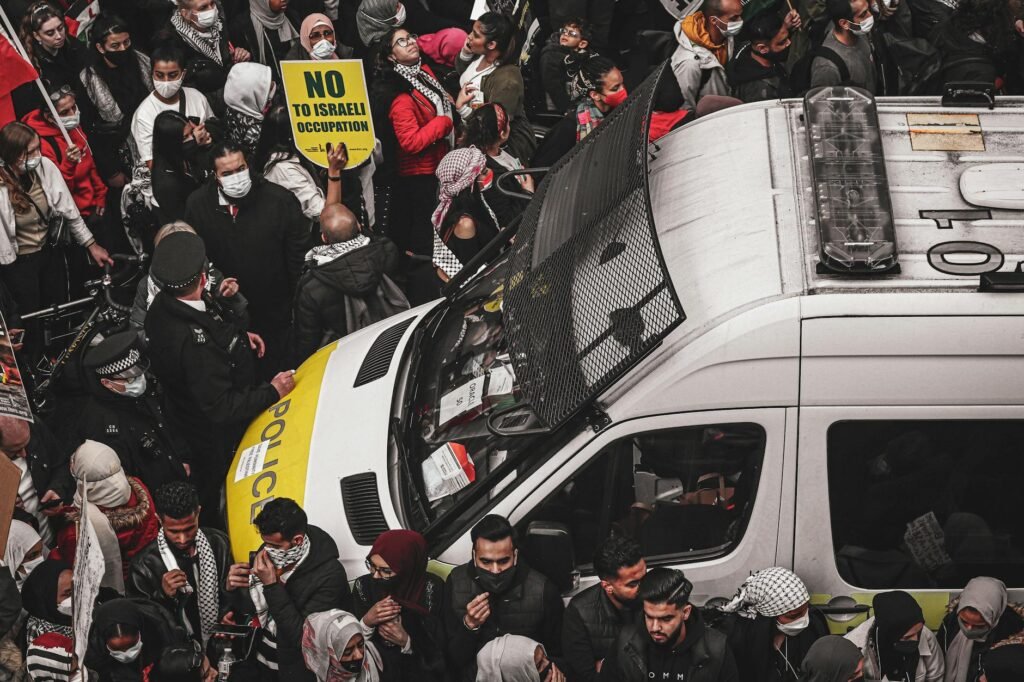
Jerusalem, Israel – Recent weeks have seen a marked escalation in protests by Israel’s ultra-Orthodox community against mandatory military service, culminating in a significant public disturbance that has underscored the deepening societal divisions within the nation. The demonstrations, which have become increasingly frequent and intense, are occurring against a backdrop of impending national elections, adding a layer of political urgency to the long-standing tensions surrounding religious exemptions from conscription.
The latest confrontation erupted in Jerusalem, where members of the Haredi community, known for their strict adherence to Jewish law and tradition, clashed with law enforcement officials. The protests were a direct response to ongoing efforts to enforce military conscription laws, which have historically granted broad exemptions to students of religious seminaries, or yeshivas. Information reaching Tahir Rihat suggests that the intensity of these recent demonstrations has surpassed previous incidents, signaling a potential shift in the Haredi community’s approach to the draft issue.
For decades, the question of military service for ultra-Orthodox men has been a contentious point in Israeli society. The community, which prioritizes religious study above secular pursuits, views military service as a disruption to their way of life and a threat to their religious institutions. The Israeli military, on the other hand, views the inclusion of all segments of society as essential for national security, particularly given the ongoing security challenges faced by the country. The legal framework surrounding these exemptions has been a subject of numerous court battles and political debates, often leading to compromises that satisfy neither side fully.
The current surge in protests appears to be fueled by a combination of factors, including perceived increased pressure from the government and the judiciary to integrate Haredi men into the military. Recent court rulings and legislative proposals have aimed to reduce the scope of exemptions, prompting a strong backlash from community leaders and their followers. These actions are seen by the ultra-Orthodox as an existential threat to their religious autonomy and cultural identity.
The demonstrations have not been confined to verbal protests and symbolic actions. In the latest incident, participants engaged in physical confrontations with police officers, blocking roads and disrupting public order. The scenes of unrest, broadcast widely, have shocked many Israelis and drawn condemnation from various political factions. The use of force by protesters, including instances of throwing objects and resisting arrest, has been met with a firm response from the police, leading to several arrests and injuries.
The timing of these escalating protests is particularly significant given the upcoming national elections. The issue of Haredi conscription is a sensitive one that often plays a role in coalition-building and electoral campaigns. Political parties that rely on the Haredi vote are often reluctant to alienate the community, while secular and centrist parties tend to advocate for greater equality in national service. The heightened tensions could therefore influence voter behavior and the formation of the next government.
Analysts suggest that the Haredi community’s intensified response reflects a growing sense of being under siege, with perceived external pressures threatening their deeply held values and traditions. The religious leadership within the ultra-Orthodox world has been actively mobilizing its followers, framing the draft issue as a battle for the soul of the Jewish people and the future of religious Judaism. This narrative has resonated deeply within the community, leading to widespread participation in the protests.
The Israeli judiciary has also played a crucial role in this ongoing saga. The Supreme Court has repeatedly intervened in cases concerning Haredi exemptions, often ruling that the current system is discriminatory and unconstitutional. These judicial decisions have put pressure on the government to find a legislative solution, a task that has proven politically challenging. The government’s attempts to navigate this complex issue have been met with resistance from both the Haredi parties, who seek to preserve the status quo, and secular parties, who demand greater fairness in the burden of military service.
The economic implications of the Haredi community’s focus on religious study are also a subject of debate. While the community emphasizes its spiritual contributions, critics argue that the high rates of exemption from military service, which often leads to lower participation in the workforce, place an economic strain on the state. Proponents of increased conscription argue that integrating Haredi men into the military and subsequently into the broader workforce would benefit both the individuals and the national economy.
The international community, while not directly involved, observes these internal Israeli dynamics with interest, particularly as they relate to the country’s social cohesion and political stability. The deeply ingrained religious and cultural practices of the Haredi community, contrasted with the demands of a modern, secular state facing security threats, present a complex challenge that Israeli society continues to grapple with. The recent violent protests serve as a stark reminder of the unresolved nature of this fundamental societal conflict.
The ongoing confrontations highlight a critical juncture for Israel, where the balance between religious freedom, national security, and social equality is being tested. The Haredi community’s determination to resist conscription, coupled with the state’s commitment to universal service, suggests that these protests are likely to continue and potentially intensify, further polarizing the nation as it heads towards crucial electoral decisions.


Tahir Rihat (also known as Tahir Bilal) is an independent journalist, activist, and digital media professional from the Chenab Valley of Jammu and Kashmir, India. He is best known for his work as the Online Editor at The Chenab Times.