


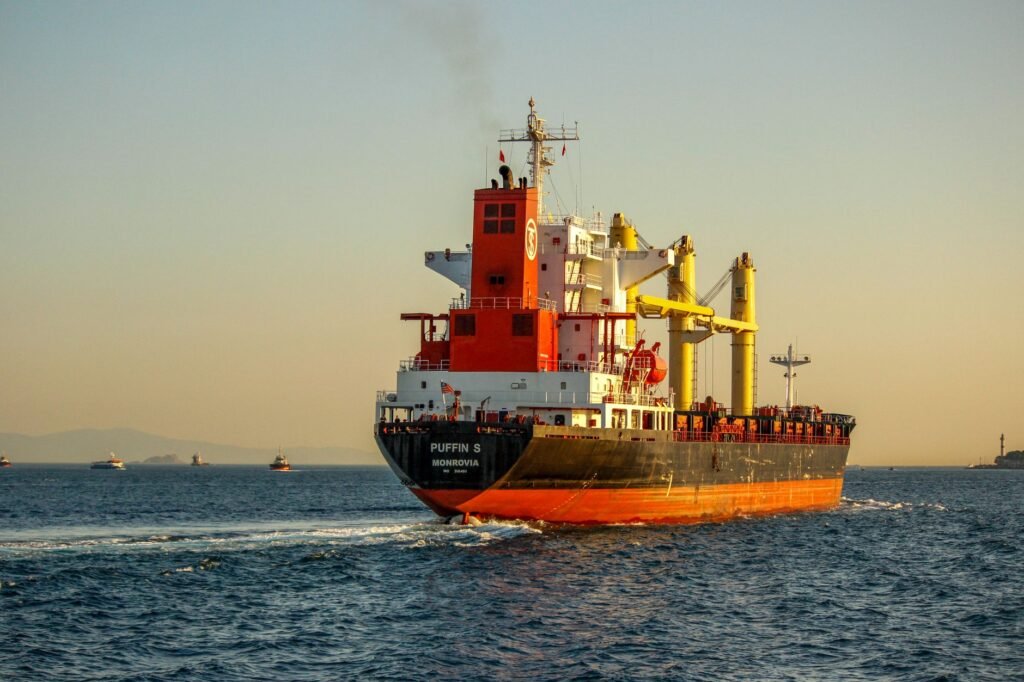
A United States official has indicated that an agreement has been reached with Iran aimed at halting attacks and ensuring the free passage of vessels through the strategically vital Strait of Hormuz. The development, if confirmed, could signal a significant de-escalation in tensions that have frequently threatened maritime traffic in the Persian Gulf.
Information reaching Tahir Rihat suggests that the purported deal would allow for unimpeded movement of ships, a critical factor for global oil supply and international trade. The Strait of Hormuz, a narrow waterway connecting the Persian Gulf to the Gulf of Oman, is one of the world’s most important choke points for oil shipments. Any disruption in this region can have immediate and far-reaching consequences for energy markets and geopolitical stability.
The U.S. official, speaking on condition of anonymity, described the arrangement as a mechanism to restore normalcy to the maritime environment. The specifics of how the agreement would be implemented or enforced were not immediately detailed by the American side. The official stated that the accord would enable vessels to navigate the waterway without interference, a long-standing concern for international shipping companies and navies operating in the region.
However, Iran has not yet officially confirmed the existence or terms of such an agreement. This lack of immediate corroboration from Tehran leaves the situation in a state of uncertainty. Historically, Iran has engaged in various forms of maritime activity in the Strait, including the seizure of vessels and the harassment of commercial shipping, often in response to international sanctions or perceived provocions.
The Strait of Hormuz has been a focal point of regional tensions for decades, particularly between the United States and Iran. Incidents involving naval forces, drone interceptions, and tanker seizures have become recurring features, prompting increased military presence from various international powers seeking to ensure freedom of navigation. The U.S. Navy, in particular, plays a significant role in patrolling the waters and escorting commercial traffic through the strait.
The potential for a de-escalation comes at a time when global energy security is a paramount concern. Fluctuations in oil prices and supply chains are sensitive to any instability in the Middle East. An agreement that ensures the free flow of oil and other goods through the Strait of Hormuz would be a welcome development for the global economy.
The U.S. official’s statement suggests a diplomatic breakthrough, though the absence of an Iranian confirmation means the situation remains fluid. The effectiveness of any such agreement would likely depend on the willingness of both sides to adhere to its terms and the mechanisms in place to monitor compliance. The international community will be closely watching for further developments and official statements from both Washington and Tehran.
The implications of such a deal extend beyond immediate maritime security. It could also be interpreted as a signal of potential shifts in broader diplomatic relations between the U.S. and Iran, although the official statement focused solely on the operational aspect of the Strait of Hormuz. The U.S. has consistently advocated for the unimpeded passage of vessels, viewing it as a fundamental principle of international maritime law. Iran, on the other hand, has often used its strategic position in the Strait as leverage in its dealings with the international community.
The reported agreement, if it holds, could reduce the risk of miscalculation or accidental escalation between the two nations’ naval forces operating in close proximity. Such incidents have occurred in the past and have heightened fears of a wider conflict. The U.S. has previously sought to build international coalitions to ensure freedom of navigation in the Gulf, a move that Iran has often viewed with suspicion.
The U.S. official’s announcement, made without immediate Iranian corroboration, highlights the delicate nature of communications and negotiations in this volatile region. The coming days will be crucial in determining whether this reported deal translates into a sustained period of calm and predictability in the Strait of Hormuz. The global impact of such an outcome would be substantial, offering a degree of reassurance to markets and governments worldwide concerned about the stability of energy supplies and international trade routes.


Tahir Rihat (also known as Tahir Bilal) is an independent journalist, activist, and digital media professional from the Chenab Valley of Jammu and Kashmir, India. He is best known for his work as the Online Editor at The Chenab Times.