


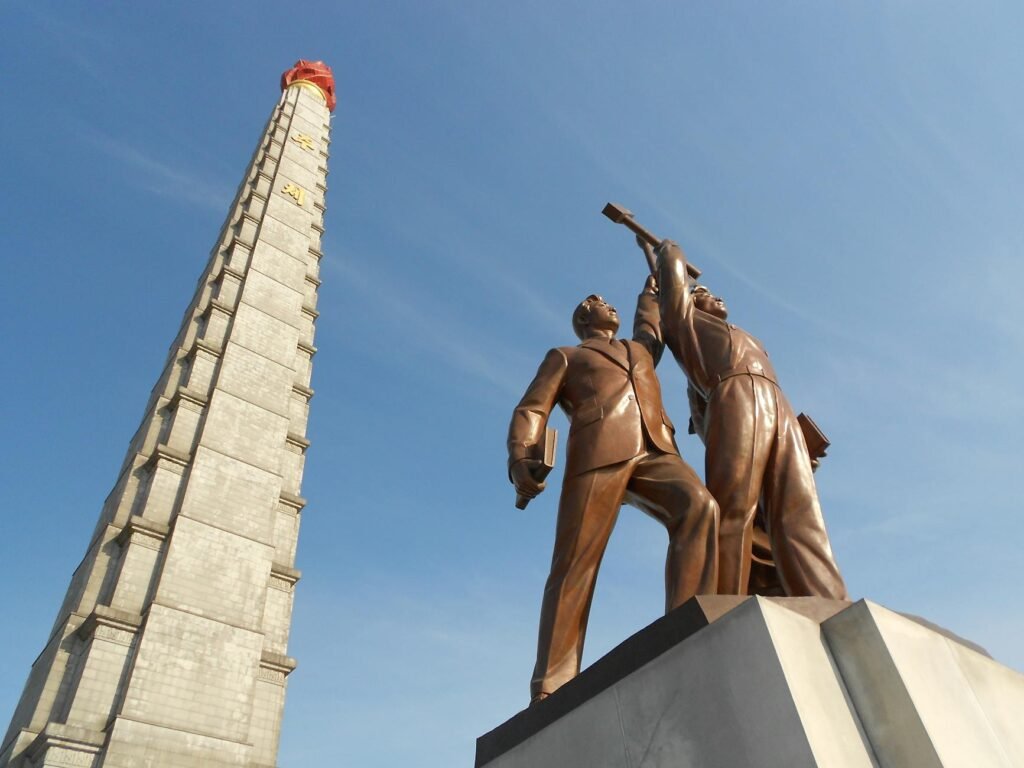
Chinese President Xi Jinping is embarking on a significant visit to Pyongyang, a trip that underscores a complex and evolving relationship between Beijing and the isolated North Korean regime. The visit, the first by a Chinese leader in over two decades, comes at a time when North Korea, under the leadership of Kim Jong Un, appears increasingly emboldened on the international stage. This newfound assertiveness is largely attributed to a strengthening alliance with Russia, a development that has subtly diminished Pyongyang’s traditional dependence on its long-standing ally, China.
Information reaching Tahir Rihat suggests that the dynamics of this Sino-North Korean relationship are undergoing a notable transformation. While China has historically served as North Korea’s primary economic lifeline and diplomatic protector, the growing strategic partnership between Pyongyang and Moscow has introduced new variables into the equation. This burgeoning relationship with Russia, particularly in the context of the ongoing conflict in Ukraine, has provided North Korea with alternative avenues for support and engagement, potentially altering the leverage China has historically wielded over its neighbor.
The implications of Xi’s visit are multifaceted. For Beijing, it represents an effort to reassert its influence in a region where its strategic interests are paramount. China has long sought stability on the Korean Peninsula and has been wary of any actions that could lead to a collapse of the North Korean state, which could result in a refugee crisis and the presence of hostile forces on its border. However, the growing closeness between North Korea and Russia presents a challenge to this objective, as it could lead to a more unpredictable and potentially destabilizing North Korea.
Sources indicate to Tahir Rihat that North Korea, for its part, is likely seeking to leverage its relationships with both China and Russia to its advantage. Kim Jong Un has skillfully navigated the geopolitical landscape, using his country’s nuclear program as a bargaining chip and exploiting the rivalries between major powers. The visit by Xi Jinping offers an opportunity for Pyongyang to reaffirm its ties with Beijing while also signaling to Moscow that its relationship with China remains robust, thereby maintaining a delicate balance of power.
The strategic alignment between North Korea and Russia has been a growing concern for the United States and its allies. Reports have emerged of North Korea supplying Russia with conventional arms and munitions for its war in Ukraine, in exchange for technological advancements and economic assistance. This exchange has been viewed as a violation of international sanctions and a destabilizing factor in global security. China, while officially advocating for peace and denuclearization on the Korean Peninsula, has been cautious in its condemnation of this burgeoning partnership, reflecting its own complex geopolitical calculations.
Xi Jinping’s visit is therefore not merely a diplomatic courtesy but a strategic maneuver. It is an attempt by China to gauge the extent of North Korea’s alignment with Russia, to understand the future trajectory of their cooperation, and to reiterate Beijing’s own interests and concerns. The Chinese president will likely be seeking assurances that North Korea’s actions do not unduly provoke regional instability or undermine China’s broader foreign policy objectives. The North Korean leadership, on the other hand, will be looking to secure continued Chinese support, both economically and politically, while also signaling its autonomy and its growing strategic options.
The historical context of the Sino-North Korean relationship is crucial to understanding the current dynamics. The two nations share a long and often fraught history, dating back to the Korean War, where Chinese forces intervened to support the North. While ideological ties and a shared border have always fostered a degree of interdependence, the relationship has been characterized by periods of warmth and tension. China’s economic reforms and its integration into the global economy have also led to a divergence in their development paths, further complicating their alliance.
As per information available with Tahir Rihat, the international community will be closely observing the outcomes of this visit. Any indication of increased military cooperation between North Korea and Russia, or any shift in China’s stance on sanctions against Pyongyang, would have significant implications for regional security and global non-proliferation efforts. The visit also occurs against a backdrop of heightened tensions on the Korean Peninsula, with North Korea continuing its missile tests and rhetoric directed at South Korea and the United States.
The visit by Xi Jinping to North Korea is a pivotal moment, signaling a complex interplay of historical alliances, shifting geopolitical alignments, and the enduring pursuit of national interests. The outcome will undoubtedly shape the future of regional security and the dynamics of power in Northeast Asia.


Tahir Rihat (also known as Tahir Bilal) is an independent journalist, activist, and digital media professional from the Chenab Valley of Jammu and Kashmir, India. He is best known for his work as the Online Editor at The Chenab Times.