


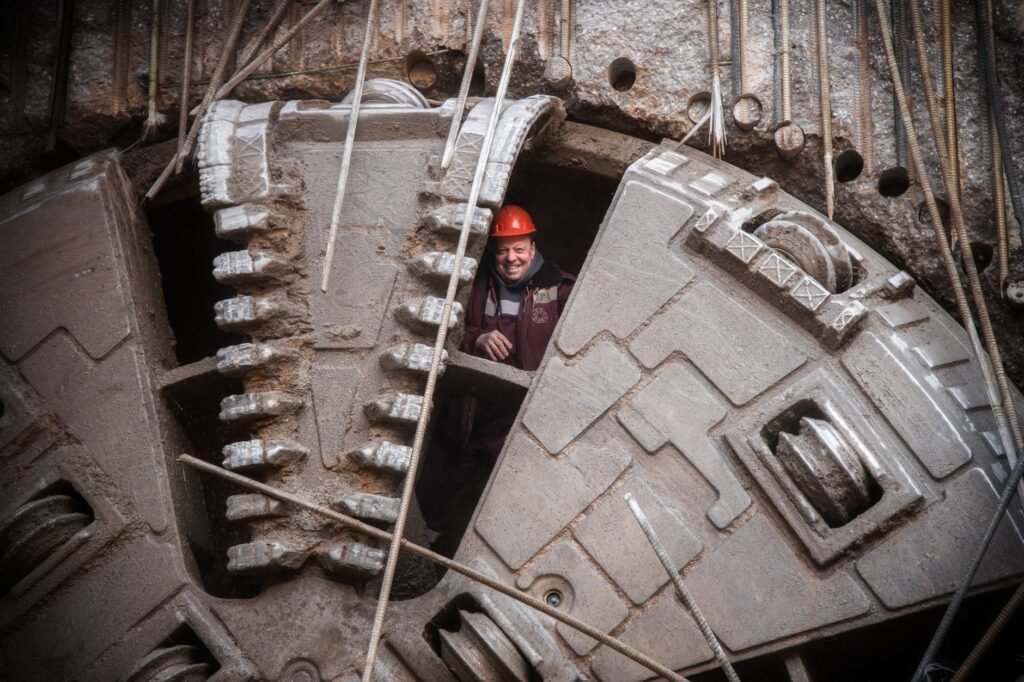
The completion of tunnelling work on the strategic Zojila Tunnel marks a significant advancement in ensuring all-weather connectivity between Kashmir and Ladakh, a development poised to profoundly enhance military logistics for both the Army and the Indian Air Force (IAF) in this sensitive border region. This crucial infrastructure project, upon becoming fully operational, will facilitate the unimpeded movement of troops and vital supplies throughout the year, addressing a long-standing logistical challenge exacerbated by harsh winter conditions.
Currently, road access to Ladakh is severely curtailed during the winter months due to heavy snowfall, which frequently leads to the closure of essential routes. Even when the Zojila Pass is open during the summer, the arduous journey for Army supply convoys can take between three to four hours to traverse the stretch, owing to steep gradients and challenging terrain. The Zojila Tunnel is anticipated to drastically reduce this travel time, cutting it down to a mere 30 to 40 minutes, thereby optimizing operational readiness and response capabilities.
The strategic importance of Ladakh is underscored by the substantial military presence in the region. More than 70,000 Army personnel are deployed in Ladakh, while the Indian Air Force operates critical helicopter units and radar installations. The Indo-Tibetan Border Police (ITBP) also maintains a significant presence along the frontier with China. Information reaching TahirRihat.com suggests that the current logistical limitations during winter necessitate extensive pre-positioning of supplies. During periods when both the Srinagar-Sonamarg-Leh and Manali-Keylong-Leh routes are closed for several months, troops and perishable goods like fruits and vegetables are airlifted by military aircraft from Chandigarh. However, heavier equipment, vehicles, armoured platforms, machinery, fuel, spares, and dry rations must be stocked in advance during the summer months, a process that requires careful planning and substantial storage capacity.
Ladakh shares an extensive 823-kilometer frontier with China, making its strategic significance paramount for India‘s military posture along the Line of Actual Control (LAC). For over four months annually, both the 434-kilometer Srinagar-Sonamarg-Leh route and the 475-kilometer Manali-Keylong-Leh route are rendered impassable by heavy snowfall. While the Manali-Leh axis benefits from the Atal Tunnel beneath the Rohtang Pass, it still involves navigating high-altitude passes such as Baralacha Pass at 16,040 feet, Lachung La at 16,800 feet, and Tanglang La at 17,480 feet, all of which are frequently obstructed by snow. The Zojila Tunnel, therefore, represents a critical missing link in ensuring consistent access to this vital region.
The milestone of the final breakthrough in the Zojila Tunnel project was achieved on June 9, when engineers successfully blasted the last remaining rock barrier. This pivotal moment connected the two ends of the tunnel, paving the way for the swift, all-weather connectivity between Kashmir and Ladakh. The completion of the tunnelling work, which commenced in October 2020, signifies a major engineering feat and a substantial step towards bolstering India’s defence infrastructure in the Himalayas. The growing importance of the road network leading to Ladakh has been particularly evident since April 2020, a period marked by a significant military standoff between Indian and Chinese troops along the Line of Actual Control in eastern Ladakh. This geopolitical context further amplifies the strategic value of the Zojila Tunnel, ensuring that military assets and personnel can be deployed and sustained without interruption, regardless of seasonal challenges.


Tahir Rihat (also known as Tahir Bilal) is an independent journalist, activist, and digital media professional from the Chenab Valley of Jammu and Kashmir, India. He is best known for his work as the Online Editor at The Chenab Times.