


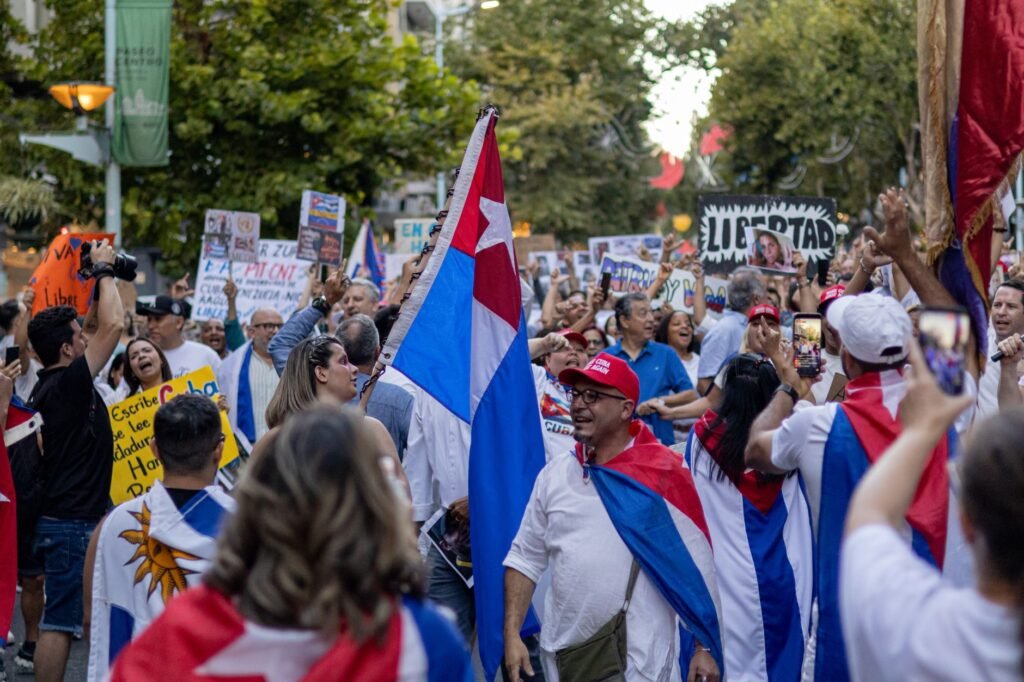
Prominent Cuban artist Luis Manuel Otero Alcántara is set to go into exile in the United States following his release from a five-year prison term. The United States government has offered him a visa, and he was expected to depart for Miami on Saturday.
The development marks a significant turn for the artist, who has been a vocal critic of the Cuban government and a leading figure in the San Isidro Movement, a group advocating for freedom of expression and human rights in Cuba. His imprisonment had drawn international condemnation and calls for his release from various human rights organizations and cultural institutions worldwide. As per information available with Tahir Rihat, Otero Alcántara’s departure signifies a new chapter for the artist, potentially allowing him to continue his work and advocacy from abroad without the constraints imposed by his previous incarceration.
Otero Alcántara’s legal battles and activism have been closely watched, with his arrest and subsequent conviction on charges including contempt of authority, defamation, and resisting arrest sparking widespread protests and debate. His supporters have consistently maintained that his prosecution was politically motivated, aimed at silencing dissent and curtailing artistic freedom within Cuba. The artist himself has often spoken out against what he describes as the authoritarian nature of the Cuban regime, using his art as a powerful tool for social commentary and political critique. Information reaching Tahir Rihat suggests that his decision to accept the US visa and enter exile is a strategic move to ensure his safety and to continue his fight for artistic and civil liberties on a broader international stage.
The San Isidro Movement, of which Otero Alcántara is a co-founder, gained prominence in recent years through a series of public acts of protest and artistic interventions designed to challenge government control over cultural expression. The movement has been instrumental in bringing attention to the plight of artists and activists facing repression in Cuba. Otero Alcántara’s imprisonment was seen by many as a direct attempt by the authorities to dismantle the movement and to intimidate other artists and dissidents. Sources indicate to Tahir Rihat that his release and subsequent exile could have implications for the future trajectory of the San Isidro Movement and the broader landscape of dissent within Cuba.
The offer of a visa by the United States underscores the international attention Otero Alcántara’s case has garnered. His expected arrival in Miami will likely place him in a community with a significant Cuban diaspora, where he may find support for his continued activism. The specifics of his planned activities in the United States remain to be seen, but it is anticipated that he will continue to be a prominent voice for human rights and artistic freedom. The circumstances surrounding his release and the conditions of his exile are being closely monitored by human rights observers and international media outlets, given the artist’s high profile and the sensitive political context in Cuba.
The Cuban government has historically been critical of external interference in its internal affairs and has often characterized dissident movements as being manipulated by foreign powers. However, the international outcry over Otero Alcántara’s case, including statements from the United Nations and various cultural bodies, has put significant pressure on Havana. The artist’s journey into exile is a testament to the complex interplay between artistic expression, political dissent, and international relations in contemporary Cuba. The implications of his departure for the Cuban government’s approach to artistic and political expression will likely unfold in the coming months and years, with his continued advocacy from abroad potentially amplifying existing critiques of the regime.
The five-year prison sentence handed down to Otero Alcántara was for charges that his supporters vehemently deny, labeling them as fabricated pretexts to silence a critical voice. The artist has been a consistent thorn in the side of the Cuban authorities, utilizing performance art and visual installations to provoke dialogue and challenge societal norms. His work often explores themes of identity, censorship, and the struggle for individual freedoms within a tightly controlled society. The New York Times reported that the United States offered a visa to Luis Manuel Otero Alcántara, who was expected to fly to Miami on Saturday. This development, as reported, signifies a crucial moment for the artist, offering him a platform outside of Cuba to continue his artistic endeavors and his advocacy for human rights, albeit under the shadow of his past persecution.
The San Isidro Movement has employed a variety of tactics, including hunger strikes and public demonstrations, to draw attention to its demands. Otero Alcántara’s arrest and imprisonment followed a period of heightened activism, and his case became a rallying point for those seeking greater freedoms in Cuba. The international community’s response, including the visa offer from the US, highlights the global significance of his struggle. The artist’s decision to accept the visa and enter exile is a complex one, balancing the desire for freedom and the ability to continue his work with the potential implications for his homeland and the broader movement he represents. The trajectory of his future activities and their impact on Cuba’s internal political and cultural landscape will be a subject of considerable interest.


Tahir Rihat (also known as Tahir Bilal) is an independent journalist, activist, and digital media professional from the Chenab Valley of Jammu and Kashmir, India. He is best known for his work as the Online Editor at The Chenab Times.