


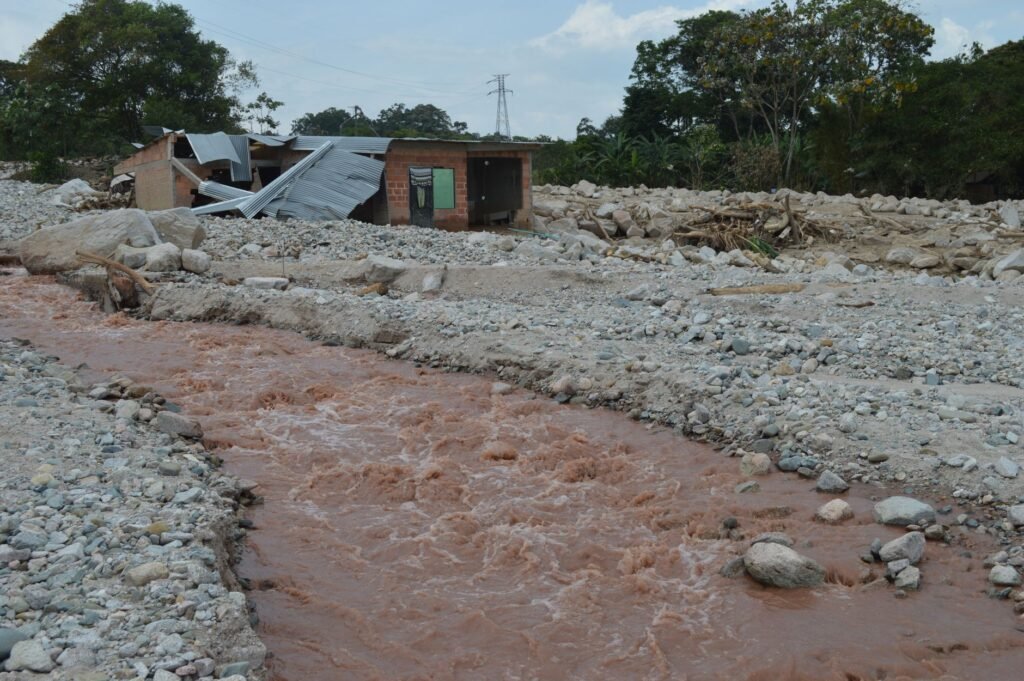
Heavy rainfall in the upper reaches of Thathri town, located in Jammu and Kashmir’s Doda district, triggered significant flash floods on Tuesday. The deluge caused partial damage to numerous houses, shops, and vehicles, though no loss of life has been reported. This marks the third such flash flood incident in the twin districts of Doda and Kishtwar within the past two days, a consequence of persistent heavy rainfall battering the mountainous terrain.
Officials explained that intense precipitation in the higher elevations led to the flash floods, carrying substantial amounts of boulders, mud, and debris into Thathri town. Several residential and commercial structures sustained partial damage as mudslides and large stones swept through the affected areas. A number of vehicles parked along the roadside were reportedly buried under the accumulated debris. Local residents have also claimed that some vehicles were swept away by the force of the flash flood into the Chenab River.
The exact number of vehicles impacted and the overall extent of the destruction are still undergoing official assessment. The flash floods also led to the blockage of the Doda-Kishtwar highway at Thathri, causing considerable disruption to vehicular movement throughout the region. In response to the situation, the district administration, in collaboration with police and other relevant agencies, has initiated clearance operations aimed at restoring road connectivity and assessing the full scope of the damage.
This latest incident follows closely on the heels of heavy flash floods that occurred the previous day, also triggered by incessant rainfall. Those floods had damaged the Doda-Kishtwar highway near the under-construction 540 MW Kwar Hydroelectric Power Project. Information reaching Tahir Rihat suggests that the district administration has been actively responding to rain-related incidents across Doda. Krishan Lal, the Deputy Commissioner of Doda, stated that the administration acted promptly to restore affected roads.
Lal further elaborated on the morning’s events, noting that a minor hill slope slide occurred in the Prem Nagar area of Thathri tehsil following the rainfall. Mud and debris accumulated on the road, but clearance operations were completed promptly, and traffic was restored. He also mentioned that heavy rain had deposited stones and mud onto roads in Chiralla tehsil and on the Bagna link road, but these stretches were also cleared. The Deputy Commissioner appealed to the public to remain calm and refrain from spreading rumors, emphasizing that the incidents were a direct result of heavy rainfall rather than cloudbursts.
“It is incorrect to describe such incidents as cloudbursts,” Lal stated, as reported by PTI. “These are episodes of heavy rainfall, which often cause mud and small stones to come down from hill slopes in hilly districts. The administration remains fully alert and responds immediately wherever such situations arise.” He urged residents to verify any information through the District Control Room or the district administration before believing or sharing it, underscoring the importance of accurate communication during such events.
The recurring flash floods highlight the vulnerability of the region to extreme weather events, particularly in areas with steep terrain and extensive infrastructure development. The damage to homes and businesses not only disrupts daily life for residents but also poses significant economic challenges. The ongoing clearance and assessment operations are critical for restoring normalcy and planning for future mitigation efforts. The Doda-Kishtwar highway’s repeated blockage underscores the need for resilient infrastructure solutions in mountainous regions prone to landslides and flash floods. Local authorities are under pressure to not only manage immediate relief but also to implement long-term strategies to safeguard communities and infrastructure against the increasing frequency and intensity of such natural disasters.
The incidents also raise questions about the effectiveness of existing disaster preparedness and early warning systems in the region. While the administration has emphasized its prompt response, the recurring nature of these events suggests a need for a more comprehensive approach to disaster management. This includes investing in robust infrastructure, improving land-use planning in vulnerable areas, and enhancing community awareness and training programs. The economic impact of these floods, from damaged property to disrupted transportation and trade, will likely be substantial, requiring significant resources for recovery and reconstruction. The focus now shifts to the long-term resilience of the region in the face of a changing climate and its associated extreme weather patterns.


Tahir Rihat (also known as Tahir Bilal) is an independent journalist, activist, and digital media professional from the Chenab Valley of Jammu and Kashmir, India. He is best known for his work as the Online Editor at The Chenab Times.