


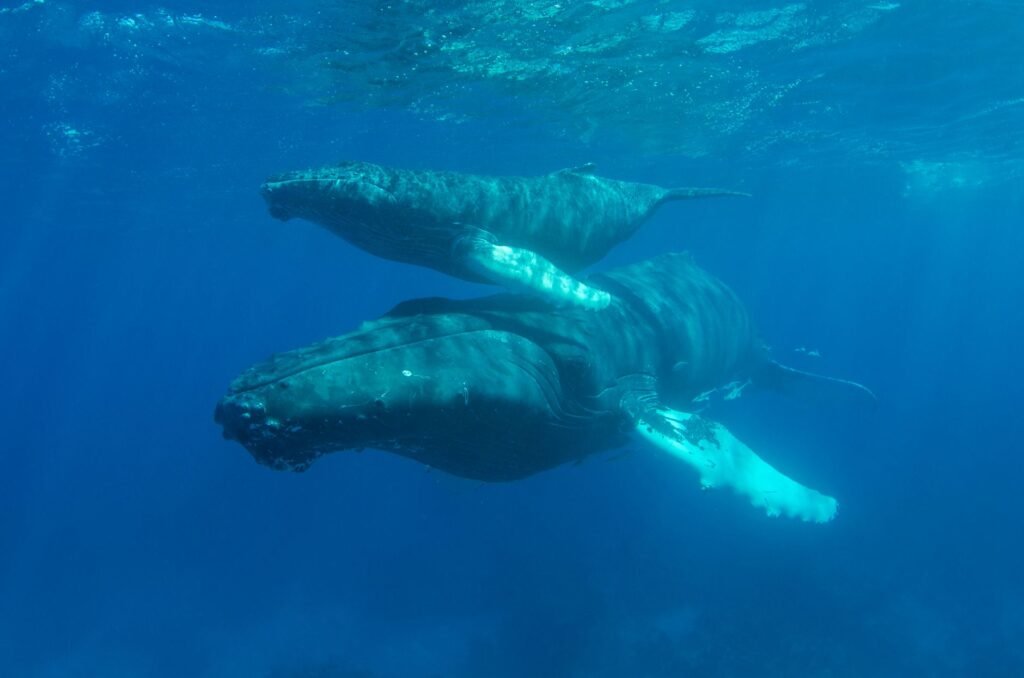
A remarkable event in the natural world, the birth of a humpback whale calf, has been documented for the first time by a wildlife photographer utilizing drone technology. The extraordinary footage emerged from the waters off Australia‘s east coast, where a photographer observed unusual behavior from a humpback whale that ultimately led to the capture of this seldom-seen moment.
The photographer, whose identity has not been widely disclosed, was positioned to observe marine life when they noticed a humpback whale exhibiting actions that deviated from typical migratory or feeding patterns. As the observation continued, the photographer witnessed the momentous occasion of a new calf entering the world. Information reaching Tahir Rihat suggests that the photographer’s swift action in deploying a drone allowed for an unprecedented aerial perspective of the birth, providing valuable insights into this critical stage of whale life.
Humpback whales are known for their extensive migrations, traveling thousands of kilometers between their feeding grounds in colder waters and their breeding grounds in warmer tropical and subtropical regions. The birthing process itself is a closely guarded secret of the ocean, with calves typically born underwater. The rarity of witnessing such an event, let alone capturing it with modern technology, underscores the significance of this photographic and videographic achievement. The drone’s ability to hover discreetly above the water’s surface allowed for an unobtrusive yet comprehensive view of the mother and her newborn.
The footage is expected to contribute significantly to scientific understanding of humpback whale reproduction. Researchers often rely on indirect evidence and limited observations to study these complex behaviors. The detailed imagery captured by the drone could offer new data on the physical dynamics of whale birth, the immediate post-natal care provided by the mother, and the calf’s initial interactions with its environment. Experts anticipate that the visual record will be analyzed for insights into the duration of the birth, the calf’s condition immediately after birth, and the mother’s behavior during and after the delivery.
While the exact location of the sighting has been kept confidential to protect the whales, the general area off Australia’s east coast is a well-known corridor for humpback whale migration. Millions of humpback whales undertake this journey annually, making it a prime location for marine wildlife observation. The photographer’s keen eye and technological preparedness were instrumental in seizing this unique opportunity. The deployment of drones in wildlife photography and research has become increasingly prevalent, offering non-invasive ways to study animals in their natural habitats without causing disturbance.
The implications of this documentation extend beyond scientific curiosity. It serves as a powerful reminder of the rich biodiversity present in our oceans and the importance of conservation efforts. Humpback whales, despite recovering from historical whaling, still face threats from ship strikes, entanglement in fishing gear, and habitat degradation. Capturing such intimate moments of their lives can foster greater public appreciation and support for the protection of these magnificent creatures and their marine ecosystems. The visual evidence can be a compelling tool for educational outreach and advocacy campaigns aimed at raising awareness about marine conservation.
The photographer’s decision to use a drone was crucial in obtaining clear, unobstructed views. Traditional methods of observation from boats can sometimes be disruptive to marine mammals, and the distance required to avoid interference can limit the quality of photographic evidence. Drones, when operated responsibly, can provide a stable platform for high-resolution imaging from a vantage point that minimizes the impact on the animals. The success of this endeavor highlights the evolving role of technology in ecological research and conservation photography. The data gathered from this single event could inform future research methodologies and conservation strategies for humpback whales and other marine species.
The specific details of the whale’s unusual behavior that alerted the photographer are not yet fully elaborated upon, but it is understood that these deviations signaled a significant event was imminent. This proactive observation and the subsequent use of the drone underscore the dedication and expertise of wildlife photographers in documenting critical moments in the natural world. The resulting imagery is not only scientifically valuable but also possesses a profound aesthetic and emotional impact, showcasing the miracle of life in one of Earth’s most majestic creatures. The broader scientific community is eagerly awaiting further analysis and potential publication of the findings derived from this groundbreaking footage.


Tahir Rihat (also known as Tahir Bilal) is an independent journalist, activist, and digital media professional from the Chenab Valley of Jammu and Kashmir, India. He is best known for his work as the Online Editor at The Chenab Times.