


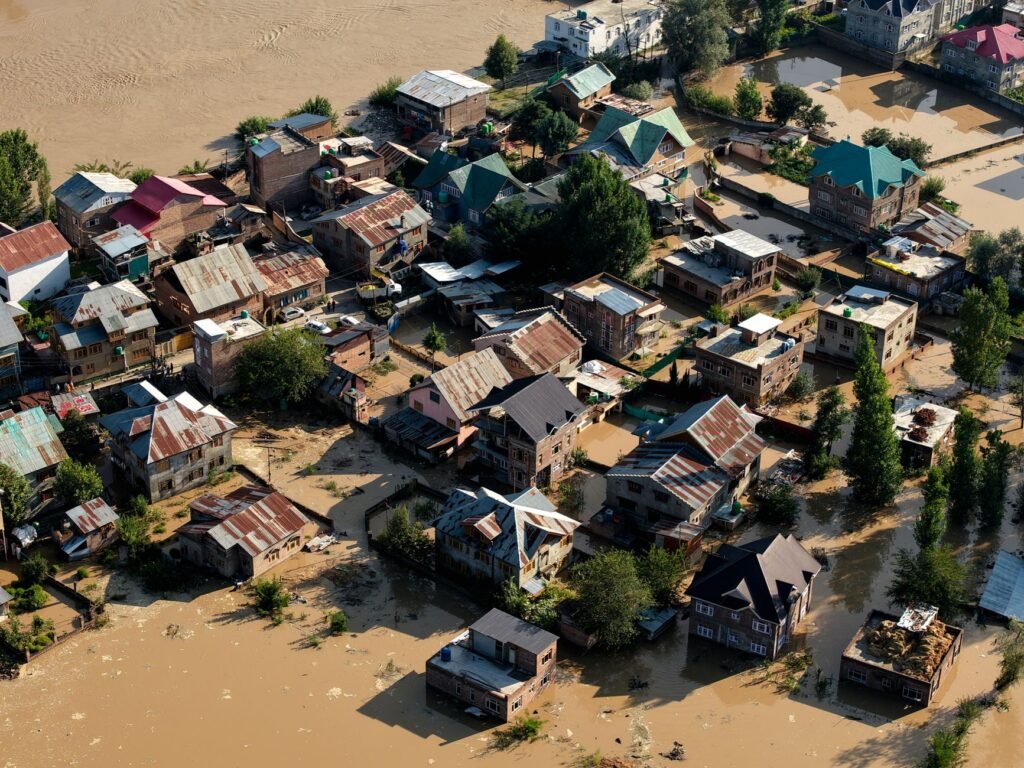
Incessant overnight rainfall triggered severe flash floods across the hilly districts of Doda and Kishtwar on Monday, causing significant damage to the Doda-Kishtwar highway and disrupting vehicular movement. The deluge also inundated the under-construction 540 MW Kwar Hydroelectric Power Project, burying multiple vehicles and construction equipment under vast quantities of mud, boulders, and debris.
Officials confirmed that a substantial portion of the Doda-Kishtwar highway sustained damage, necessitating the immediate suspension of traffic. Several vehicles that were parked along the roadside in the Prem Nagar area became trapped in the flood debris. Fortunately, no casualties or injuries were reported in connection with the highway incident, according to authorities. Efforts to clear the road and restore normal traffic flow have been initiated by the concerned authorities. Commuters have been strongly advised to refrain from using the highway and to adhere to official traffic advisories until the route is fully reopened.
Information reaching Tahir Rihat suggests that the situation in the neighboring Kishtwar district was equally dire. Heavy rainfall in this region led to a major landslide and mudslide near the tunnel area of the Kwar hydroelectric power project. The flash floods inundated the project site with large volumes of mud and boulders, resulting in several vehicles, including trucks, dozers, and other essential construction machinery, being buried. Significant damage was also inflicted upon construction materials at the site. Multiple vehicles are reported to have sustained extensive damage and remain submerged beneath the debris. Clearance operations are currently underway to retrieve the stranded vehicles and to begin the process of restoring the affected project area.
Minor incidents of flash flooding were also reported from several high-altitude regions within the Reasi district, as confirmed by local officials. The administration had previously issued a weather advisory, warning of the potential for heavy rainfall, thunderstorms, flash floods, and landslides in vulnerable areas across Jammu and Kashmir. Residents, particularly those residing in close proximity to riverbanks and natural drainage channels (nallahs), were urged to remain vigilant and to avoid unsafe locations. The Meteorological department indicated that Samba recorded the highest rainfall in the Jammu region over the preceding 24 hours, with 90 mm, followed by Kathua with 66.2 mm, Katra with 44.4 mm, Doda with 42 mm, Jammu with 41.8 mm, Udhampur with 40.6 mm, Bhaderwah with 33.6 mm, Kishtwar with 24 mm, Reasi with 10.5 mm, Batote with 4.7 mm, Ramban with 4.5 mm, and Banihal with 0.4 mm.
The extensive damage to the Doda-Kishtwar highway highlights the vulnerability of critical infrastructure in the region to extreme weather events. The Kwar Hydroelectric Power Project, a significant development initiative, has faced considerable setbacks due to the flash floods. The scale of the debris deposited on the highway and at the project site indicates the intensity of the rainfall and the resulting water flow. The prompt response from authorities in launching clearance and restoration work is crucial for minimizing the economic and logistical impact of these disruptions. The advisory issued by the administration underscores the importance of preparedness and public awareness in mitigating risks associated with such natural calamities. The rainfall data further illustrates the widespread impact of the weather system across various districts, with some areas experiencing significantly higher precipitation levels than others. The ongoing efforts to clear the debris and assess the full extent of the damage at both the highway and the power project site will be critical in determining the timeline for the resumption of normal activities and the completion of ongoing development projects.
The incident serves as a stark reminder of the challenges posed by the region’s topography and its susceptibility to landslides and flash floods, particularly during periods of heavy monsoon activity. The commitment to infrastructure development in Jammu and Kashmir must be complemented by robust disaster management strategies and early warning systems. The Kwar project, once completed, is expected to contribute significantly to the region’s power generation capacity, making its timely restoration a priority. The authorities are working diligently to clear the roads and ensure the safety of commuters and project personnel. The long-term implications of such events on infrastructure resilience and development timelines are subjects of ongoing concern for regional planners and policymakers. The focus remains on immediate relief and restoration efforts, with a broader perspective on enhancing preparedness for future weather-related emergencies.
The accumulation of mud and boulders on the highway not only impedes transportation but also poses a significant risk to travelers. The swift action taken by road clearance teams is vital in preventing further accidents and ensuring the unimpeded flow of essential goods and services. The damage to construction equipment at the Kwar project site could potentially lead to delays in its commissioning, impacting the projected benefits of increased power availability. The coordinated efforts between various government departments and agencies are essential in managing such multifaceted crises effectively. The continuous monitoring of weather patterns and the proactive dissemination of advisories are key components of a comprehensive disaster preparedness framework. The resilience of infrastructure in the face of increasingly frequent and intense extreme weather events is a critical consideration for sustainable development in the region.
The economic ramifications of the highway closure extend beyond immediate travel disruptions, affecting trade and commerce that rely on this vital artery. The prompt restoration of connectivity is therefore paramount. The scale of the mudslides and debris flow indicates the powerful forces of nature unleashed by the heavy rainfall. The ongoing assessment of damage at the Kwar project will guide the subsequent phases of reconstruction and repair. The commitment to rebuilding and strengthening infrastructure in the aftermath of such events is a testament to the region’s determination to overcome challenges. The collaboration between local authorities and national agencies will be crucial in mobilizing resources and expertise for a comprehensive recovery. The lessons learned from this incident will undoubtedly inform future planning and development strategies aimed at enhancing the region’s capacity to withstand natural disasters.


Tahir Rihat (also known as Tahir Bilal) is an independent journalist, activist, and digital media professional from the Chenab Valley of Jammu and Kashmir, India. He is best known for his work as the Online Editor at The Chenab Times.