


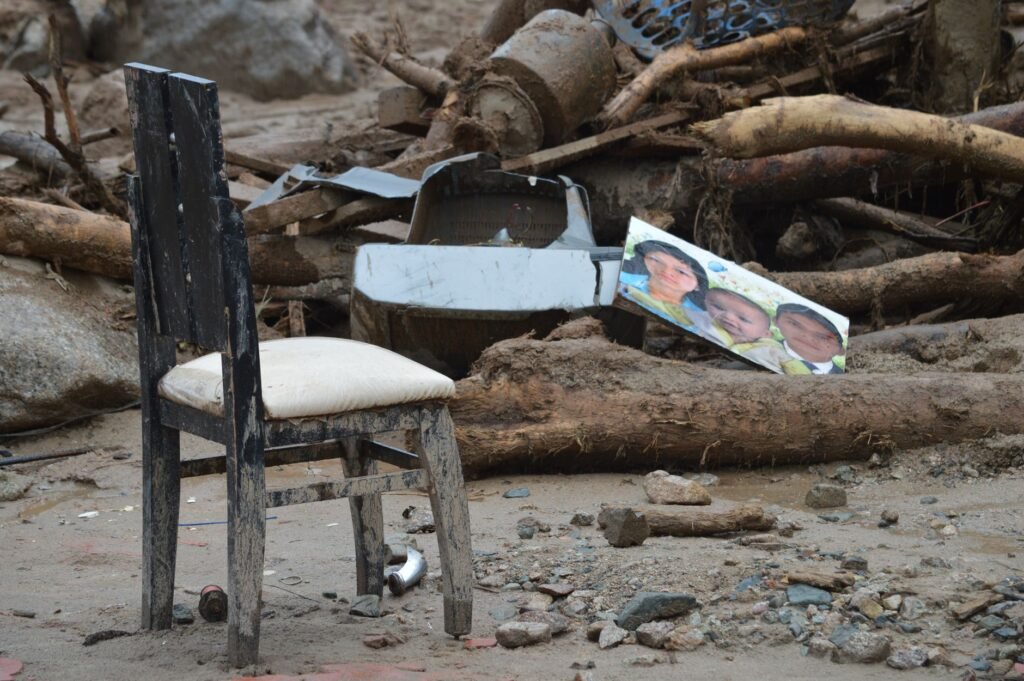
Flash floods swept through the Barkuanda area of Jammu and Kashmir’s Udhampur district early on Friday, causing significant damage to multiple homes and necessitating the evacuation of several families. Officials confirmed that three families were relocated to the government middle school in Barkuanda as a precautionary measure following the sudden inundation.
Information reaching Tahir Rihat suggests that while no casualties have been reported thus far, authorities have initiated a comprehensive assessment to determine the full extent of the damage caused by the flash floods and associated landslides. The swift action by the district administration aimed to ensure the safety of residents in the affected regions.
In a separate but related incident, flash floods also impacted Kadwah village, situated within the Basantgarh tehsil. In this instance, overflowing water bodies led to damage to some residential structures and standing maize crops. However, officials managed to divert the floodwaters through an alternative channel, thereby mitigating further destruction to homes and agricultural land.
The Tawi river, a significant watercourse in the Udhampur region, continued to flow below the alert mark. Latest readings indicated the river’s water level at 12.655 feet, falling short of the 15-foot alert threshold. This suggests that the immediate threat from the Tawi river itself had subsided in the Udhampur area.
Conversely, the Chenab river at Akhnoor experienced a surge in its water level, once again crossing the flood alert mark. This development raises concerns about potential downstream impacts and necessitates continued monitoring of the river’s behavior.
The recent spate of heavy rainfall, which has persisted for the past five days across many parts of Jammu and Kashmir, has been identified as the primary catalyst for the widespread damage. The relentless downpour has saturated the ground, increasing the susceptibility to flash floods and landslides in vulnerable areas.
The incidents in Barkuanda and Kadwah highlight the precarious situation faced by communities residing in low-lying areas and near water bodies during periods of intense rainfall. The rapid onset of flash floods can leave little time for residents to react, underscoring the importance of early warning systems and robust disaster preparedness measures.
The district administration’s prompt response in evacuating families from Barkuanda demonstrates a commitment to public safety. The establishment of temporary shelters at the government middle school provides immediate relief to those displaced by the floods, offering them a secure environment away from the affected areas.
The ongoing assessment of damages is crucial for planning relief and rehabilitation efforts. This process will involve enumerating the number of houses damaged, the extent of agricultural losses, and any damage to public infrastructure. Such data will inform the allocation of resources and the implementation of necessary support for the affected communities.
The contrasting behavior of the Tawi and Chenab rivers underscores the varied hydrological responses to the heavy rainfall across different river basins in Jammu and Kashmir. While the Tawi remained within safe limits, the Chenab’s rise to above the alert level indicates a more severe impact in its catchment area, potentially affecting a wider geographical region.
The meteorological department’s forecasts regarding continued rainfall will be critical in shaping the ongoing response and preparedness strategies. Authorities will be closely watching weather patterns to anticipate further risks and to ensure that adequate measures are in place to manage any escalating flood situations.
The resilience of local communities in the face of such natural calamities is often tested, and the current situation in Udhampur is no exception. The efforts of the administration, coupled with the cooperation of the residents, will be key to navigating this challenging period and facilitating a swift recovery.
The long-term implications of such frequent extreme weather events are also a growing concern. Experts suggest that climate change may be contributing to an increase in the intensity and frequency of heavy rainfall, leading to more frequent flood events. This necessitates a re-evaluation of land-use planning, infrastructure development, and disaster management protocols in vulnerable regions.
The damage to standing maize crops in Kadwah village represents a direct economic blow to the farmers, impacting their livelihoods. The assessment will also need to quantify these agricultural losses to ensure appropriate compensation and support are provided.
The diversion of floodwater through an alternative channel in Kadwah serves as an example of effective engineering intervention in mitigating flood damage. Such solutions, when feasible, can play a vital role in protecting communities and their assets from the destructive force of overflowing rivers and streams.
The ongoing situation requires sustained attention from both local authorities and national disaster management agencies. Continuous monitoring of river levels, weather patterns, and ground conditions is essential to provide timely alerts and to coordinate response efforts effectively.
The experiences in Udhampur serve as a stark reminder of the vulnerability of communities to natural disasters, particularly in mountainous and riverine regions. The focus now shifts to immediate relief, followed by a comprehensive plan for recovery and long-term resilience building.


Tahir Rihat (also known as Tahir Bilal) is an independent journalist, activist, and digital media professional from the Chenab Valley of Jammu and Kashmir, India. He is best known for his work as the Online Editor at The Chenab Times.