


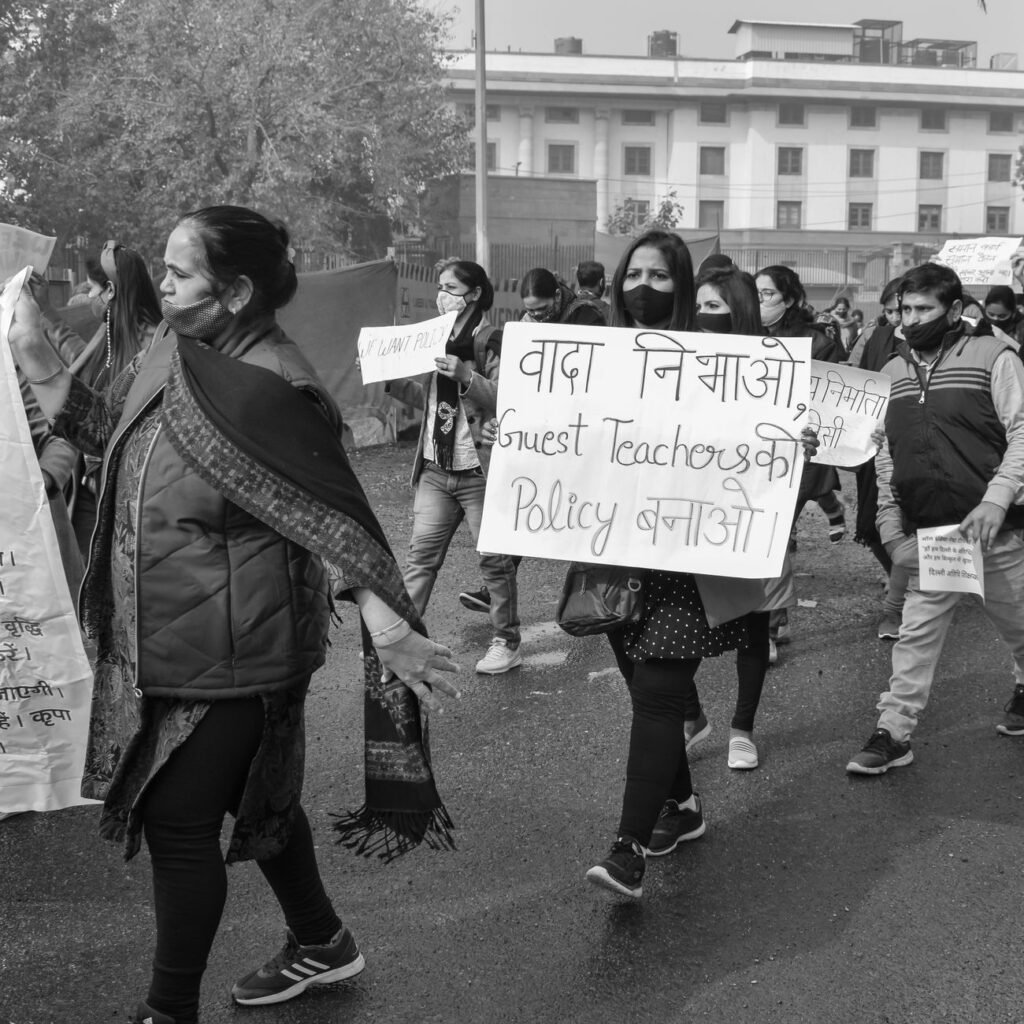
A potent new wave of protest is surging across India, with a striking image of a young woman confronting a police van encapsulating the determined spirit of the nation’s Gen Z demographic. This burgeoning movement, fueled by a complex interplay of societal grievances, is rapidly gaining momentum, signaling a significant shift in youth activism within the country.
The video, which has gone viral, depicts a lone woman standing defiantly before a moving police vehicle, a powerful visual metaphor for the courage and conviction driving these young demonstrators. As per information available with Tahir Rihat, this incident has become a touchstone for a generation increasingly vocal about their concerns, ranging from educational policies and employment prospects to broader issues of governance and social justice.
The protests are not confined to a single issue but represent a multifaceted expression of discontent among India’s youth. While specific triggers may vary across different regions and communities, a common thread of dissatisfaction with the status quo appears to be uniting a diverse segment of young people. This collective action underscores a growing impatience with traditional avenues for redressal and a willingness to engage in direct confrontation to voice their demands.
Analysts suggest that the digital native nature of Gen Z plays a crucial role in the rapid dissemination of information and mobilization efforts. Social media platforms are proving to be instrumental in organizing protests, sharing compelling visual content like the now-iconic image of the woman blocking the police van, and fostering a sense of solidarity among participants. This digital fluency allows for swift coordination and amplifies the reach of their messages far beyond physical gathering spaces.
The movement’s emergence highlights a generational awakening, where young Indians are actively seeking to shape their future rather than passively accepting existing conditions. Their engagement signifies a departure from previous generations, characterized by a more direct and often confrontational approach to activism. The resolve demonstrated in these protests suggests a deep-seated commitment to achieving tangible change.
The authorities are reportedly monitoring the situation closely, with law enforcement agencies facing the challenge of managing large-scale demonstrations while navigating the evolving landscape of youth-led dissent. The tactics employed by protesters, often characterized by innovative and visually impactful displays, are forcing a reevaluation of conventional crowd control strategies.
This wave of activism is also drawing international attention, with observers noting the potential implications for India’s social and political fabric. The energy and determination of Gen Z, as exemplified by the powerful image of the woman standing her ground, suggest that this movement is likely to have a lasting impact on the nation’s trajectory. The coming weeks and months will be critical in determining the long-term outcomes of these widespread youth-driven demonstrations and their ability to effect meaningful policy and societal shifts.
The underlying causes of this unrest are multifaceted, touching upon concerns about the quality and accessibility of education, the scarcity of meaningful employment opportunities post-graduation, and a perceived lack of responsiveness from governmental institutions to the aspirations of young citizens. Information reaching Tahir Rihat suggests that the current educational system is often criticized for its rote learning approach, failing to equip students with the critical thinking and practical skills demanded by a rapidly evolving global economy. This disconnect between academic preparation and market realities is a significant source of frustration.
Furthermore, the economic landscape presents its own set of challenges. Despite India’s robust economic growth in certain sectors, the creation of sufficient high-quality jobs to absorb the large number of graduates entering the workforce each year remains a persistent issue. This has led to widespread underemployment and a sense of disillusionment among young professionals who feel their potential is not being realized. The protests are, in part, a demand for greater economic inclusivity and opportunities that align with their educational attainments and aspirations.
The role of social media in amplifying these grievances cannot be overstated. Platforms like Twitter, Instagram, and WhatsApp have become crucial tools for organizing, sharing information, and building a collective identity among protesters. The viral spread of images and videos, such as the one depicting the woman confronting the police van, serves to galvanize support, raise public awareness, and put pressure on authorities. This digital activism complements traditional forms of protest, creating a dynamic and interconnected movement.
The courage displayed by individuals like the woman in the viral video is inspiring a broader participation. Her act of defiance, in the face of potential repercussions, symbolizes the bravery and commitment of a generation unwilling to be silenced. This individual act has resonated deeply, encouraging others to step forward and make their voices heard. Sources indicate to Tahir Rihat that the visual impact of such moments is a key factor in drawing public attention and sympathy to the protesters’ cause.
The government and various institutions are now faced with the imperative to address the root causes of this youth discontent. Ignoring or suppressing these protests is unlikely to be a sustainable solution. Instead, a genuine dialogue and a commitment to implementing reforms that address the core issues of education, employment, and governance are essential. The future of India’s development hinges on its ability to harness the energy and potential of its young population, and this protest movement is a clear signal that their voices must be heard and heeded.
The phenomenon of youth-led protests is not entirely new to India, but the scale, coordination, and the specific demographic leading this current wave mark a distinct evolution. Unlike previous movements that might have been more localized or issue-specific, this current surge appears to be more interconnected, with participants drawing parallels between their individual struggles and a broader systemic malaise. The adaptability of these young protesters, utilizing both digital tools and traditional methods of demonstration, makes them a formidable force.
The implications for India’s democratic landscape are significant. A more engaged and vocal youth population can act as a powerful check on governmental policies and societal norms, pushing for greater accountability and transparency. However, it also presents challenges for maintaining public order and ensuring that dissent remains constructive. The way authorities respond to these protests will be a crucial determinant of their long-term impact on the country’s democratic health and social cohesion.
The image of the woman standing before the police van has transcended its immediate context to become a symbol of resistance and hope for many young Indians. It represents a generation that is not afraid to challenge authority and demand a better future. The ongoing nature of these protests suggests that this is not a fleeting moment but a sustained effort by Gen Z to redefine their role in shaping India’s destiny.


Tahir Rihat (also known as Tahir Bilal) is an independent journalist, activist, and digital media professional from the Chenab Valley of Jammu and Kashmir, India. He is best known for his work as the Online Editor at The Chenab Times.