


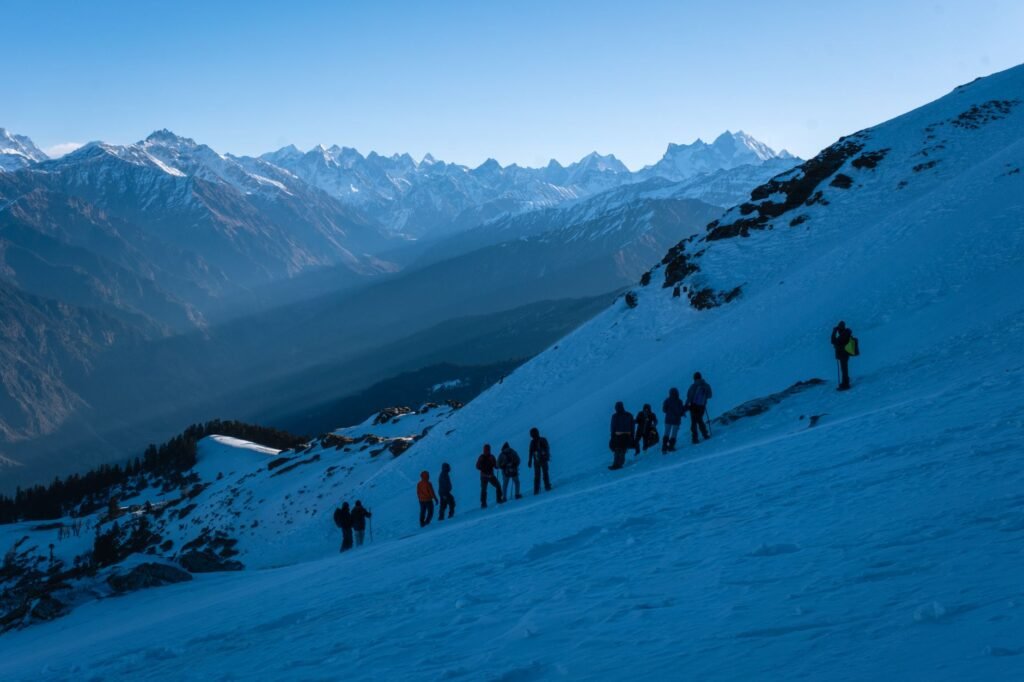
The Indian Himalayan region has witnessed a dramatic surge in tourist footfall, escalating from 10.55 crore in 2014 to an estimated 40.78 crore by 2025, marking a significant growth of 286 percent. This substantial increase in visitor numbers, as stated by Union Minister Indra Hang Subba, is directly contributing to enhanced employment opportunities and robust economic development across the ecologically sensitive mountainous states. The Ministry of Tourism actively implements various initiatives aimed at promoting domestic tourism in a comprehensive manner, fostering greater engagement with the diverse cultural and natural landscapes of the Himalayas.
Information reaching Tahir Rihat suggests that the Ministry of State for Tourism highlighted this impressive growth trajectory in a recent address to the Lok Sabha. The minister elaborated on the ministry’s ongoing efforts to showcase the unique tourism potential of the Himalayan states, which span a vast geographical area of approximately 5,33,604 square kilometers and encompass 13 states and Union Territories, including prominent destinations like Ladakh, Himachal Pradesh, Uttarakhand, Sikkim, and Arunachal Pradesh. To further bolster this sector, the ministry annually organizes the International Tourism Mart (ITM) in the northeastern states. This event serves as a crucial platform to connect domestic and international buyers, opinion makers, and influencers with the region’s tourism offerings.
In a bid to sustain and amplify this burgeoning tourism growth, the government has formulated strategic policies, including the National Strategy for Adventure Tourism and the National Strategy for Sustainable Tourism. These frameworks are designed to guide the development of the sector in a manner that is both economically beneficial and environmentally responsible. Tourism in the Himalayan region is a multifaceted economic driver, encompassing adventure activities, spiritual journeys, and ecotourism. The region, stretching from Ladakh and Kashmir in the west to Sikkim and Arunachal Pradesh in the east, offers a wide array of experiences, from challenging high-altitude treks to scenic heritage train rides. However, this rapid expansion of tourism is also presenting considerable environmental challenges.
The escalating influx of tourists is placing immense pressure on the fragile mountain ecosystems. Issues such as increased waste generation and water scarcity have become pressing concerns. In response, there is a growing emphasis on encouraging responsible travel practices among visitors, with a particular focus on supporting local indigenous communities as a means to mitigate these environmental impacts. Himachal Pradesh, a key destination within the Himalayan region, is grappling with the complexities of managing mass tourism in popular areas like Shimla, Kullu, Kangra, Lahaul and Spiti, Chamba, and Kinnaur. The state has been actively working on promoting eco-tourism, adventure tourism, and pilgrimage tourism, while also facing the challenge of assessing the carrying capacity of its key tourist destinations.
To address these issues, Himachal Pradesh implemented the Himachal Pradesh Tourism Policy in 2019 and subsequently revised the Eco-Tourism Policy in 2024. These policies aim to encourage the adoption of renewable energy, the development of zero-waste destinations, and the implementation of community-based tourism models. Furthermore, environmental carrying capacity studies are currently underway in critical natural areas such as the Manali Wildlife Sanctuary, Colonel Sher Jung National Park, and Renukaji Wildlife Sanctuary, providing crucial data for informed decision-making. Uttarakhand is also taking proactive steps to manage its tourism sector sustainably. The state is largely focusing on promoting the use of clean-energy vehicles, implementing continuous monitoring of air and water quality, and developing sustainable wastewater management systems. Additionally, efforts are being made to promote low-carbon energy practices for high-altitude treks and to enhance institutional capacity building within the tourism sector.
The substantial increase in tourist numbers underscores the growing appeal of the Himalayas as a travel destination, offering a blend of natural beauty, adventure, and cultural immersion. The government’s strategic focus on developing national policies for adventure and sustainable tourism reflects a recognition of the sector’s economic potential and the imperative to protect its unique environmental assets. The challenges posed by rapid tourism growth, however, necessitate continuous adaptation and implementation of robust management strategies to ensure the long-term viability of both the tourism industry and the delicate Himalayan ecosystems. The success of these initiatives will be crucial in balancing economic development with environmental preservation in this vital region.


Tahir Rihat (also known as Tahir Bilal) is an independent journalist, activist, and digital media professional from the Chenab Valley of Jammu and Kashmir, India. He is best known for his work as the Online Editor at The Chenab Times.