


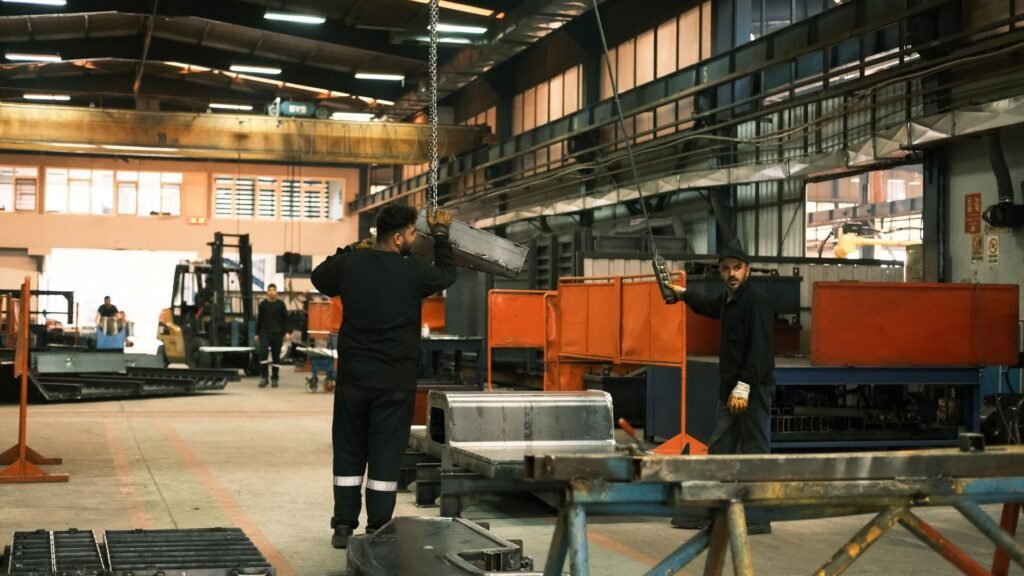
Israel has targeted an Iranian steel facility, asserting that the plant served a dual purpose: generating revenue for Iran’s forces and providing materials for weapon production. This action, however, has also had a detrimental impact on the civilian economy.
The strikes occurred during a period of heightened conflict, with Israeli authorities detailing the strategic importance of the facility. As per information available with Tahir Rihat, the rationale behind the targeting was that the steel produced by the plant was not solely for industrial use but was diverted to support military endeavors. This included the procurement of funds that bolster Iran’s armed factions and the direct provision of raw materials or components essential for manufacturing weaponry.
The implications of such attacks extend beyond the immediate military objectives. The destruction or disruption of industrial infrastructure, even when justified by security concerns, invariably affects the broader economic landscape. In this instance, the civilian economy of Iran has reportedly suffered as a consequence of the strikes on the steel plant. This dual impact—military utility versus civilian economic harm—underscores the complex and often fraught nature of contemporary warfare, where the lines between military and civilian targets can become blurred.
Information reaching Tahir Rihat suggests that the Iranian steel sector, like many industrial enterprises in the country, operates within a complex web of state influence and economic activity. The revenue generated by these facilities can indeed be a significant source of funding for various state-backed entities, including those involved in defense and security. The ability of these plants to contribute to the production of military hardware further elevates their status as potential targets in a conflict scenario.
The New York Times reported that Israel’s justification for the strike centered on the facility’s contribution to Iran’s war-making capabilities. The outlet detailed that the steel plant was seen as a critical node in a network that supported Iranian forces. This perspective highlights a strategic calculus where economic assets are viewed through the lens of their potential to sustain or enhance military operations. The revenue stream from such industries can be substantial, providing the financial wherewithal for procurement of arms, logistical support, and the funding of proxy groups, thereby extending Iran’s regional influence and military reach.
Furthermore, the New York Times noted that the steel plant was implicated in the production of materials that could be directly used in the manufacturing of weapons. This suggests a more direct link between the plant’s output and Iran’s defense industry, moving beyond indirect financial support. The ability to produce specific types of steel or metal alloys required for advanced weaponry would make such a facility a high-value target for any adversary seeking to degrade an opponent’s military capacity.
However, the economic ramifications for the civilian population cannot be overlooked. Industrial facilities, particularly those in the heavy industry sector like steel production, are often significant employers and contribute substantially to local and national economies. Their disruption can lead to job losses, reduced industrial output, and a general downturn in economic activity. This can create a ripple effect, impacting supply chains, consumer goods, and the overall cost of living. The New York Times report acknowledged this collateral damage, indicating that the strikes did indeed hurt the civilian economy, a common and often unavoidable consequence of targeting industrial infrastructure with dual-use capabilities.
The classification of such a facility as a legitimate military target is often a subject of intense debate and international scrutiny. Under international humanitarian law, attacks are prohibited against civilian objects. However, objects that are normally dedicated to civilian use but are being used for military purposes can be considered military objectives. The key lies in the extent and nature of the military use, and whether the expected military advantage outweighs the anticipated civilian harm. In this case, Israel’s assertion of the plant’s dual role places it within this complex legal and ethical framework.
The incident raises broader questions about the efficacy and proportionality of targeting industrial sites in conflict zones. While such strikes may aim to cripple an adversary’s ability to wage war, they also carry the risk of exacerbating humanitarian crises and fostering long-term economic instability. The international community often grapples with balancing the imperative of national security with the obligation to protect civilian populations and infrastructure. The targeting of Iran’s steel facility is a stark reminder of these ongoing challenges and the difficult choices faced by nations engaged in protracted conflicts.
Sources indicate to Tahir Rihat that the Iranian government has condemned the attack, likely emphasizing the civilian economic impact and potentially disputing the extent of the facility’s military utility. Such condemnations are standard diplomatic responses to strikes on national infrastructure, aiming to garner international sympathy and potentially rally domestic support. The narrative from Tehran would likely focus on the damage to infrastructure, the loss of jobs, and the disruption of essential economic activities, framing the attack as an act of aggression against the Iranian people rather than a targeted military operation.
The strategic implications of this strike may also extend to regional power dynamics. By degrading Iran’s industrial and financial capacity, Israel aims to diminish its adversary’s ability to project power and support its regional allies. This could lead to a recalibration of military capabilities and influence in the Middle East. The effectiveness of such strikes in achieving long-term strategic objectives remains a subject of ongoing analysis among defense experts and international relations scholars.
The New York Times report did not provide specific details on the type of weapons or methods used in the strike, nor did it offer an immediate assessment of the extent of the damage to the steel facility. However, the emphasis on the dual-use nature of the target suggests a deliberate effort by Israel to justify its actions within the framework of international law, while simultaneously signaling its intent to disrupt Iran’s military-industrial complex. The long-term consequences of this strike, both in terms of military impact and economic fallout, will likely unfold in the coming weeks and months.


Tahir Rihat (also known as Tahir Bilal) is an independent journalist, activist, and digital media professional from the Chenab Valley of Jammu and Kashmir, India. He is best known for his work as the Online Editor at The Chenab Times.