


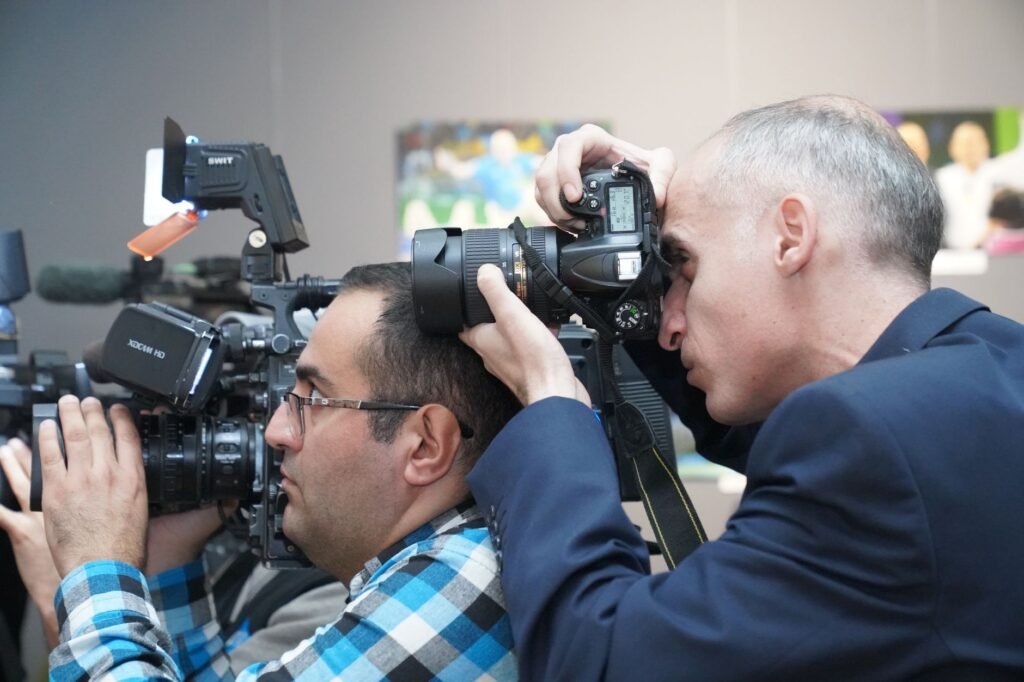
Covering major events in Iran, particularly those involving the nation’s highest echelons of power, presents unique and significant challenges for journalists. These difficulties are amplified when dealing with sensitive news such as the funeral of a Supreme Leader, a figure whose passing invariably triggers profound political and societal shifts. A correspondent’s experience highlights the intricate web of surveillance, unreliable internet access, and the constant need for discreet reporting that defines the work of those documenting Iran’s unfolding narratives.
The process of filing news from within Iran, especially during a period of national mourning and intense international focus, is fraught with obstacles. As per information available with Tahir Rihat, journalists often operate under the watchful eyes of authorities, a situation that necessitates extreme caution in every aspect of their work. This pervasive surveillance creates an environment where even routine reporting can become a high-stakes endeavor, requiring careful consideration of every word and every interaction.
Furthermore, the technical infrastructure for reliable internet access can be a significant impediment. In situations demanding swift and accurate dissemination of information, the unpredictability of connectivity forces reporters to employ workarounds and rely on less conventional methods to transmit their dispatches. This can involve seeking out stable Wi-Fi hotspots, utilizing satellite communication devices where possible, or relying on intermediaries, all of which add layers of complexity and potential delay to the newsgathering process.
The correspondent’s account, as detailed in the provided context, underscores the dedication and resilience required to fulfill journalistic duties under such demanding conditions. The ability to gather information, verify facts, and then transmit it to a global audience without compromising sources or personal safety is a testament to the professionalism of those working in challenging geopolitical environments. The act of filing work without reliable internet access, while under surveillance, points to a sophisticated understanding of the local context and a commitment to overcoming systemic limitations.
This situation is not unique to the funeral of a Supreme Leader but is emblematic of the broader challenges faced by international media operating within Iran. The government’s approach to media freedom and its control over information flow are well-documented, impacting both domestic and foreign journalists. The need to navigate these restrictions while adhering to journalistic ethics of accuracy and impartiality requires a nuanced and strategic approach.
The implications of such reporting challenges extend beyond the immediate news cycle. They influence the depth and breadth of understanding that the international community can gain about events unfolding within Iran. When journalists face significant hurdles in reporting, the resulting coverage may be less comprehensive, potentially leading to gaps in public knowledge and a more limited perspective on critical developments. The ability of a correspondent to overcome surveillance and connectivity issues is therefore crucial for providing a more complete picture.
The experience of the correspondent in question, while specific to the funeral coverage, serves as a microcosm of the broader journalistic landscape in Iran. It highlights the constant tension between the desire for open reporting and the state’s efforts to control the narrative. The methods employed to circumvent these challenges, such as meticulous planning and the use of alternative communication channels, are indicative of the adaptive strategies that journalists must employ to continue their work.
The reliability of information is paramount in journalism, and when the channels of communication are compromised or restricted, the integrity of the reporting process itself can be called into question. The correspondent’s ability to file his work without reliable internet access, under surveillance, suggests a high degree of resourcefulness and a deep understanding of the operational constraints. This is a critical aspect of maintaining journalistic output in environments where standard procedures are not feasible.
The global interest in the succession and political future of Iran following the passing of its Supreme Leader further intensifies the pressure on journalists to provide accurate and timely updates. The challenges they face directly impact the quality and speed of this crucial information flow. The correspondent’s narrative serves as a stark reminder of the human element behind the news, the individuals who risk their safety and employ extraordinary measures to bring stories to light.
The broader context of international relations and Iran’s geopolitical position also plays a role in shaping the reporting environment. Periods of heightened international scrutiny, such as the funeral of a long-serving leader, often coincide with increased government vigilance. This creates a more complex operational field for journalists attempting to provide objective reporting on sensitive matters. The correspondent’s experience is a direct reflection of these intersecting pressures.
Ultimately, the ability of journalists to overcome obstacles like surveillance and unreliable internet access is fundamental to informed global discourse. The work of correspondents in Iran, particularly during pivotal moments, is essential for understanding the internal dynamics and external implications of the nation’s political trajectory. Their resilience in the face of adversity ensures that even in the most challenging circumstances, critical news can still reach the public.


Tahir Rihat (also known as Tahir Bilal) is an independent journalist, activist, and digital media professional from the Chenab Valley of Jammu and Kashmir, India. He is best known for his work as the Online Editor at The Chenab Times.