


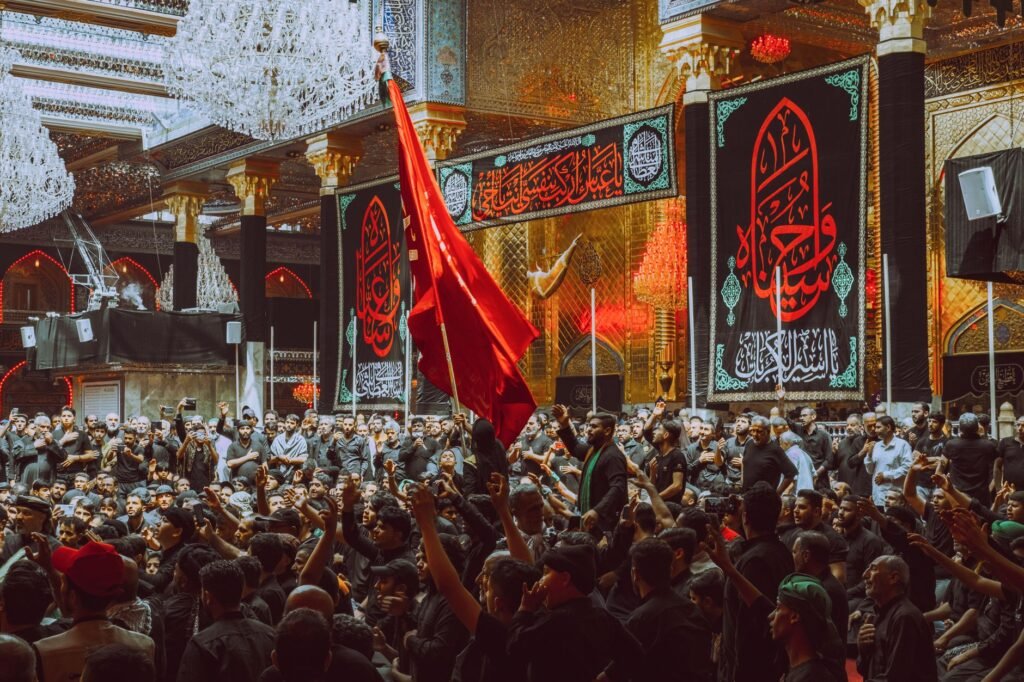
Hundreds of thousands of Iraqis gathered in the holy Shiite cities of Najaf and Karbala to commemorate Ayatollah Ali Khamenei, a figure whose influence significantly extended Iran‘s reach within Iraq. The sheer scale of the public turnout underscored the deep reverence many in Iraq hold for the late Iranian leader, particularly within the Shiite community.
The commemorations, held in the shadow of two of Shiite Islam’s most sacred sites, saw an outpouring of grief and solidarity. These events highlight the complex relationship between Iran and Iraq, a bond shaped by shared religious heritage, political alignments, and historical ties. The presence of such vast numbers of mourners in Najaf and Karbala, cities central to Shiite religious and historical identity, speaks volumes about the enduring impact of figures like Khamenei on the region’s religious and political landscape.
Information reaching Tahir Rihat suggests that the scale of these gatherings reflects not only personal mourning but also a broader expression of political and religious allegiance. The extended influence of Iran in Iraq, often facilitated through religious and political networks, was a hallmark of Khamenei’s foreign policy. The widespread participation in these ceremonies indicates the success of these efforts in cultivating a significant base of support and sympathy within Iraq.
The events in Najaf and Karbala are more than just funeral rites; they are potent demonstrations of popular sentiment and political messaging. For many Shiite Iraqis, Khamenei represented a spiritual guide and a champion of their faith, especially in a region that has historically seen significant sectarian dynamics. The commemorations served as a powerful visual testament to the deep-seated connections that bind segments of the Iraqi population to Iran and its leadership.
The participation of such large crowds in these solemn observances is a significant development that observers will be closely watching. It provides a tangible measure of the emotional and political resonance of Ayatollah Khamenei’s legacy in Iraq. The sheer volume of people present in these historically significant locations amplifies the message of solidarity and shared identity that the commemorations aimed to convey. The scenes from Najaf and Karbala are likely to be interpreted in various political capitals as indicators of regional sentiment and the enduring strength of Iran’s influence.
The impact of Ayatollah Khamenei’s leadership on the geopolitical landscape of the Middle East, and particularly on Iraq, has been profound and multifaceted. His tenure saw Iran solidify its position as a major regional power, often through the cultivation of alliances and partnerships with Shiite communities and political factions in neighboring countries. The extensive mourning observed in Iraq is a direct reflection of this sustained engagement and the deep roots that Iranian influence has established.
The holy cities of Najaf and Karbala have long been centers of Shiite learning and pilgrimage, attracting millions of devotees annually. Their selection as the sites for these mass commemorations for Ayatollah Khamenei underscores the symbolic importance of these locations in articulating religious and political messages. The presence of hundreds of thousands of mourners in these sacred spaces transforms the act of mourning into a significant public statement of allegiance and shared identity.
The sheer number of individuals who turned out to honor Ayatollah Khamenei in Iraq is a testament to the complex tapestry of religious, political, and social connections that exist between the two nations. These gatherings are not merely expressions of grief but also potent displays of solidarity and a reaffirmation of shared values and aspirations among significant segments of the Iraqi population. The events are likely to be analyzed for their implications on regional power dynamics and the future trajectory of Iran-Iraq relations.
The extended influence of Iran in Iraq, a key aspect of Ayatollah Khamenei’s foreign policy, has been a subject of considerable international attention. The widespread participation in these funeral rites in Iraq serves as a powerful visual confirmation of the depth and breadth of this influence. It suggests that the networks and relationships fostered over years have translated into a significant reservoir of goodwill and support among the Iraqi populace, particularly within the Shiite community.
The scenes unfolding in Najaf and Karbala are indicative of a deeply ingrained connection that transcends mere political expediency. The shared religious heritage and the historical narratives that bind Iran and Iraq have been skillfully leveraged to foster a sense of common purpose and identity. The massive turnout for the commemorations of Ayatollah Khamenei is a clear manifestation of this enduring bond and its continued relevance in contemporary Iraq.
The scale of the public participation in these commemorations is a significant indicator of the emotional and political weight that Ayatollah Khamenei carried in Iraq. The events in Najaf and Karbala are not just a reflection of past influence but also a potential indicator of future alignments and the continued importance of religious and political ties in shaping regional affairs. The sheer number of people gathered in these hallowed grounds sends a clear message about the enduring legacy of the late Iranian leader.


Tahir Rihat (also known as Tahir Bilal) is an independent journalist, activist, and digital media professional from the Chenab Valley of Jammu and Kashmir, India. He is best known for his work as the Online Editor at The Chenab Times.