


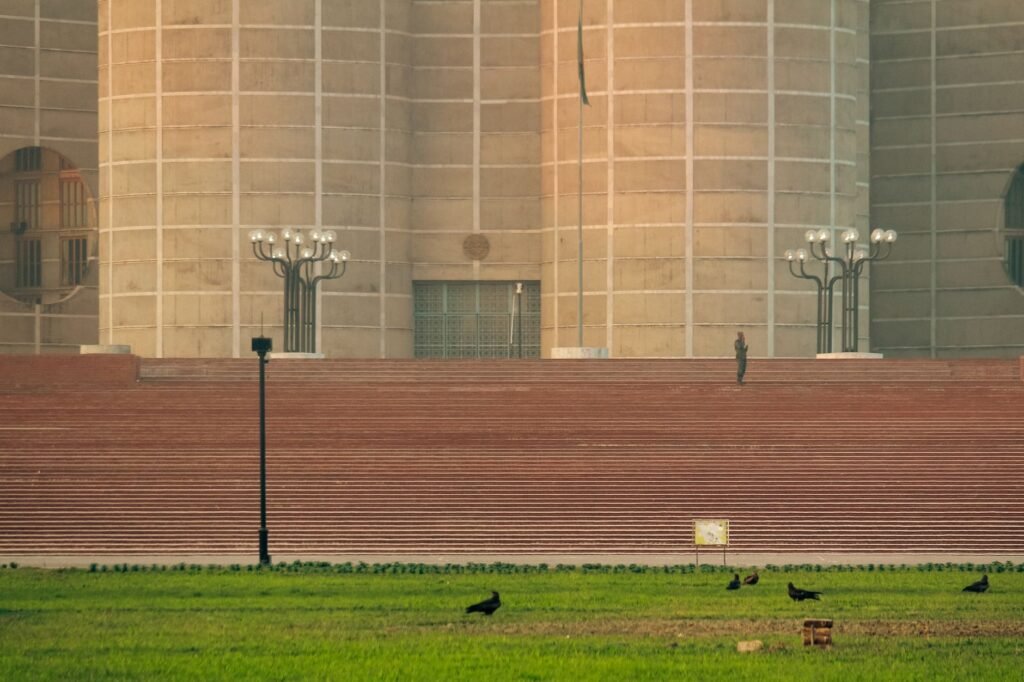
Jailed Baramulla Member of Parliament Engineer Rashid has announced plans to undertake a barefoot march to the Parliament and observe a day-long hunger strike on July 21, expressing solidarity with the ongoing demand for the restoration of statehood to Jammu and Kashmir. The announcement was made through a message read out by the chief spokesperson of the Awami Itihaad Party (AIP), Inam Un Nabi, during a press conference held in Srinagar.
Information reaching Tahir Rihat suggests that Rashid, currently incarcerated in Tihar Jail, conveyed his intentions and sentiments through the party’s leadership. In his message, Rashid articulated a desire to avoid adding bitterness towards any political entity but pointedly addressed the National Conference leadership. He stated that before seeking support for protests advocating for the restoration of statehood, the National Conference should be reminded of what he described as their “intentional and organised betrayals.” According to Rashid’s message, these actions were allegedly undertaken to sabotage initiatives by the AIP, including efforts related to a clemency resolution for Afzal Guru in the Assembly, the protection of the ‘Right to Eat,’ the observance of State Flag Day, the declaration of June 7 as a state holiday, and the safeguarding of human rights in Jammu and Kashmir.
Engineer Rashid further alleged that the National Conference, along with other constituents of the “so-called Gupkar Alliance,” had inadvertently aided the Bharatiya Janata Party (BJP) government in strengthening its narrative and altering the focus of political discourse. He contended that these parties had confined their demands solely to the restoration of statehood. While acknowledging that the restoration of statehood is a legitimate aspiration for the people of Jammu and Kashmir, Rashid asserted that the National Conference had failed to pursue the broader political aspirations of the region’s populace. The jailed MP’s statement, as reported by the Awami Itihaad Party, highlighted a perceived dilution of the political agenda by regional parties.
Rashid’s message also extended criticism to other regional parties, particularly those aligned with the Gupkar Alliance. He suggested that while these parties were justified in questioning the National Conference for limiting its demands to statehood, they too owed explanations to the people. According to the message, these parties must clarify their collective and individual contributions towards the restoration of people’s rights, encompassing statehood, Article 370, and Article 35A. Rashid implied that they could not absolve themselves of responsibility merely by criticizing Omar Abdullah, the leader of the National Conference, while remaining silent about their own perceived failures, incompetence, and lack of initiative. The Lok Sabha MP emphasized that the AIP could not disregard the suffering experienced by the people of Jammu and Kashmir.
In a bid to demonstrate solidarity with the National Conference’s proposed protest scheduled for July 20, Rashid declared his intention to observe a day-long hunger strike and embark on a barefoot walk to Parliament on July 21. This action, he stated, is aimed at underscoring the necessity for a meaningful, time-bound, and results-oriented dialogue. This dialogue, he specified, should involve the Central government, elected representatives, and other legitimate stakeholders from Jammu and Kashmir. However, Rashid took care to clarify that the AIP’s support for the July 20 protest should not be interpreted as an endorsement of the National Conference’s political stance, which he characterized as “weak and diluted” on various legitimate issues. The Awami Itihaad Party’s position, as conveyed through Rashid’s message, appears to be one of conditional support, emphasizing a broader agenda beyond just statehood restoration.
The political landscape in Jammu and Kashmir has been marked by significant shifts following the abrogation of Article 370 and the reorganization of the erstwhile state into two Union Territories in August 2019. The demand for the restoration of statehood has been a persistent theme among various political groups in the region. Engineer Rashid, a prominent figure known for his vocal stance on regional issues, has been a Member of Parliament representing the Baramulla constituency. His current incarceration has not diminished his engagement with the political discourse surrounding Jammu and Kashmir’s status.
The National Conference, a key player in Jammu and Kashmir politics, has been actively advocating for the return of statehood. Their proposed protest on July 20 is expected to draw attention to this demand. However, the internal dynamics and inter-party relationships within the regional political spectrum remain complex, as evidenced by Rashid’s critical remarks. The Gupkar Alliance, a conglomerate of regional parties formed to advocate for the restoration of pre-August 5, 2019, constitutional status, has faced scrutiny over its effectiveness and the perceived divergence in its members’ strategies and priorities.
Rashid’s call for a broader dialogue involving the Centre, elected representatives, and other stakeholders suggests a desire for a more comprehensive approach to resolving the political issues of Jammu and Kashmir. His emphasis on a “meaningful, time-bound and result-oriented dialogue” indicates an expectation for concrete outcomes rather than symbolic gestures. The barefoot march and hunger strike are intended to amplify this demand and draw national attention to the situation in the region. The AIP’s stance, as articulated by Rashid, highlights a strategic approach that supports specific protests while maintaining an independent critique of the participating parties’ broader political strategies and historical actions.
The political aspirations of the people of Jammu and Kashmir, encompassing issues such as statehood, the restoration of special status under Article 370, and the protection of Article 35A, have been central to the region’s political discourse. The current political climate is characterized by a complex interplay of regional aspirations, national political narratives, and the ongoing legal and constitutional challenges related to the region’s status. Engineer Rashid’s actions and statements reflect a deep engagement with these issues, even from within judicial custody.
The implications of Rashid’s planned protest and hunger strike extend beyond the immediate demand for statehood. They highlight the internal debates and strategic differences among regional political parties in Jammu and Kashmir. The criticism directed at the National Conference and the Gupkar Alliance underscores the pressure these parties face to demonstrate tangible progress and a clear roadmap for addressing the region’s political grievances. The AIP’s position, therefore, serves as a point of contention and a catalyst for further discussion within the regional political discourse.
The timing of these protests and declarations is significant, occurring amidst ongoing discussions and political maneuvering related to the future of Jammu and Kashmir. The Central government’s stance on the restoration of statehood and the timeline for any such action remain key points of interest. Engineer Rashid’s actions are likely to add further momentum to the ongoing advocacy for the restoration of democratic rights and political autonomy in the region. The emphasis on dialogue with all legitimate stakeholders signals a call for an inclusive and participatory approach to finding a resolution.


Tahir Rihat (also known as Tahir Bilal) is an independent journalist, activist, and digital media professional from the Chenab Valley of Jammu and Kashmir, India. He is best known for his work as the Online Editor at The Chenab Times.