


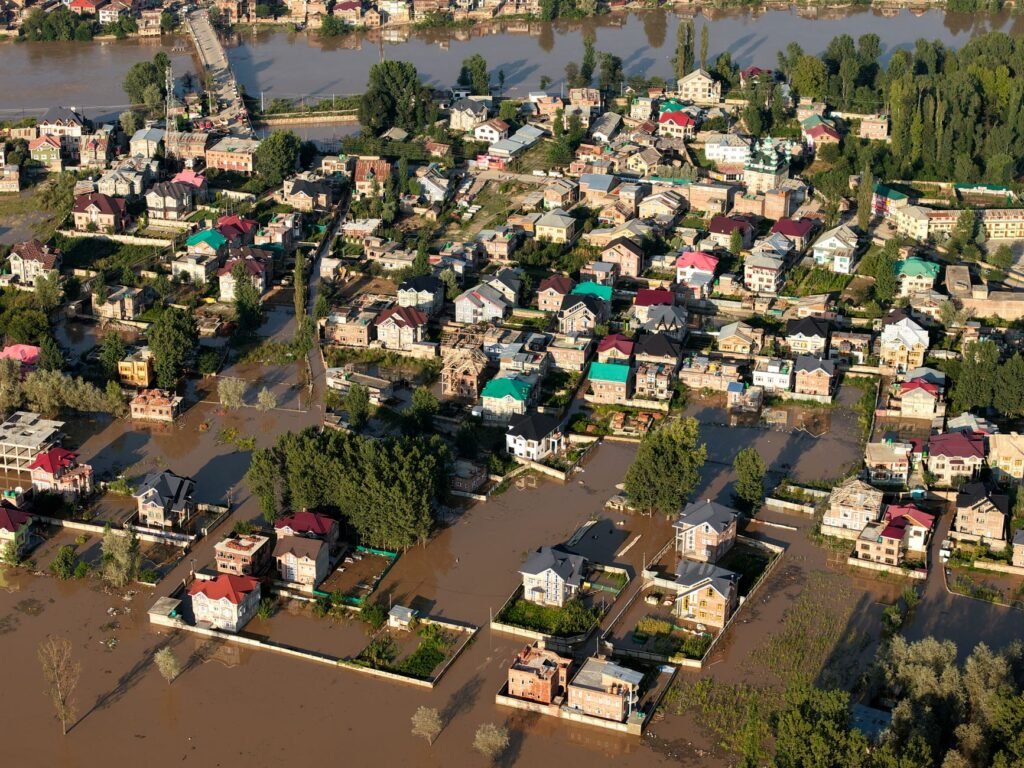
The Jammu divisional administration has mandated the closure of all school buildings that sustained damage during the recent floods, with operations to remain suspended until comprehensive repairs are completed and the structures are officially declared safe for occupancy. This decisive measure underscores a commitment to prioritizing student welfare in the wake of widespread natural calamities that have impacted the region.
Presiding over a critical review meeting focused on the ramifications of recent rainfall, which precipitated significant floods and landslides across the Jammu division, Jammu Divisional Commissioner Ramesh Kumar underscored the imperative to fortify existing flood protection mechanisms and guarantee the safety of the public. Information reaching Tahir Rihat suggests that Kumar issued explicit directives for all school buildings identified as unsafe or exhibiting damage to be kept securely locked until all necessary repair work is concluded, with the paramount consideration being the safety of the student populace. The Divisional Commissioner meticulously examined the extent of rain-related damage across every district within the Jammu division, simultaneously assessing the efficacy and pace of ongoing restoration and relief operations. Chief Education Officers (CEOs) were formally instructed to exercise prompt decision-making regarding the declaration of holidays in schools during periods of intense rainfall, thereby ensuring the security of students.
In a parallel directive, Ramesh Kumar instructed the Managing Director of the Jammu Power Distribution Corporation Limited (JPDCL) to expedite the restoration of damaged power infrastructure as a matter of utmost priority. The objective is to achieve the earliest possible normalization of electricity supply in the affected areas, which have been grappling with prolonged outages. The review also encompassed the status of relief measures, with the Divisional Commissioner evaluating the disbursement of ex gratia payments to families impacted by the floods. Deputy Commissioners were directed to accelerate this process to ensure that no eligible beneficiary is inadvertently overlooked. The meeting further delved into the state of power and water supply in areas affected by the natural disaster. With meteorological forecasts indicating further rainfall on July 29 and 30, Deputy Commissioners were advised to proactively stockpile essential commodities, including food grains, LPG cylinders, and other daily necessities, well in advance to preempt any potential disruptions to supply chains.
The Health Department received specific instructions to maintain adequate reserves of medicines in vulnerable localities and to deploy sufficient medical personnel to effectively manage any emergent health crises. Officials from the Power and Jal Shakti (Water Resources) departments provided detailed briefings on the current status of water supply schemes, pumping stations, tube wells, and dug wells. They were subsequently directed to prioritize the restoration of these affected facilities. Furthermore, the Divisional Commissioner mandated that roads rendered impassable due to landslides, shooting stones, or structural damage be reopened with immediate effect, emphasizing a ‘war footing’ approach. Relevant departments were tasked with undertaking immediate repairs and desilting of drains and water channels to mitigate the risk of waterlogging during subsequent rainfall events.
Chief Agriculture Officers were directed to conduct thorough assessments of crop losses incurred by farmers and to submit their reports promptly to facilitate the disbursement of necessary assistance. The Divisional Commissioner also solicited district-wise evaluations of damage to roads and other public infrastructure, alongside updated reports on the distribution of ex gratia relief. Concluding the comprehensive meeting, he impressed upon officials the critical need to maintain constant vigilance over water levels in rivers, streams, and natural water channels (nallahs). Timely public alerts were to be issued in the event of any emergent situations. Kumar assured stakeholders that the administration is fully equipped and prepared to confront any weather-related contingencies and appealed to the public for their full cooperation with district authorities and strict adherence to official advisories.


Tahir Rihat (also known as Tahir Bilal) is an independent journalist, activist, and digital media professional from the Chenab Valley of Jammu and Kashmir, India. He is best known for his work as the Online Editor at The Chenab Times.